The New Home Edit
Not Finished, Still Home
Moving day is not always the moment a house is finished. Sometimes it is simply the day you begin living among everything that is still becoming.
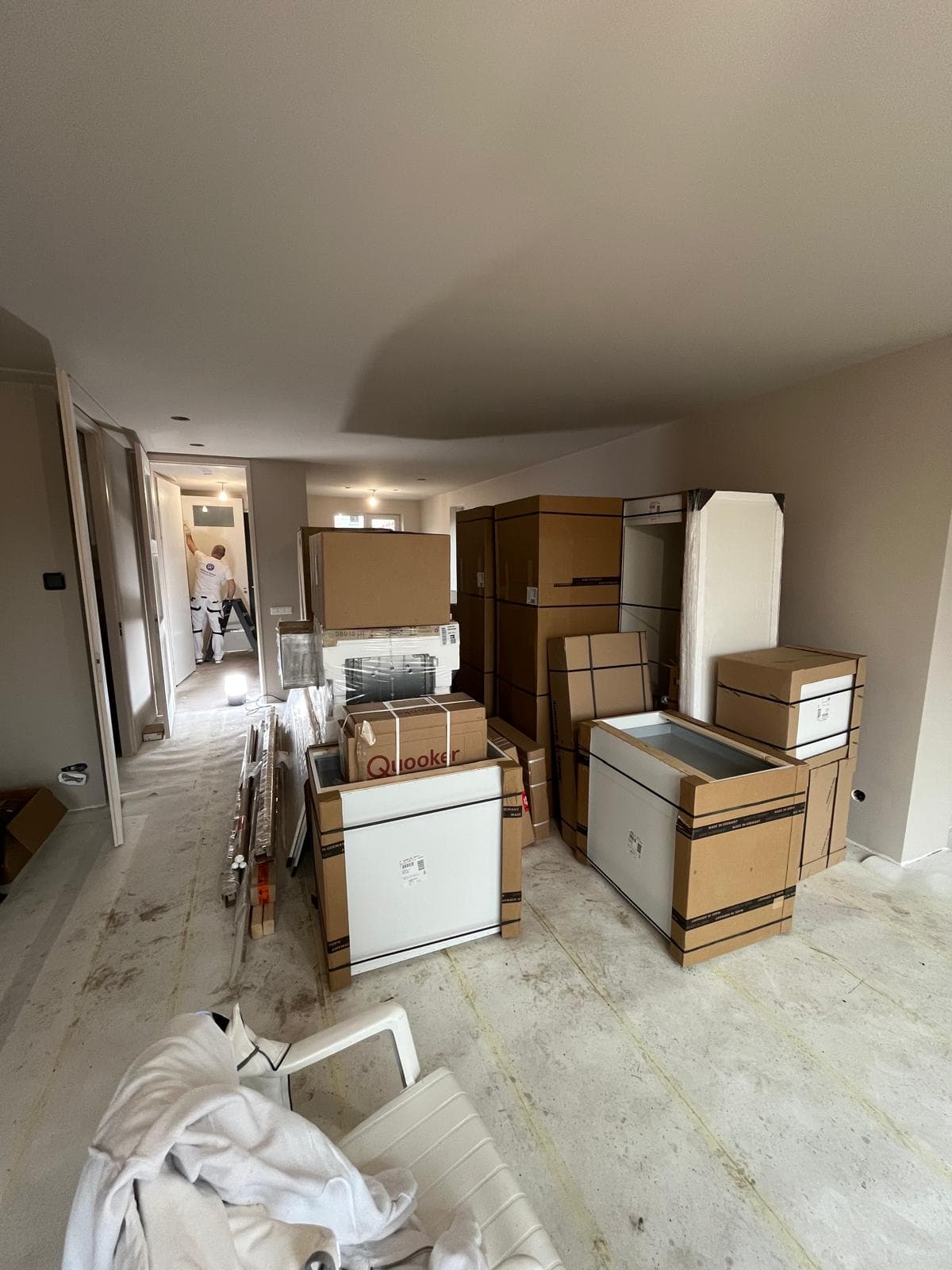
“A house can be ready enough for daily life before it is visually finished. Safe essentials, one functioning routine and a deliberate place for the remaining work matter more in the first weeks than forcing every room into a permanent final version.”
On the day we moved into our new-build home, the bathroom was finished.
This remains the most concise and accurate summary of the situation.
The bathroom was finished.
The rest of the house had entered into a more interpretive relationship with the word.
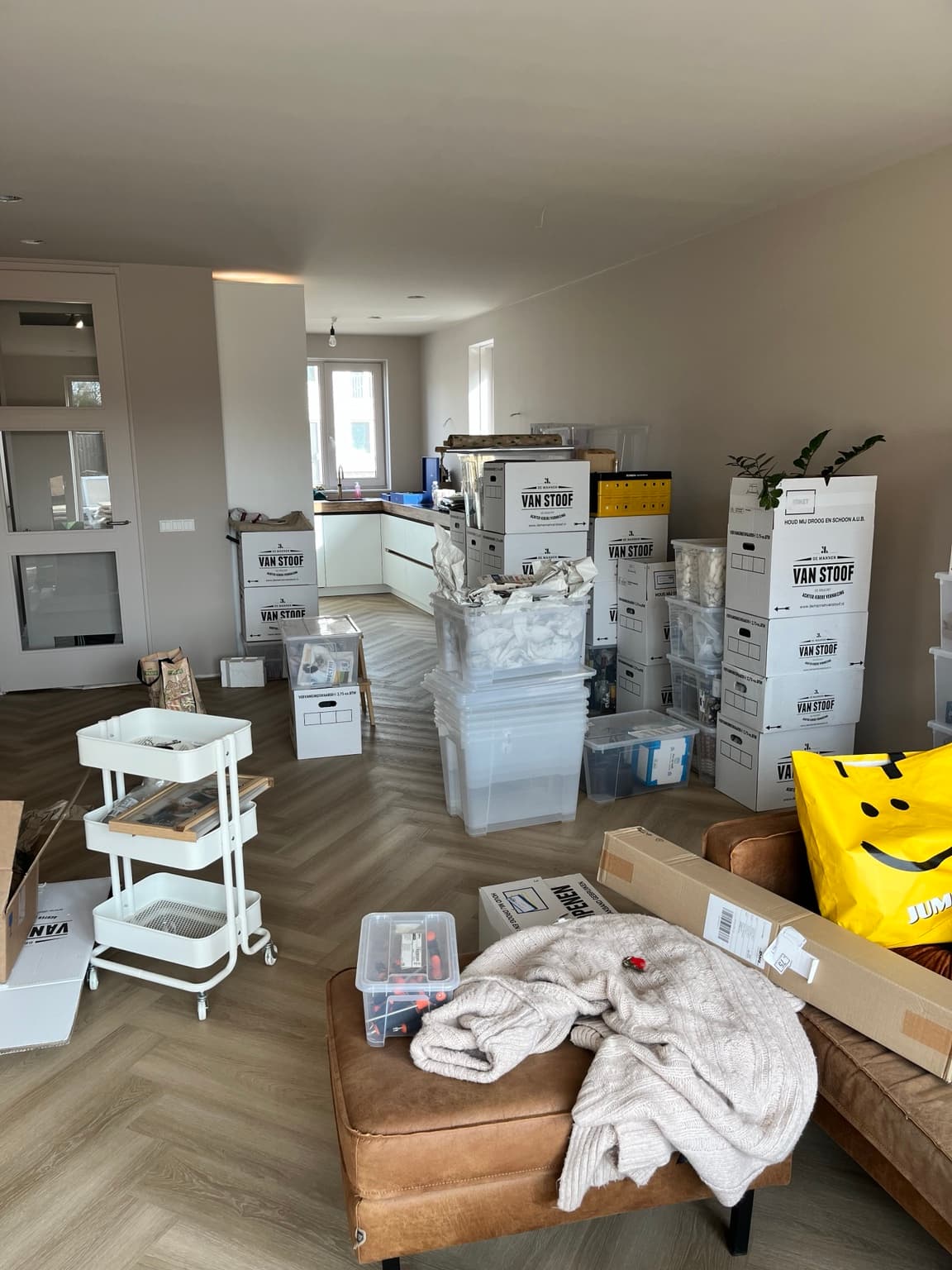
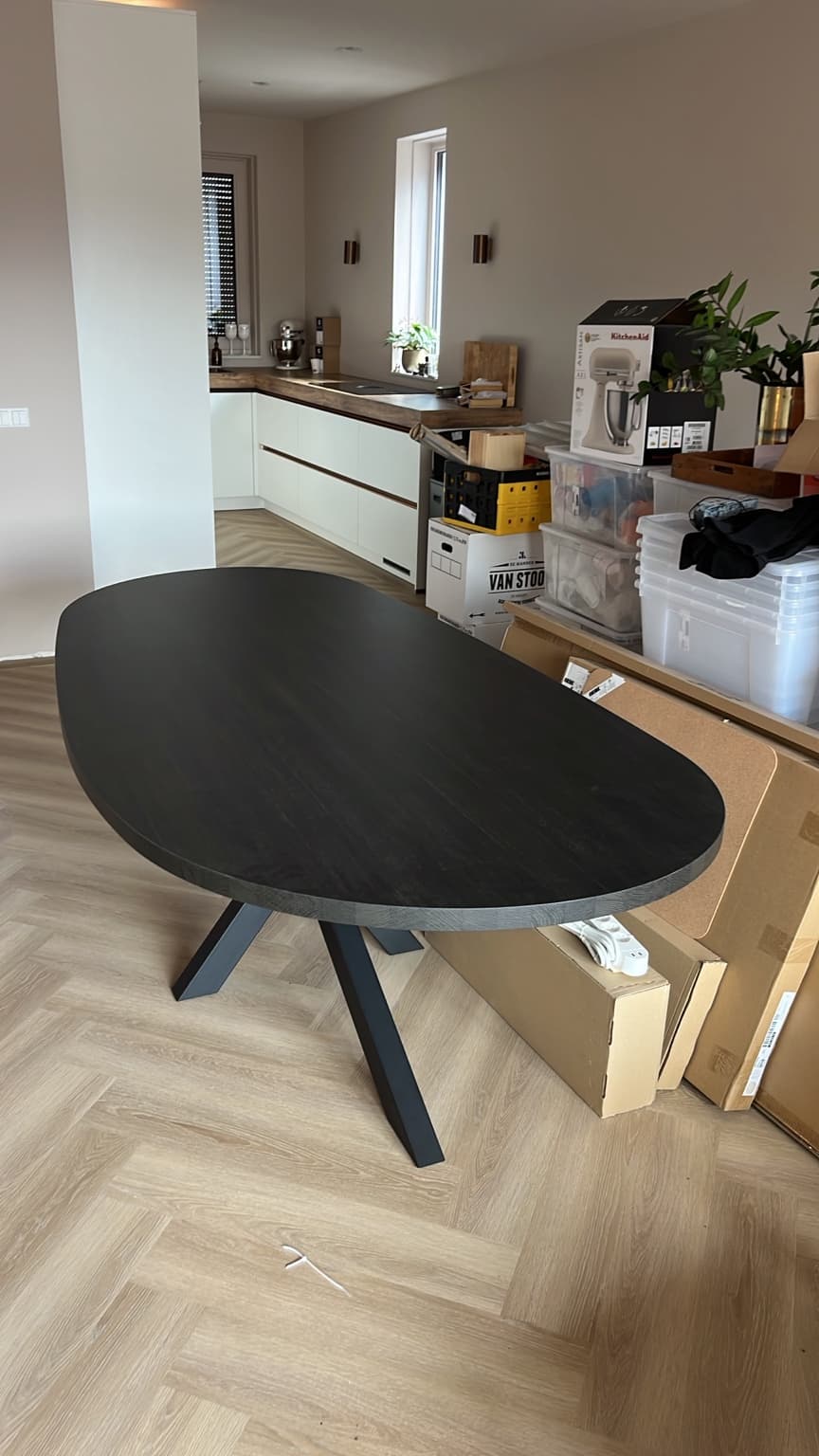
Our painter continued working around us for another four or five weeks because I had chosen to have almost everything painted: walls, ceilings, doors and the staircase. We used our old sofa while we waited for the new one. For a while, we had no dining table and no dining chairs. Boxes stood everywhere in the deeply unattractive way boxes do, even when they contain lovely things and have been labelled with considerable care.
There were still appointments, delays and decisions. The house was simultaneously our home and an active project.
I would love to say I floated through that period in a state of serene acceptance. I did not. I wanted things finished. I wanted dates to remain where they had originally been placed. I wanted the boxes to unpack themselves quietly during the night.
What proved essential was not another heroic planning session.
It was breathing, accepting where our influence ended and allowing the house to become home before it became complete.
The Move Is a Threshold, Not a Finish Line
Most moving imagery is built around a satisfying conclusion. The final box enters. The keys are placed in a beautiful bowl. Someone opens a bottle. The room is miraculously free of packaging by sunset.
Real life is less committed to narrative closure.
A delayed floor can disturb several other appointments. A made-to-measure item may arrive in stages. A kitchen or final lighting may be installed after daily life has already begun. A painter may need access to the room where you are also trying to drink coffee, answer email and locate the clean towels.
That does not mean the move has failed. It means moving into a new or substantially changed home is a season rather than a single day.
The useful question is not always, “Is everything finished?”
It may be, “Can daily life begin safely and reasonably here?”
Those are very different standards.
The Actual Sequence, Week by Week
For us, that season had real dates.
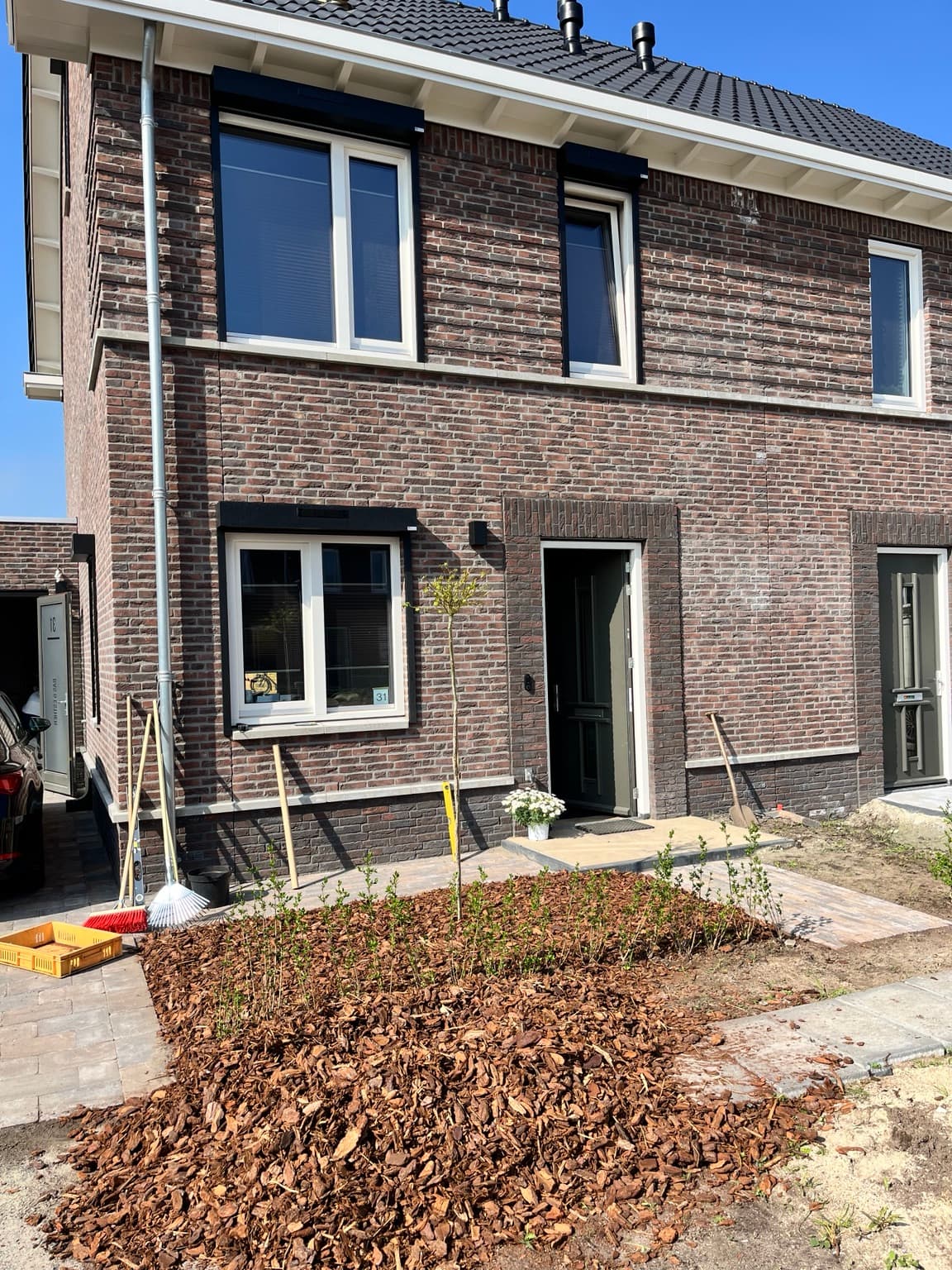
We received the keys in the final week of January. We slept in the house for the first time on 3 March.
At handover, the house was essentially bare - the bathroom and toilet were the only rooms the contractor had genuinely finished.
In between came a sequence with its own logic, not ours: electrical work, then sanding, then plastering, then drying, then sanding again, then a first coat of paint, a second, a third, and finally the flooring.
A construction delay earlier in the build had already reduced the finishing window we had originally planned around, without shortening any of the work still ahead of us.
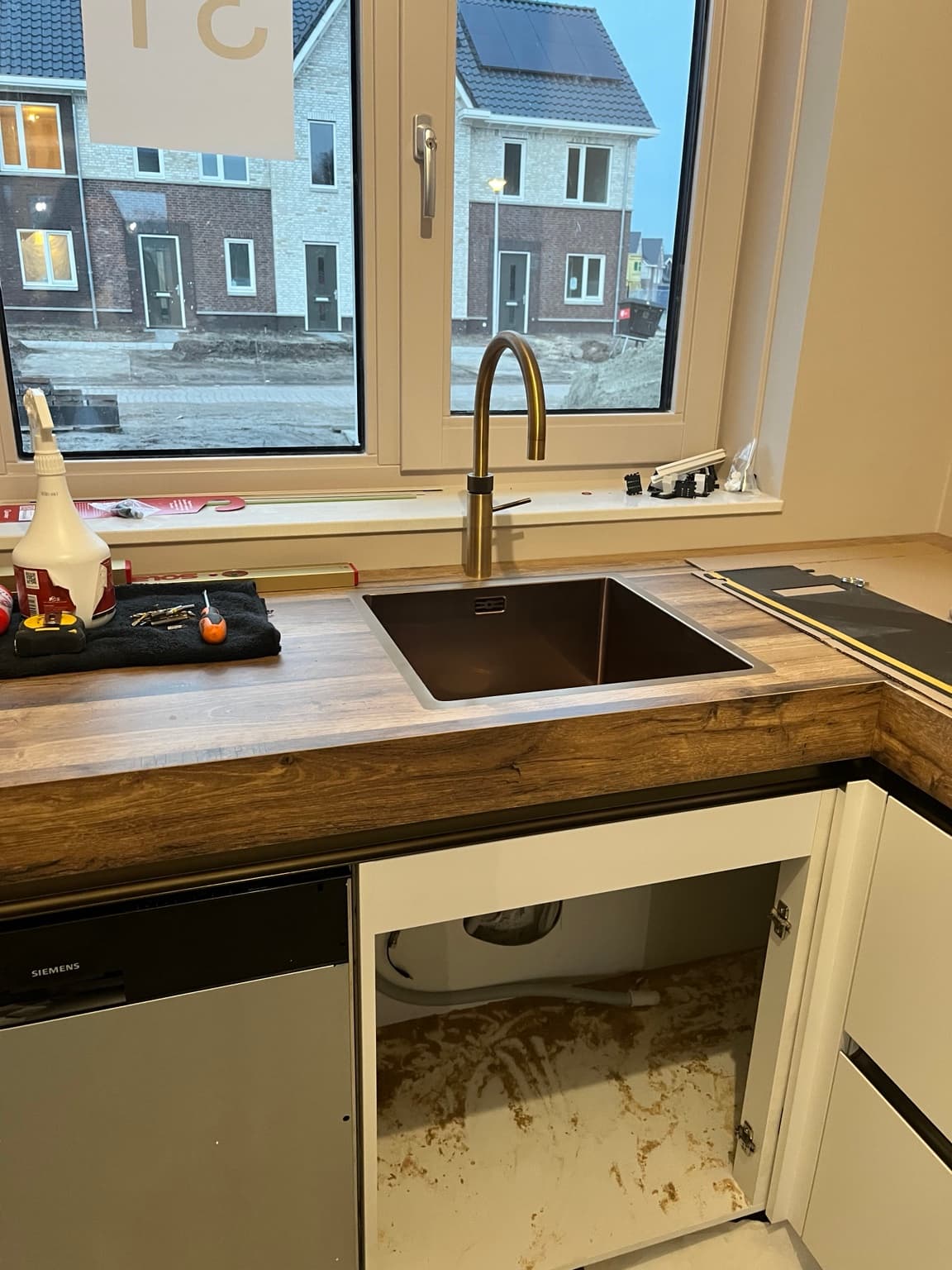
The kitchen arrived roughly six weeks after we collected the keys. Our painter was still returning weeks after we had moved in, and parts of the floor finishing - including the skirting - happened while we were already living here.
Furniture was its own separate delay. What we had been told would take around twelve weeks ultimately took more than sixteen. Our old sofa came with us for exactly that reason - not because it belonged in the new living room, but because we needed somewhere to sit.
Temporary Can Be an Intelligent Decision
Our old sofa was not the final choice for the new living room. It was still an excellent place to sit while the new sofa made its way through a very long lead time.
Having no dining table was inconvenient. It was also temporary. Neither situation required us to panic-buy a permanent solution simply to make the room photograph better.
A temporary arrangement becomes much easier to live with when it has a clear purpose.
The old sofa allowed us to rest.
A simple food setup allowed us to eat before everything in the kitchen had found its place.
Temporary lighting allowed rooms to function before the final fixtures were installed.
These were bridges, not failures.
The danger of an unfinished house is not only the inconvenience. It is the urge to end that inconvenience with a rushed permanent purchase. A placeholder can protect a future decision, provided it remains safe, useful and genuinely temporary.
The Box Phase Is Not an Organising Emergency
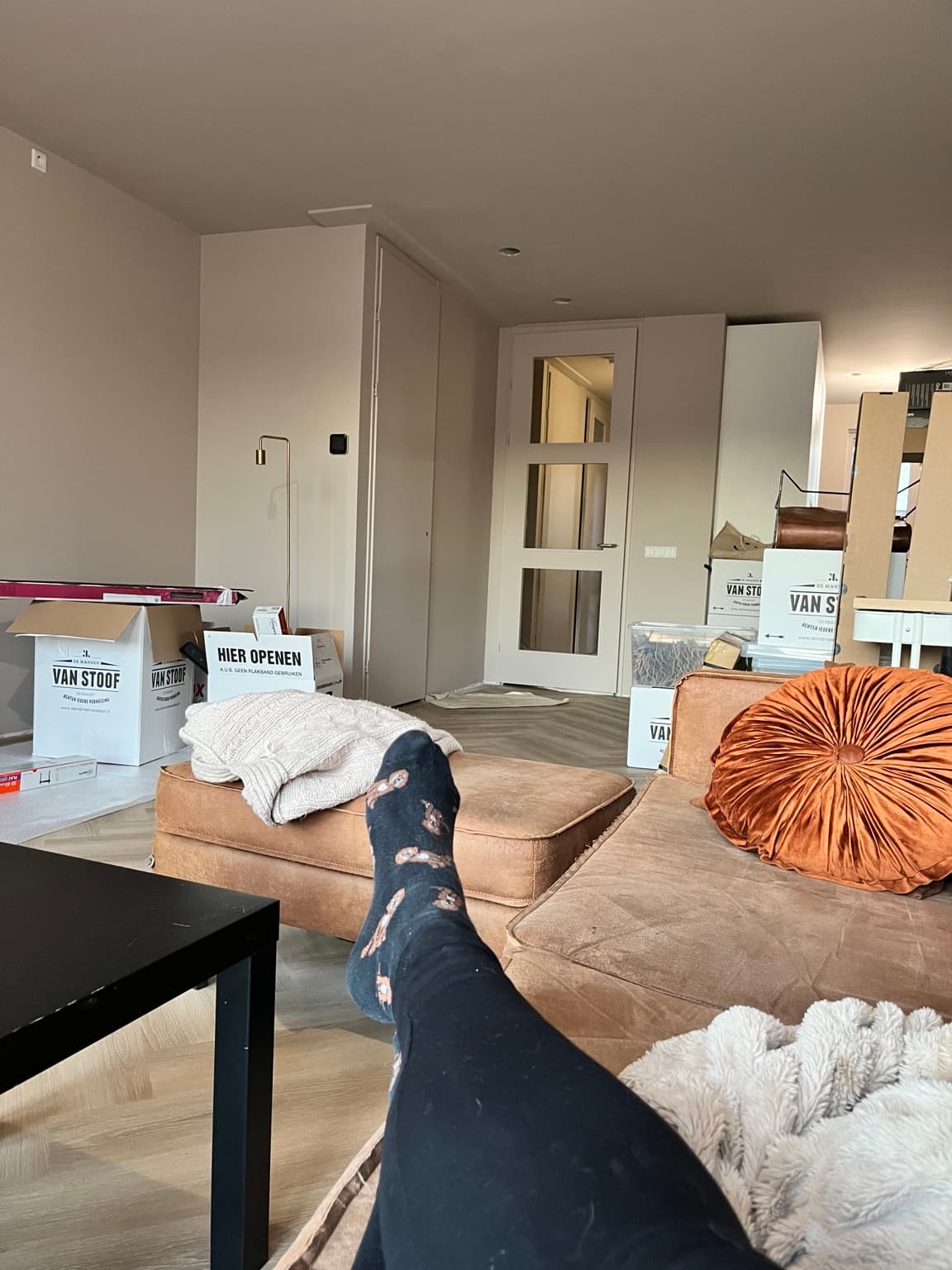
The first weeks involve a strange visual contradiction. You have moved into the largest organising project of your recent life, yet the house may look less organised than either home did before the move.
Boxes collect in corners. Items wait for furniture that has not arrived. One missing object causes three other boxes to be opened. The scissors develop the supernatural ability to leave whichever room you are standing in.
It is dreadful to look at.
It is also normal.
Rather than trying to make the entire house box-free immediately, it helped to recognise that a few places mattered more. Somewhere to sleep. Somewhere to wash. A working coffee point. One surface that did not become the headquarters for tape, post, chargers and things without a home.
A small protected area can give the eye somewhere to rest while the rest of the house remains in motion.
The boxes will leave. You do not need to make every room feel complete before you are allowed to feel settled in one corner.
For a practical approach to putting things where daily life actually needs them, see A Home for Everything, linked below.
Some Delays Belong to Someone Else's Calendar
Our floors were delayed because the installer had planning problems. The cast floor in the garage became an entirely separate saga and did not produce the finish we had hoped for. Mistakes were made on more than one side. It took an extremely long time and, eventually, we accepted the result for what it was.
This is where project planning meets the limits of project control.
You can confirm an appointment. You can record an agreement. You can follow up, provide access, make a decision and ask for a resolution when the finish is not right.
You cannot personally manufacture another person’s availability, remove every delay or force a material to dry because the calendar would find that more convenient.
“Go with the flow” sounds delightful when embroidered on a cushion. It is considerably less delightful when you are living inside the flow and would prefer it to meet the agreed installation date.
Still, there comes a point where repeatedly carrying an uncontrollable delay in your head does not improve the outcome. The more useful response is to identify the next follow-up, protect a fallback and then return your attention to what you can actually influence.
INSIDE THE NEW HOME STUDIO
The Studio gives unfinished work a deliberate place through the Move-In Minimum, Temporary on Purpose, Control–Influence–Release and the First 30 Days. The complete checklists, prompts and planning pages remain exclusive to the premium workbook.
The House Teaches You How It Wants to Work
Living in the house before completing every organisational and decorative decision gave us information no floor plan could provide.
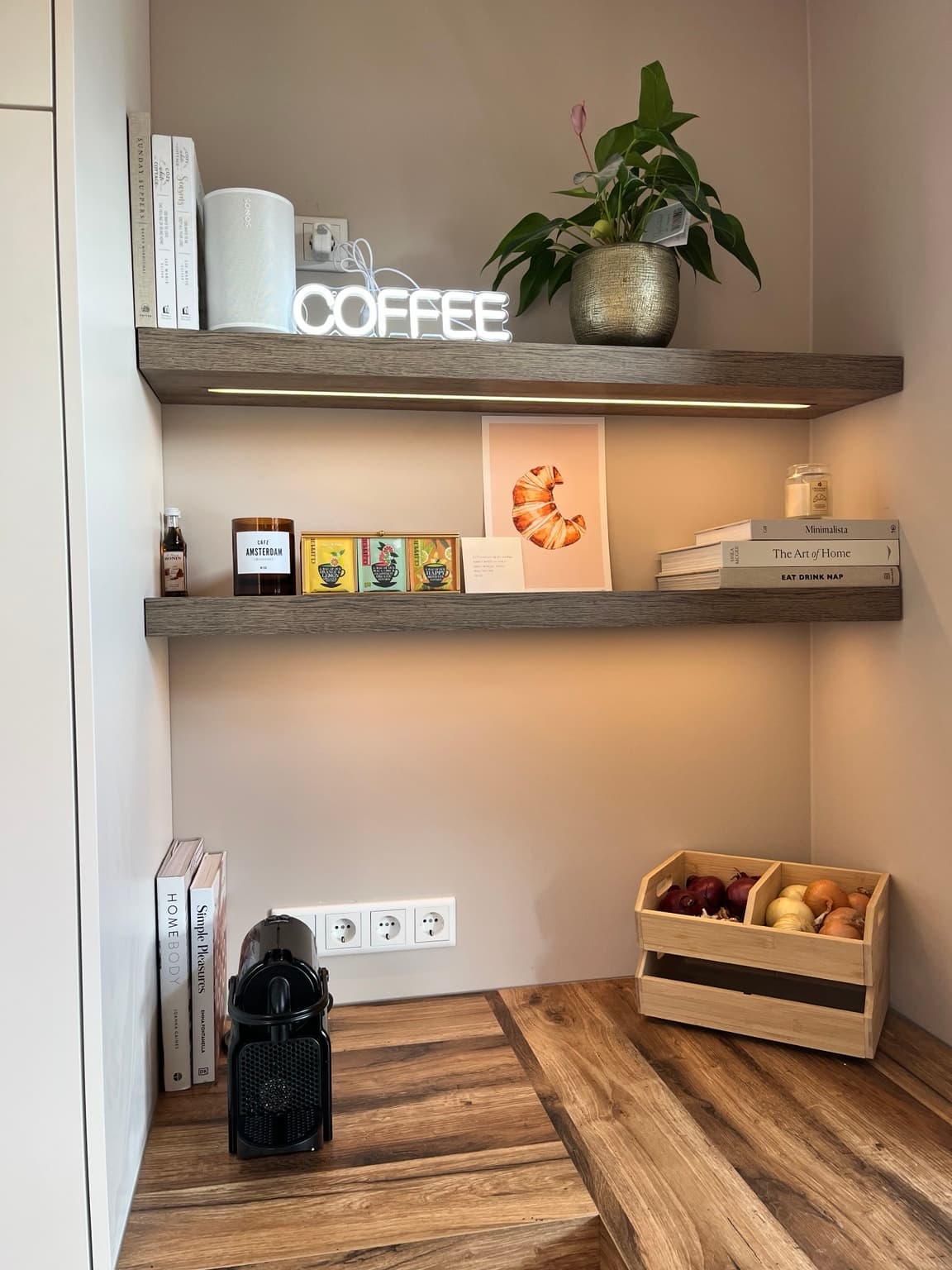
We had to learn how the kitchen worked in practice. Where did we naturally prepare food? Which route became annoying? What needed to remain within reach? Where did coffee belong so the morning ritual felt easy rather than staged?
Our coffee corner became one of those small anchors. It mattered because we used it, not because a styling guide had announced that every respectable kitchen required a dedicated caffeine vignette.
This is one of the gifts hidden inside the unfinished period: observation.
Before ordering another storage solution, notice where objects naturally land. Before filling an empty wall, see how the room feels at different times of day. Before buying the chair you assume the bedroom needs, notice whether anyone would actually sit there.
An empty area may be unfinished. It may also be gathering evidence.
The First Night Changed the Meaning of the House
The most important moment did not happen when the painter packed away his final brush or when the last major piece of furniture arrived.
It was the first night we stayed after handing over the keys to our previous house.
Until then, the move still contained a kind of reverse gear. We were working at the new house, transporting things, making decisions and travelling between two versions of life.
Handing over the old keys removed that possibility.
That first night felt enormously significant. The house was not finished. It did not need to be. We were no longer visiting a project.
We lived there.
The distinction was emotional rather than visual, but it changed everything.

Privacy Arrived in Stages
Our shutters were installed during the first week, which meant we had real privacy long before a single curtain was hung.
Curtains arrived later, in stages, room by room.
It sounds like a small detail. It did not feel like one. Curtains were the moment the house felt emotionally finished in a way plastering and painting never quite managed - the difference between a house that works and a house that feels entirely, privately yours.
Ready to live in and completely finished are not the same milestone. Our shutters proved the first. Our curtains, much later, proved the second.
A Home Can Wait Well
More than a year later, parts of our home are still becoming.
The garden is not completely finished. The bedroom needs more decoration. Several walls are waiting for art. A beautiful lamp intended for the attic has still not been hung because the height makes it a job for the appropriate professional rather than a casual Sunday experiment.
None of those things now makes the house feel like an emergency.
They have moved from “unfinished” to “waiting well”.
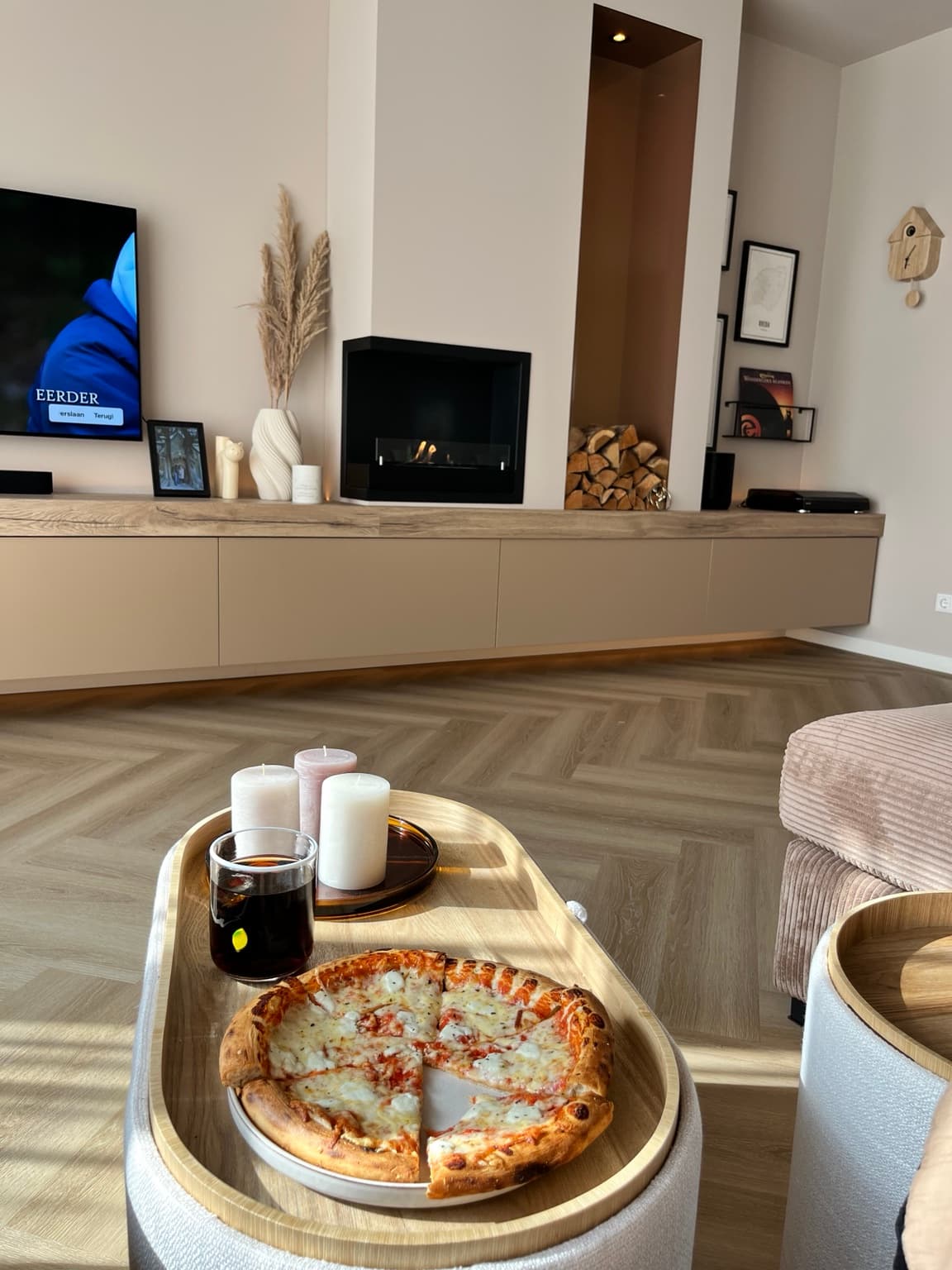
There is a plan, an intention or simply permission to decide later. Daily life works. The living room feels like us. The coffee corner is used. The remaining gaps no longer shout simply because they exist.
Slow decorating is not neglect. It is allowing use, budget, safety, timing and genuine preference to have a voice.
A Home That Feels Considered explores the same principle beyond the moving period, linked below: temporary emptiness is often preferable to permanent compromise.
One Useful Thing to Do Now
Choose one small place to protect from the project.
It might be one end of the sofa, a bedside table, the coffee corner or a section of the dining table. Clear the tape, tools, post and unresolved decisions from that place. Add only what makes it usable tonight.
Then choose one unfinished thing and give it a next date rather than another evening of background worry.
The whole house does not need to become calm at once.
One place may exhale first.
An article can reassure you that the first weeks are allowed to look and feel unfinished. The larger transition still needs somewhere to hold trades, boxes, temporary solutions, room decisions and the things that can safely wait.
Continue Reading

Written by Esther
Esther is a photographer and storyteller, and the founder of Essy's Essentials - a seasonal home for stories, rituals, recipes and everyday luxuries.
·
More about Esther →