The New Home Edit
How to Make a New Build Feel Warm, Cosy and Like Home
New-build homes can feel clean but impersonal. Here is how we used lighting, colour, materials, curtains and everyday routines to make ours feel warm from the beginning.

“A new-build begins feeling like home when the rooms stop looking like empty architectural volumes and start supporting actual routines.”
The Quickest Answer
If a new-build feels cold, don’t immediately buy more accessories. Start with warm wall colours, layered lighting, natural-looking materials, window treatments, texture and clear zones for the way you live. A new-build begins feeling like home when the rooms stop looking like empty architectural volumes and start supporting actual routines.
New-build homes are very good at giving you smooth walls, straight lines and a clean beginning.
Those are also exactly the things that can make them feel slightly anonymous at first.
Our house was almost completely bare when we received the keys. Apart from the bathroom and toilet, there was very little between us and a lot of fresh plaster.
I never wanted to make the house look artificially old. I wanted it to feel warm. That turned out to be much more about light, colour, materials and everyday life than adding decorative “character” for the sake of it.
Begin With Atmosphere, Not Decoration
Before we had finished every detail, I already had a clear idea of how I wanted the house to feel. Warm. Soft. Considered. Comfortable in the evening.
That gave us a direction for decisions long before I had selected every object.
It is easy to approach a new-build room as sofa, then rug, then table, then accessories. I prefer to start with: how do I want this room to feel at five o’clock on a dark winter afternoon?
That question influences colour, lighting, window treatments and material choices before you start filling shelves.
Choose Wall Colours That Can Carry the Room
Paint is one of the least technologically complicated choices in a new-build. It can also completely change the emotional temperature of it.
I do not think “warm home” means every wall needs to become beige. It means being intentional about undertones and about how colours behave with your actual daylight and artificial light.
For us, warmer colours suit the materials and lighting throughout the house. And I would absolutely include good paint - and a good painter - in the category of daily luxury. You look at those walls every day.
Good Lighting Matters More Than More Things
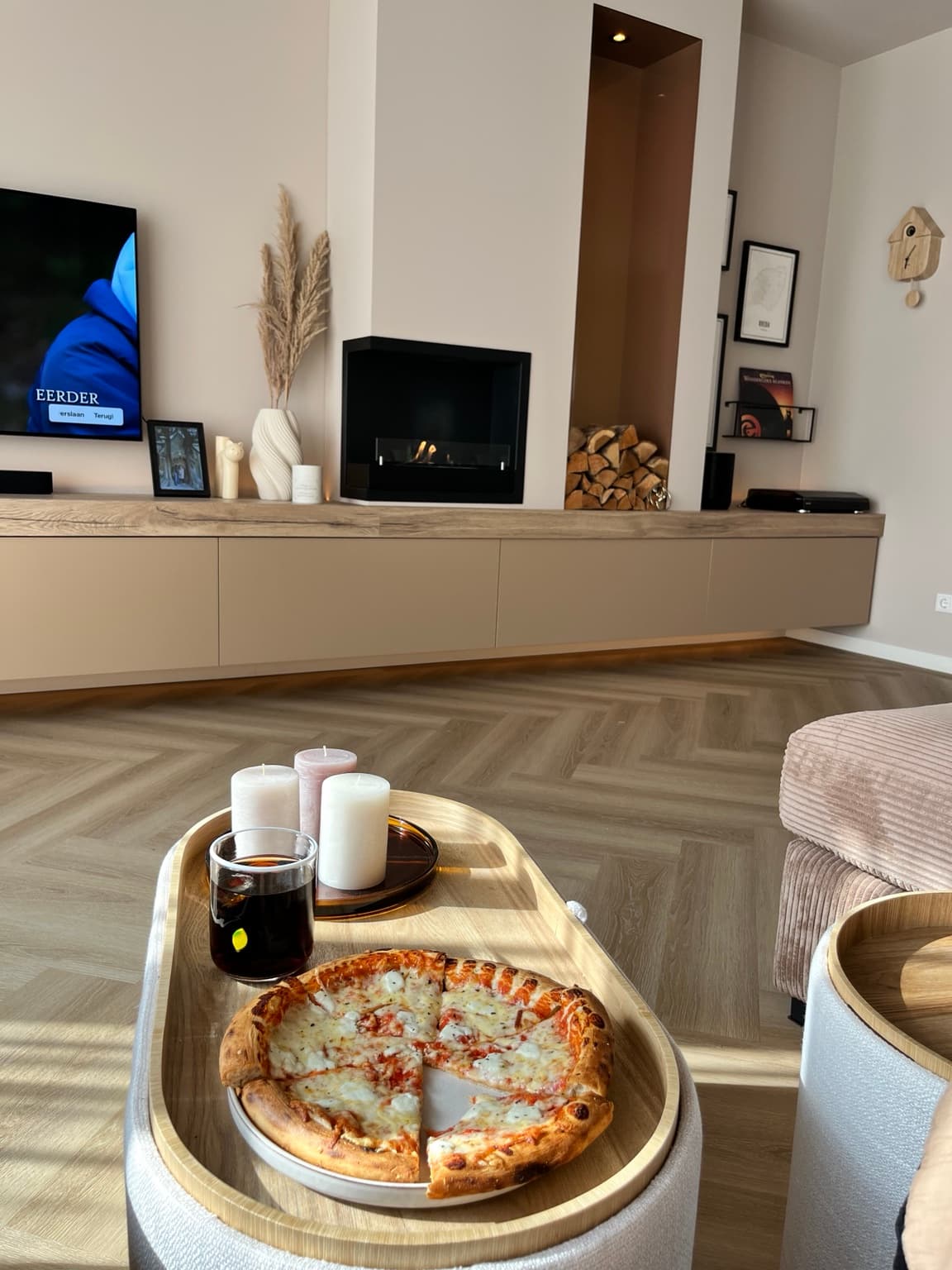
If there is one area where a new-build can quickly feel harsh, it is lighting. One bright ceiling source may technically illuminate a room. It rarely makes me want to spend an evening there.
We planned layers. Functional light where we actually need to see clearly. Ambient light where we want the room to soften. Indirect light in places such as the kitchen. Smart behaviours that allow the same room to change depending on the time and task.
Our house can be very bright when I am cleaning. It does not need to remain that bright when I am sitting down later with a glass of something.
Think in three questions: where do I need to see, where do I want to linger, and what should disappear into a soft glow?
Plan Atmosphere Into the Kitchen Too
Kitchens easily become the brightest, hardest-looking room in a new-build.
Ours includes lighting integrated around the cabinetry and handle areas as well as the more obvious functional lighting. That means the kitchen does not have to disappear into darkness once cooking is finished. It can become part of the evening atmosphere.
Particularly in an open-plan home, the kitchen should have an evening mode too.
Use Materials With Visual Warmth
We repeatedly chose materials that add depth without making the house visually busy. Wood-look surfaces. Warm bronze and brass tones. Smoked glass. Soft upholstery. Warm glossy tile. Natural-looking texture.
Together, they stop a new-build from feeling like a collection of flat surfaces.
Our kitchen worktop is a good example. It is not real wood. That was deliberate. I wanted the substantial warm appearance without signing up for the maintenance of a real timber worktop.
“Warm” does not require sacrificing practicality.
Let Finishes Speak the Same Material Language
One reason I notice the bathroom tile I regret is that it feels disconnected from the warmer material language elsewhere. That experience has made me more convinced that individual finishes should not be chosen in isolation.
A beautiful tile can still be wrong for your house.
When considering a finish, place it next to the flooring, wood tones, metals, paint, neighbouring room finishes and the lighting it will actually sit under.
The question is not only "do I like this?" It is "does this belong here?"
Curtains Can Change the Whole Emotional Temperature
Our curtains were one of the final pieces to arrive. They came in stages. And when they were finally there, the house changed.
The acoustics softened. The windows stopped feeling exposed. The rooms felt dressed without feeling decorated.
That was the moment I remember thinking that the house truly felt like home.
Fortunately, our shutters were installed in the first week, so we had privacy while we waited.
Texture Matters More in a Very Clean Architectural Shell
A new-build gives you a smooth background. That makes tactile contrast particularly effective.
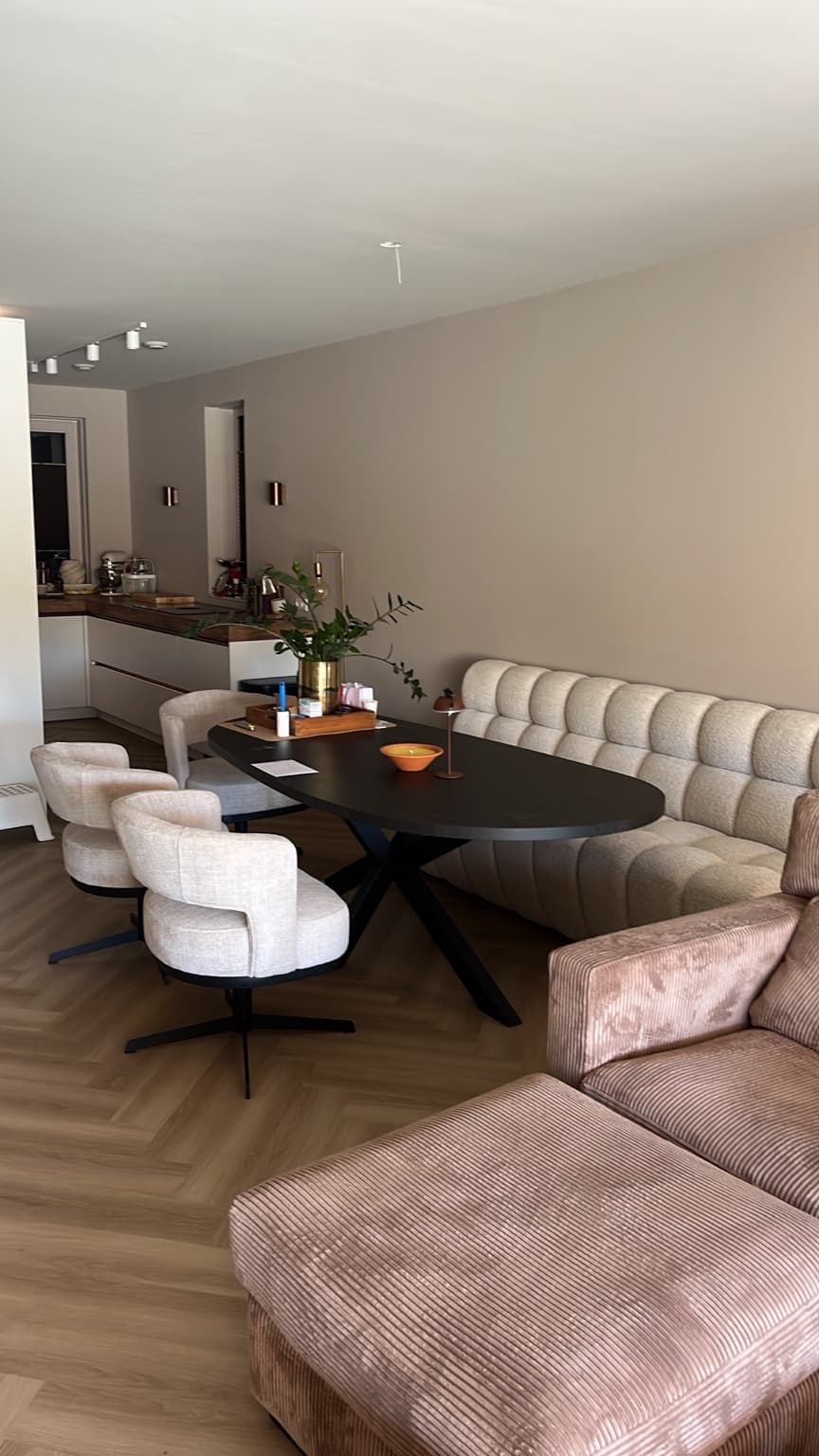
A bouclé sofa. Fabric curtains. A thick rug. Wood grain. Soft bedding. Matt and glossy surfaces used together.
You do not need all of those things in every room. Texture is one of the easiest ways to introduce softness without turning the home into a themed “cosy” interior.
Don’t Try to Fill Every Empty Place Immediately
An empty new-build can create panic. There is suddenly a wall with nothing against it. A corner with no purpose. A shelf with no objects.
That does not mean they all need solving during the first month.
We bought most of our furniture new, and much of it was delayed. For a while we lived with our old sofa while waiting for everything else to arrive. The house still became home.
I would rather leave a space quiet for a while than buy something purely because an empty wall makes me uncomfortable.
Build Small Routines Into the Rooms
A house begins feeling personal when you stop moving through it like a visitor.
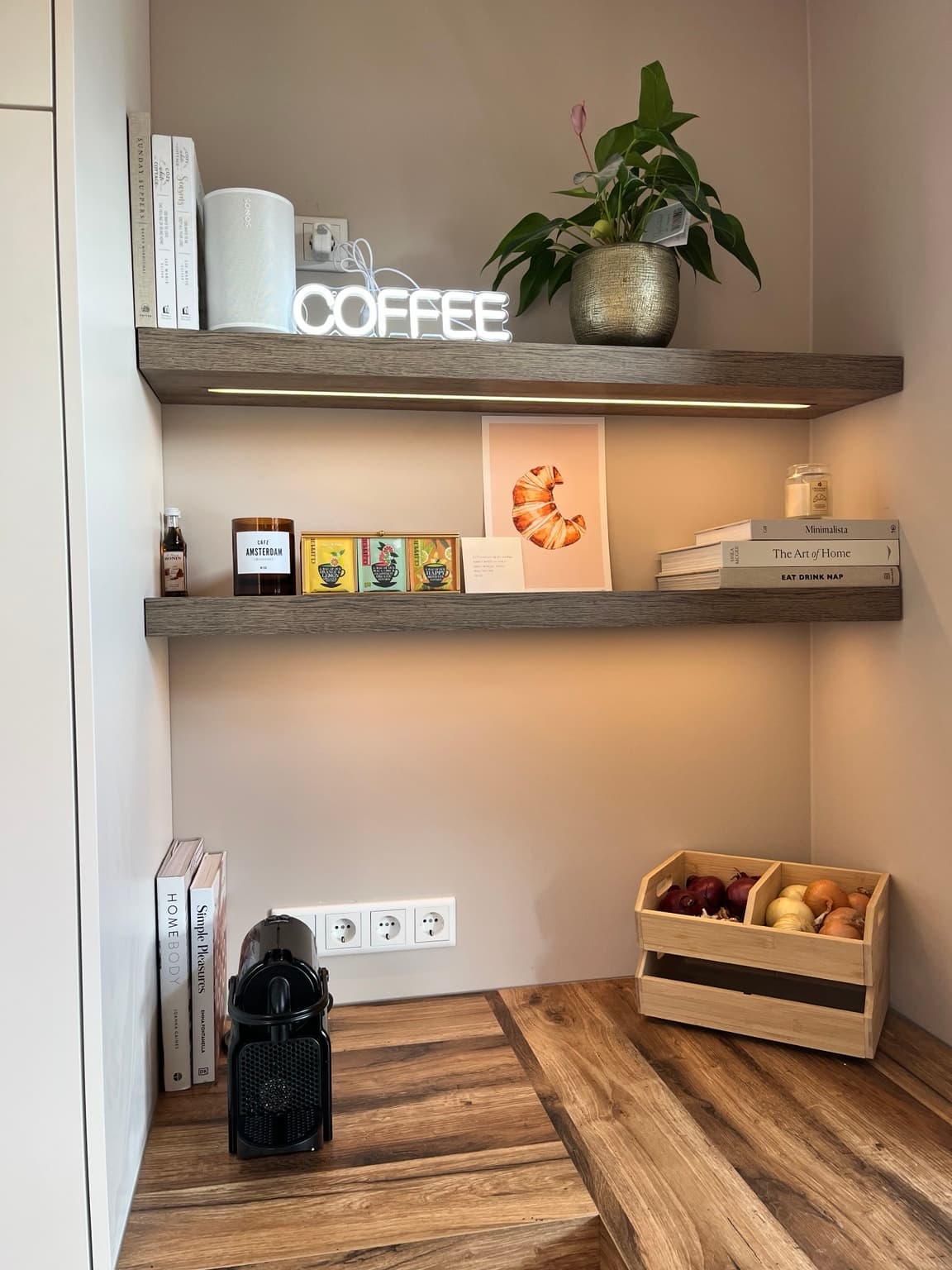
Our coffee corner was planned from the beginning. It was not simply an aesthetic vignette. It became part of a routine.
The same applies to lighting in cupboards, music by room and the places we naturally use at different moments of the day.
Give rooms purpose. The atmosphere then begins accumulating around the way you live.
Use Smart-Home Technology to Soften the House, Not Show It Off
Our smart-home setup is extensive. But I do not want the house to feel technological.
Philips Hue, sensors and automation largely sit behind everyday life. At night, lights are softer. When we clean, they are brighter. Cupboards can illuminate automatically. Music can stay within the room where we want it. And everything can still be overridden with physical controls.
Technology contributes to warmth when it makes the home behave more naturally.
Let Some Things Be Imperfect
A warm home is not necessarily a perfect one.
Our garage floor did not turn out as beautifully as intended. There are tiles I would choose differently. There are still future projects. The carport is not there yet. The garden is not in its final form.
None of that stops the house feeling finished enough to enjoy.
At some point, constantly evaluating a house becomes the thing that prevents you from living in it. Warmth also comes from allowing the home to stop being a project for the evening.
Continue Reading
I do not think a new-build needs fake beams, instant panelling or a collection of decorative objects to prove that it has personality.
It needs decisions that belong to the people living there.
Choose the light you want to come home to. Choose the colour you actually want to live with. Plan the corner where you will make coffee every morning. Leave space for something you have not found yet.
A new-build stops feeling new surprisingly quickly once life starts happening inside it.
Planning the feeling as well as the floor plan? The New Home Studio helps you work through the practical decisions behind a home that fits the way you actually want to live.

Written by Esther
Esther is a photographer and storyteller, and the founder of Essy's Essentials - a seasonal home for stories, rituals, recipes and everyday luxuries.
More about Esther →