Home Styling
A Home That Feels Considered
A thoughtful approach to creating a home that feels warm, personal and quietly put together.
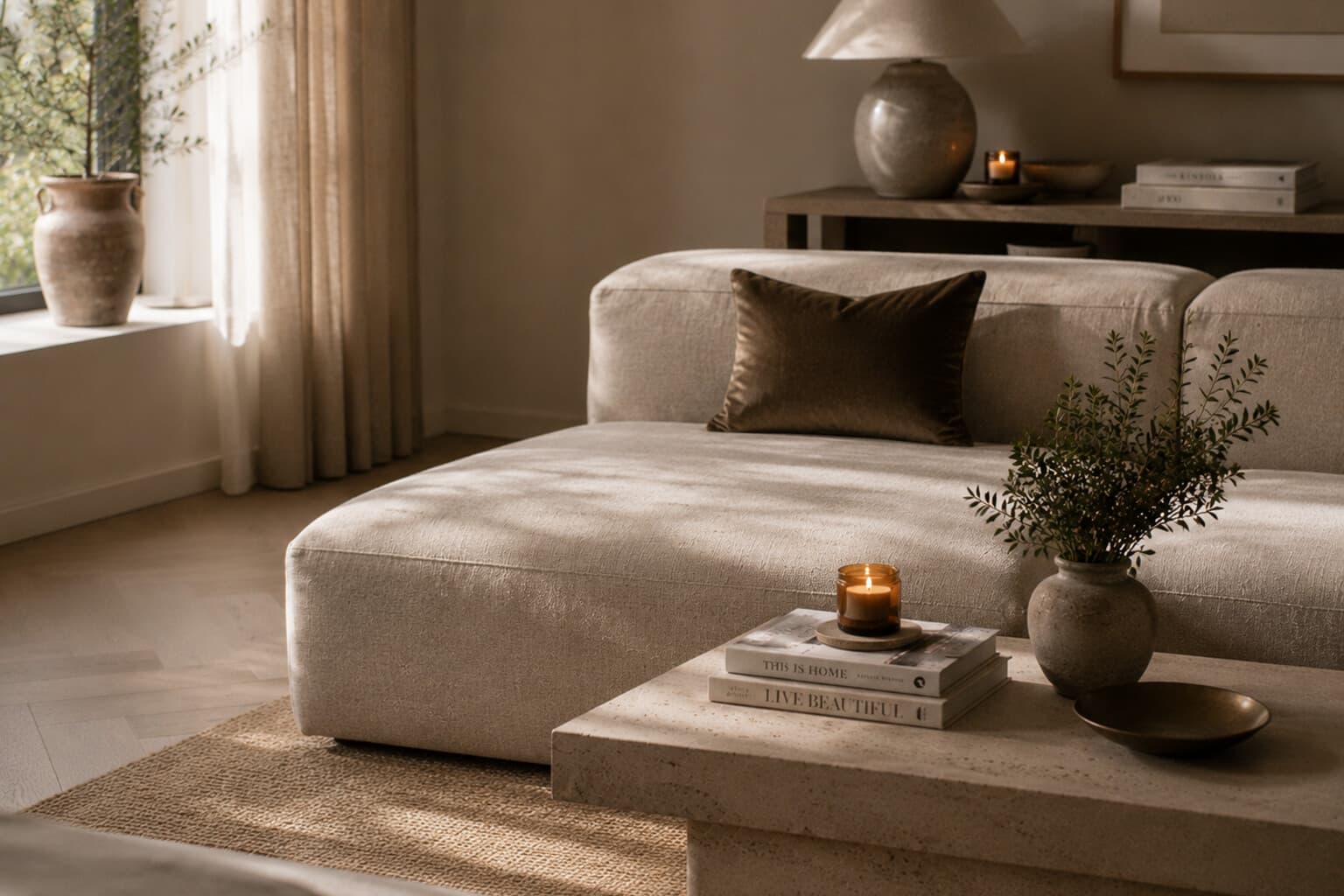
A considered home does not need to be large, newly renovated or filled with expensive objects.
It feels intentional because the rooms support the way life is actually lived. There is somewhere to place a cup. A lamp creates soft light where it is needed. Objects have enough space to be noticed. Colours repeat gently from one room to another. Practical items are easy to reach without dominating the room.
The goal is not to create a perfect interior. It is to create a home that feels calm, coherent and recognisably yours.
Begin With How the Room Needs to Feel
Before choosing furniture, paint or accessories, decide how you want the room to feel. Possible words include warm, restful, intimate, fresh, elegant, grounded, inviting, collected, light or comfortable.
Choose no more than three words. These become a filter for later decisions. For example, a room intended to feel warm, elegant and restful may benefit from soft, layered lighting, natural materials, a restrained colour palette, furniture with rounded or balanced forms, fewer, better-placed decorative objects, and textiles with visible texture.
The feeling should lead the styling. The styling should not be a collection of unrelated purchases.
Style the Life Already Taking Place
Observe how the room is used. Ask: where do people naturally sit? Where do bags and keys usually land? Where is a reading light needed? Which surfaces become cluttered? What is always moved before guests arrive? Which objects are useful but difficult to store? Which part of the room feels ignored?
A home becomes more beautiful when its practical problems are solved gracefully. A tray may gather daily objects. A small table may support a reading chair. A basket may hold blankets. A wall hook may prevent bags from being left on furniture.
Good styling often begins with removing friction.
Create a Coherent Palette
A room does not need to contain only one colour. It needs a clear relationship between the colours that are present. A simple palette may include one main neutral, one supporting neutral, one deeper grounding colour, one warm metallic or natural finish, and one restrained seasonal accent - for example, warm cream, taupe, walnut brown, antique brass and muted olive.
Repeat these tones through different materials rather than matching every item exactly. A taupe wall, stone-coloured linen, smoky glass and warm wood can belong together without being identical.
Use Contrast Carefully
A room made entirely from similar pale tones can feel flat. Contrast creates definition. Possible contrasts include light and dark, smooth and textured, matte and reflective, soft and structured, old and new, simple and decorative.
A dark wooden table may ground pale upholstery. A brass lamp may add warmth to a matte wall. A rough ceramic bowl may balance a polished surface.
The contrast should support the room, not compete for attention.
Leave Breathing Room
Not every surface needs decoration. Not every corner needs furniture. Empty space allows shape, texture and light to become visible.
When a room feels busy, remove before adding. Try taking away one small item from every surface, furniture that blocks movement, decorative objects that repeat the same function, items that belong in another room, and objects retained only because there is nowhere else to put them.
Breathing room creates the impression of confidence. It suggests that each remaining item was chosen rather than merely accommodated.
Repeat Materials
Repetition creates quiet cohesion. A material used once can feel accidental. Used several times, it becomes part of the design language. Possible repeated materials include walnut or dark wood, linen, wool, bouclé, ceramic, smoked glass, brass, bronze, natural stone and blackened metal.
The repetition does not need to be exact. A brass lamp, a small tray and a picture frame can create a subtle connection across the room.
Use Fewer, Larger Statements
Several small decorative items often create more visual noise than one larger piece. Consider replacing many small prints with one substantial artwork, several tiny ornaments with one sculptural object, a collection of small cushions with fewer, generously sized cushions, several unrelated lamps with one confident floor lamp, and a group of small plants with one larger plant.
Larger elements create structure. Smaller details can then be added selectively.
Let the Home Evolve
A considered home usually develops gradually. It contains objects collected over time, pieces connected to travel or family, books that are actually read, art that still feels meaningful, and furniture chosen for the room rather than for a temporary trend.
Do not rush to complete every area. A room can remain simple while waiting for the right object.
Temporary emptiness is preferable to permanent compromise.
Pair It With
- The Essy’s Essentials Home Palette
- The Layered Lighting Guide
- The One-Room Styling Reset
- The Art of a Well-Lived Home
A considered home is not created through constant decoration.
It is created through a series of clear decisions. What supports the room. What deserves to remain. What should be allowed to leave. And what makes everyday life feel just a little more beautiful.

Written by Esther
Esther is a photographer and storyteller, and the founder of Essy's Essentials - a seasonal home for stories, rituals, recipes and everyday luxuries.
More about Esther →