Home Styling
The Layered Lighting Guide
How to use lamps, soft pools of light and warm illumination to change the atmosphere of a room.
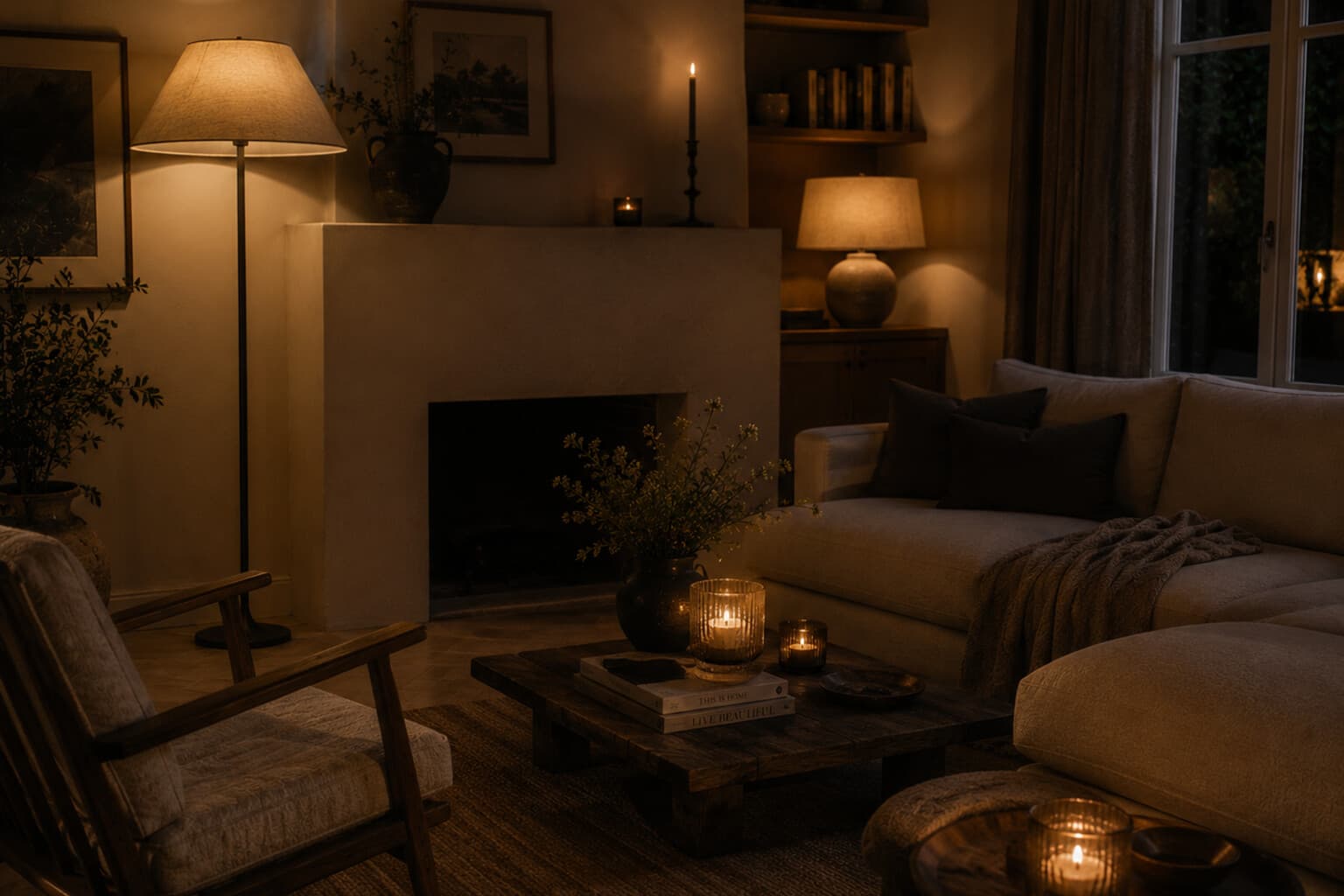
Lighting is one of the most influential elements in a home.
It affects colour, texture, mood and the way a room is used. A beautifully furnished room can still feel uncomfortable when the light is too bright, too cold or concentrated in only one place.
Layered lighting means using several light sources for different purposes. Instead of expecting one ceiling light to serve the entire room, combine practical and atmospheric illumination.
Layer 1: General Light
General light makes the room safe and functional. It may come from ceiling lights, recessed lighting, large pendants or wall-mounted fixtures.
General lighting does not need to be the brightest light in the room. It should provide an even foundation. Use dimmers where possible so the room can move from practical daytime use to softer evening light.
Layer 2: Task Light
Task lighting supports a specific activity - a reading lamp beside a chair, a desk lamp, lighting above a kitchen worktop, a bedside lamp, or a light near a mirror.
Task lighting should be positioned according to the activity rather than simply for symmetry.
Layer 3: Accent Light
Accent lighting draws attention to artwork, shelving, architectural detail, plants, textured walls or a cabinet or collection.
Use it selectively. Too many highlighted areas weaken the effect.
Layer 4: Ambient Light
Ambient lighting creates atmosphere. It may come from table lamps, floor lamps, small shaded lamps, candles, portable lamps or concealed lighting.
Ambient light should create gentle pools rather than illuminate every surface equally.
Choose Warm Light
For living rooms, bedrooms and dining spaces, warm light generally creates a softer and more intimate atmosphere than cool light. Avoid mixing visibly different light temperatures in the same room unless the contrast is intentional.
Check how light affects wall colour, wood tones, metal finishes, textiles and artwork. A paint colour that appears warm in daylight may look grey or green under an unsuitable bulb.
Place Light at Different Heights
A room feels flatter when all light comes from the ceiling. Create variation through low table lamps, mid-height lamps, floor lamps, wall lights and candlelight.
Lighting at different levels makes the room feel more dimensional.
Create Pools of Light
Instead of illuminating the entire room at one intensity, place light where activity and interest occur - a lamp beside the sofa, a smaller lamp on a console, a shaded light near books, a candle on the dining table, a portable lamp in a darker corner.
This encourages the room to feel intimate rather than exposed.
Use Lampshades as Part of the Styling
Lampshades affect both the appearance and the quality of light. Suitable materials include linen, pleated fabric, paper, glass and textured natural fibres.
A light shade usually spreads more illumination. A darker or denser shade creates a more focused pool. Consider the proportion of the shade in relation to the lamp base and surrounding furniture.
Avoid Under-Scaled Lamps
Small lamps can disappear on a large sideboard or beside substantial furniture. Choose a lamp with enough height and volume to relate to the surface.
As a guide, a table lamp should often feel like part of the furniture arrangement rather than a small accessory placed on top.
Use Candlelight Carefully
Candles create movement and warmth that electric lighting cannot fully reproduce. Use them on dining tables, mantels, coffee tables, bathroom shelves and outdoor tables.
Always place candles safely, away from flammable materials, children and pets. Use stable holders and never leave open flames unattended.
Layered-Lighting Checklist
Before calling the room finished, confirm: general light is present, task lighting is positioned where needed, ambient lamps are added, light sources are placed at different heights, bulb temperatures are coordinated, dimmers are used where possible, dark corners have been reviewed, lamps are correctly scaled, and evening lighting has been tested.
A Room-by-Room Approach
Living Room
- One floor lamp.
- One or two table lamps.
- Optional accent lighting.
- Dimmable general light.
Bedroom
- Soft bedside lamps.
- A practical wardrobe or dressing light.
- Minimal general light.
- Optional small ambient lamp.
Dining Area
- A pendant or central fixture.
- Dimmable light.
- Candles or small table lamps nearby.
Kitchen
- Clear task lighting.
- General light.
- A warmer secondary light for evenings.
Hallway
- Enough general light for safety.
- One softer lamp where space allows.
- Wall lights or a console lamp.
Pair It With
- A Home That Feels Considered
- How to Style a Console Table
- The Coffee-Table Edit
- The Evening Lighting Ritual
A room changes when the lighting changes.
Layered light makes a home feel warmer, more dimensional and more responsive to the rhythm of the day. Often, the most effective styling improvement is not another object. It is a better lamp.

Written by Esther
Esther is a photographer and storyteller, and the founder of Essy's Essentials - a seasonal home for stories, rituals, recipes and everyday luxuries.
More about Esther →