Home & Living
How to Create a Coffee Corner You’ll Love Using
My own kitchen corner, built around coffee, warm light, music and the things I enjoy looking at.
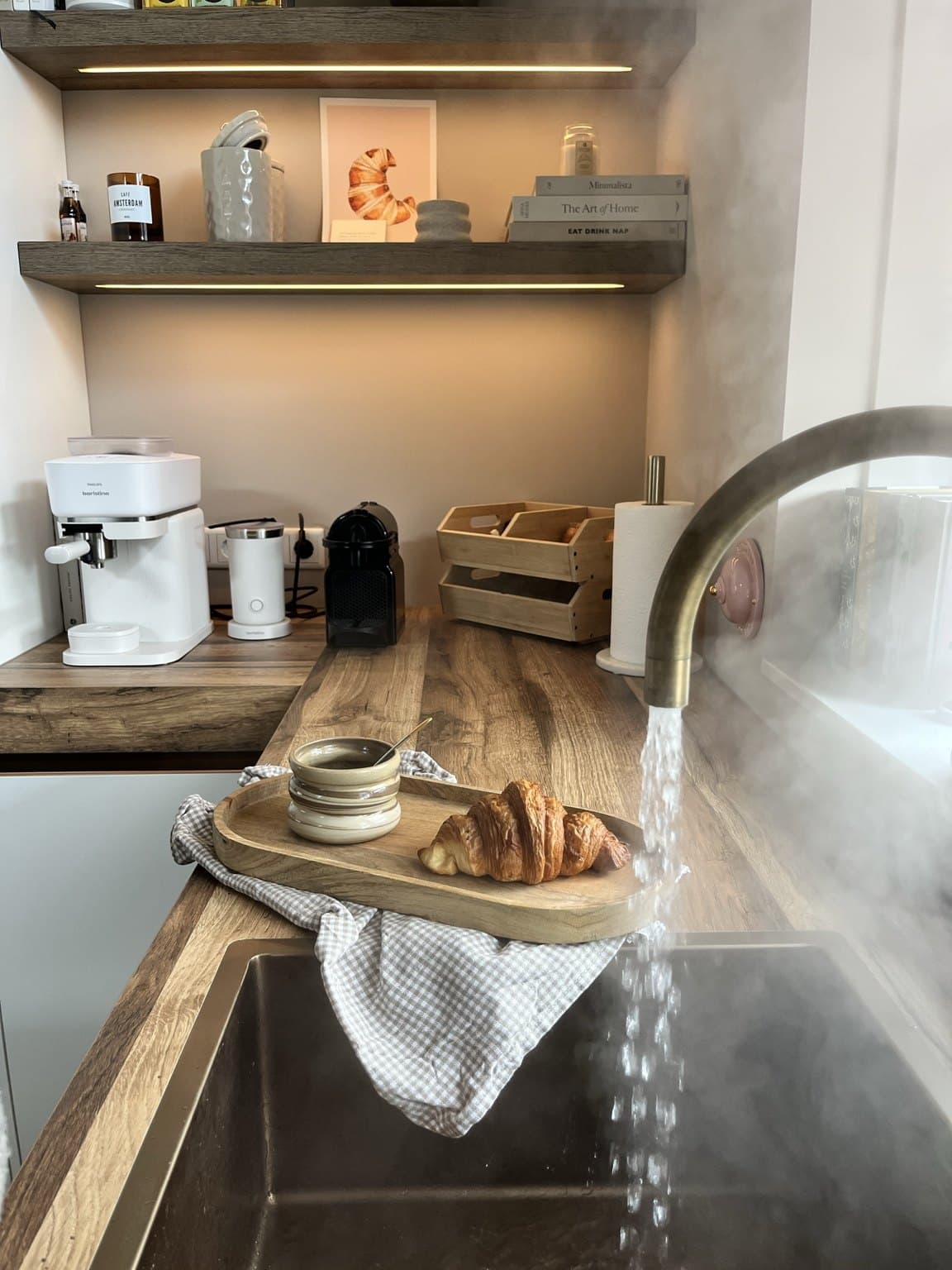
My coffee corner at home, planned as part of the kitchen.
A coffee corner works best when it gives you room to make the coffee you actually drink, keeps the everyday things easy to reach and adds a few details that make you happy to be there. A small piece of kitchen worktop can be enough.
Mine began while we were planning the kitchen. I knew I wanted this little corner, so it was one of the early choices that helped shape the room. The light, the shelves and the space for making coffee were considered together.
Now it is one of the places in the house I am happiest with.
I have built it in layers: useful lighting, music, coffee equipment, books, a little art and something green. Each part has a reason to be there, although liking the look of something is a perfectly good reason too.
Begin with the coffee you actually make
My favourite way to make coffee is with the Chemex. I love the glass and being able to watch the coffee slowly drip through. That part is wonderfully calming. The making belongs to the pleasure of drinking it.
In everyday life, though, that usually means the weekend.
I also love Nespresso. When I am hurrying, or simply want a coffee without making much of the process, it is the one I reach for. I enjoy both, and my corner makes room for that.
I have a moka pot as well, which I often use outside over an open fire. It belongs to another kind of coffee moment.
Before choosing what to put in your own corner, think about an ordinary weekday and a weekend morning. What do you use most? What do you enjoy when there is more time? Arrange the space around those answers.
One machine, one favourite cup and a clear surface can be a lovely beginning.
Give the corner a proper place in the kitchen
Because I thought about mine early, the kitchen could be planned with the coffee corner in mind. That helped the space feel like it belonged there.
If you are planning a new kitchen, picture yourself making a cup before deciding where everything goes. Consider the power supply, the worktop, the space above the machine and how easily you can reach water and put used cups away.
In an existing kitchen, try the location before adding shelves or buying storage. Make coffee there for a few days. Notice whether filling the machine is awkward, whether the cupboard above gets in the way or whether the corner keeps collecting things you need for cooking.
Leave enough room to set down a cup, handle the equipment and wipe the surface. Check the clearances and ventilation your appliance needs, especially below shelves or cupboards.
Plan the Life in the Room Before You Plan the Electrics
Start the layers with light
Good lighting was part of the foundation for mine. The warm light around the shelves brings the wood, cups and personal details together, while making the corner feel inviting.
For your own space, look at both the work surface and the shelves. You need to see what you are doing when you make coffee, and you may want a softer glow when the kitchen becomes an evening room.
An existing under-cabinet light may already give you the useful part. A nearby lamp or a suitable shelf light can add atmosphere where the space allows it.
Try the arrangement after dark as well as in daylight. Make a cup there and see where your hands cast shadows. The nicest-looking light still needs to work when you use the corner.
Let music be part of the room
There is a Sonos speaker connected to my coffee corner. I often play Italian or classical music while I am cooking, so the little space belongs to the wider life of the kitchen too.
That is one of the layers I enjoy most. The room has a sound as well as a look.
You could use a speaker you already own elsewhere in the room. Keep the worktop space for the things that need to be there, and choose music you actually enjoy hearing. It can be a familiar album or a playlist you return to while preparing dinner.
The aim is a room you like spending time in.
Put your personality on the shelves
I love coffee-table books and have rather a lot of them. Some live here because I enjoy their covers, their proportions and the way they sit among the other things.
I also bought a croissant print that now belongs in the corner. It makes me happy to look at it, which is exactly what I want from a little piece of art at home.
For your own shelves, choose a few things with that same personal connection. A book you love, a print you found, a ceramic jug or a cup you keep reaching for will give the space character.
Vary the heights and leave room between groups. A small stack of books can sit beside a taller object, with one picture behind them. Then look at the arrangement from the place where you normally stand.
Keep the objects you handle every day easy to reach. The shelves can carry some of the styling while the worktop remains available for making coffee.
Choose greenery for the spot it will live in
I like having a little green in the corner. My plant sits quite high, so it needs to cope with my occasionally forgetting to water it.
An inconveniently placed plant is a useful reminder to be honest about your habits.
Choose for the light available and for the care you are likely to give. If the shelf is high, make sure you can take the plant down comfortably to check and water it. Let the pot sit somewhere stable and away from the equipment.
You do not need to fill every shelf. One plant can bring the softness you want.
Keep the daily things simple
Styling is more enjoyable when the corner still works on a busy morning.
Give the coffee you use most a clear home. Keep your everyday cups accessible, and put the things needed only occasionally wherever they fit best. There should be somewhere convenient for used capsules or filters, even if that place is outside the corner itself.
A useful check is to make a cup and clear up afterwards. If that involves repeatedly shifting decorative objects, move a few of them.
Start with what you already own, then add only what helps the routine or gives you lasting pleasure.
Take the coffee somewhere you want to stay
My coffee corner is where I make it. Where I drink it depends on the day.
I love curling up on the sofa under a blanket. I also like sitting on our white bouclé dining bench with my cup at the table. In summer, I take it outside to the big table or sit under the covered patio.
Those places are part of the pleasure too: watching the Chemex drip through, then choosing where to settle with the coffee.
A small coffee-corner checklist
Before adding anything else, check that you have the following. If you have a small kitchen, begin with the first four; you can build the other layers gradually.
- A usable surface with space to make a cup.
- A sensible place for your equipment and its power supply.
- Light that works on the counter.
- Everyday coffee and cups within easy reach.
- A few personal details you enjoy looking at.
- Space to wipe down and put things away.
Stay a little longer
A few questions
How do you make a coffee corner in a small kitchen?
Choose one section of worktop, keep the equipment you use most there and use nearby cupboard space for the rest. Leave enough working room around the machine. Add decoration only when the coffee-making space is comfortable to use.
What should you put in a coffee corner?
Start with your brewing equipment, your usual coffee and cups, useful lighting and a way to clear up. Then consider a print, a book or a plant if the space allows. The right combination depends on how you make coffee.
Do you need a separate coffee bar?
A section of your existing kitchen can work very well. A separate cabinet or trolley is an option when it offers a suitable, stable surface and fits the way you use the room.
How can a coffee corner feel cosy without becoming cluttered?
Keep the work surface useful, add warm light and choose a few personal details above or beside the equipment. Look for places to store the things you use less often.

Written by Esther
Esther is a photographer and storyteller, and the founder of Essy's Essentials - a seasonal home for stories, rituals, recipes and everyday luxuries.
More about Esther →