Home Styling
The Coffee-Table Edit
A simple styling method for creating a coffee table that remains beautiful, personal and practical.
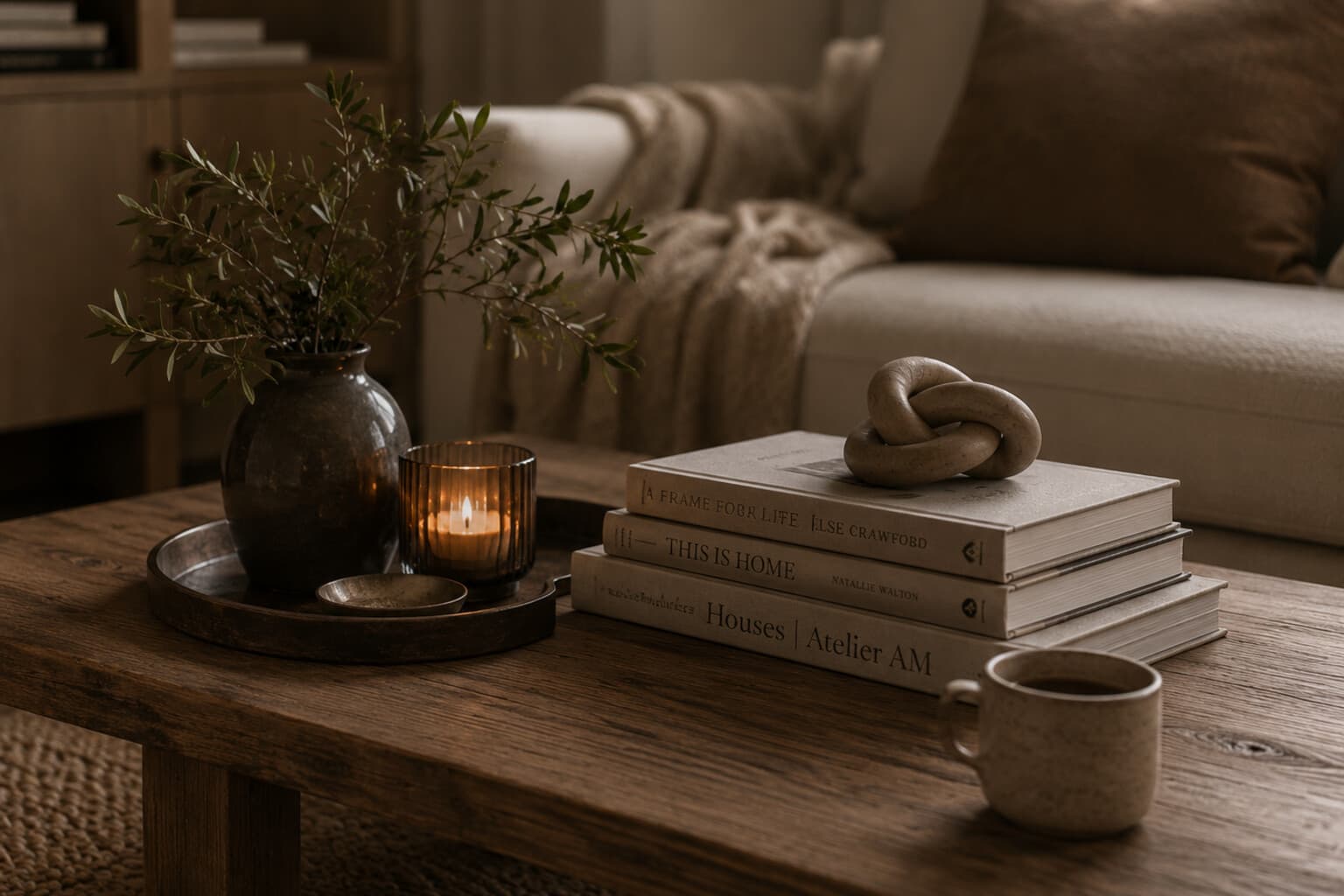
The coffee table sits at the centre of daily life.
It holds drinks, books, remote controls, candles, snacks and the objects that move through the room. Styling it successfully requires restraint.
The table should feel considered without becoming too precious to use.
Begin With a Tray
A tray creates a visual boundary around smaller objects - use it for a candle, matches, a small vase, remote controls or a decorative object.
The tray does not need to hold everything. Its purpose is to organise the smallest items and make them easy to move when the table is needed.
Add One Stack of Books
Choose books that reflect genuine interests - photography, interiors, travel, food, art, fashion or gardens.
Use one to three books depending on their thickness and the size of the table. The stack should support the composition rather than become an unread monument.
Add One Sculptural Object
Place a small object on or near the books - a ceramic bowl, a stone object, a paperweight, a small box, a magnifying glass or a sculptural candle.
Choose something with a clear shape.
Add Something Living
Use seasonal flowers, one branch, a small plant, a bowl of fruit or natural seed heads.
The element should suit the scale of the table. Large arrangements may obstruct conversation or the view across the room.
Include Atmosphere
A candle can add scent, light and a sense of ritual. Choose a vessel that suits the room.
Avoid using too many scented products in one space. A single, well-chosen candle is usually enough.
Protect Daily Function
Leave space for a cup or glass, a book being read, a plate, or a laptop where necessary.
Do not place fragile objects in the areas most often used. A coffee table should support the room’s habits.
The Editing Rule
When the table feels crowded, remove one book, one small object, one scented item, one unrelated colour and one duplicate function.
The coffee table should usually contain fewer elements than expected.
Coffee-Table Checklist
Before calling it finished, confirm: a tray is added where useful, books are selected intentionally, one sculptural object is included, a natural element is added, practical space is preserved, objects are visible from seating height, the composition is easy to move, and small clutter is contained.
Styling by Table Shape
Rectangular Table
- Create two or three zones - for example, a tray, a book stack, an open area.
Round Table
- Use one central or slightly off-centre grouping.
- Keep the composition visible from all sides.
Square Table
- Divide the surface into four loose quadrants, leaving at least one open.
Nesting Tables
- Style only one or two surfaces.
- Leave the smallest table free for practical use.
Ottoman
- Use a sturdy tray to create a stable surface.
- Keep the arrangement low and easy to move.
Pair It With
The coffee table is most successful when it feels both styled and lived in.
It should offer something beautiful to notice while leaving enough room for everyday life to continue.

Written by Esther
Esther is a photographer and storyteller, and the founder of Essy's Essentials - a seasonal home for stories, rituals, recipes and everyday luxuries.
More about Esther →