The Money Edit
I Never Wanted Less. I Just Wanted Better.
A personal guide to buying fewer disposable things, choosing beautiful purchases with intention and keeping the luxuries that genuinely make life better.
Spending, Intentionally · 10 min read
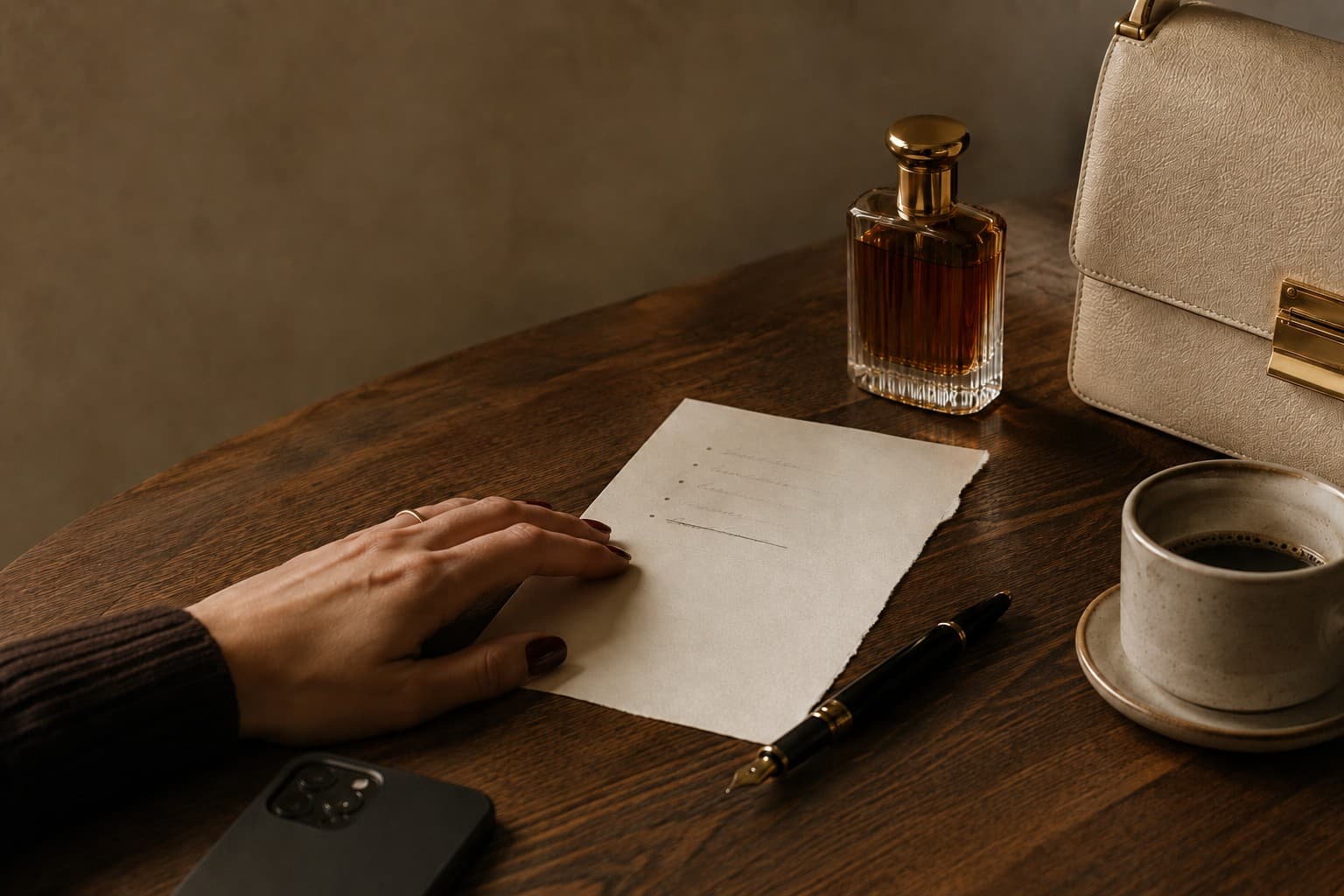
“A 70% discount on something I did not want was still 30% too expensive.”
I should probably begin with a confession that is not really a confession: I like expensive things.
I buy niche perfume. I own shoes that cost far too much. Every now and then, I fall in love with a handbag that requires what can only be described as a small financial meeting with myself. I have my nails done every few weeks. I visit a beautician. I am not interested in pretending that the secret to a beautifully organised financial life is never wanting anything beautiful again.
I never wanted a life with less beauty in it. I simply stopped mistaking more for better.
Somewhere between the expensive perfume and the manicure, I stopped wanting parcels filled with things I barely remembered ordering. I became less interested in the twenty almost-right items and much more interested in the one thing that still felt right after the discount code had expired.
That change did not happen because I suddenly developed flawless financial discipline. Tragically, I remain a woman who can be emotionally moved by a very good handbag.
It happened because my life changed, my income changed and - eventually - the way I wanted to spend changed too.
I have not always been able to choose the expensive version
My salary grew as my career did: slowly, through new roles, more responsibility and the occasional workday that made a handbag feel less like an indulgence and more like emotional compensation.
I can afford more now than I could fifteen years ago. That matters, and pretending otherwise would make this entire conversation rather dishonest.
There were years when "buy one beautiful investment piece" would not have been useful advice to me. Sometimes you need a coat, a pair of work shoes or something appropriate for an occasion now. You cannot always wait six months, conduct fabric research and emerge with an heirloom.
Buying what you can afford because you need it is not a failure of taste, discipline or character.
But there is an enormous difference between buying something affordable because it solves a real need and buying something you never wanted because an app told you it was practically free.
I know that difference because I have done both.
When cheap shopping became entertainment
When impossibly cheap online shopping first became popular, I was susceptible to it too. Everything cost almost nothing. There was always another discount, another voucher and another reason to add one more item before checking out.
Over time, shopping became less like choosing something and more like playing a game designed by somebody who had studied exactly how long I could resist a flashing wheel.
Congratulations, you have unlocked 17% off an item you did not know existed seven minutes ago.
Temu and SHEIN did not invent every part of this, but they perfected a version of online shopping I no longer want in my life: endless scrolling, aggressive urgency, prices low enough to make hesitation feel ridiculous and little games that turn leaving the app into a failure to claim a reward.
The fact that these techniques work is not proof that shoppers are foolish. European consumer authorities use the term dark patterns for interfaces that steer people towards decisions they might not otherwise make, including fake countdown timers, visual pressure and hidden information. In 2025, the EU's consumer-protection network also raised concerns with SHEIN about practices including fake discounts and pressure selling. The machinery is not imaginary; it is designed to be persuasive.
And I was persuadable.
What changed was not that I became morally better than the woman filling her basket. I have been that woman. I simply became more honest about how rarely the basket made me as happy as the website promised it would.
The problem was never that I liked beautiful things
Low-buy content can become joyless very quickly. Suddenly coffee outside the house is a moral crisis, nobody is allowed to have their nails done and an expensive perfume is treated like evidence in a financial court case.
That version was never going to work for me.
I do not want a life stripped of every treat, ritual and unnecessary beautiful thing. Those things are part of my life. A manicure is not an emergency, but it does have a suspiciously permanent place in my monthly planning. Niche perfume is not a practical household requirement, although I remain open to reviewing the evidence.
My low-buy approach is not about proving how little I can live with. It is about giving the things I genuinely love enough space to be noticed.
An expensive purchase can still be a bad purchase. A designer name does not guarantee quality, ethics or happiness. But one carefully chosen fragrance that I wear for years gives me more than five cheaper bottles bought because they looked convincing online.
One pair of shoes I still feel wonderful in is worth more to me than a row of synthetic almost-versions that never fit properly and feel disposable after a few wears.
The price is not the philosophy. The intention is.
What low-buy means in my actual life
I do not follow a complicated set of restrictions. If a system needs its own laminated operating manual, there is a fair chance I will spend more time organising it than living by it.
These are the principles I return to instead.
I stay away from shopping that feels like a game
If a website offers coins, wheels, countdowns, daily rewards and seventeen increasingly dramatic warnings that I am about to lose my discount, I leave.
I do not need shopping to behave like a casino with polyester blouses.
I let a wish survive ordinary life
I keep things on a wishlist instead of moving them directly into a basket. The exact waiting period is less important than allowing the first rush to pass.
Do I still want it after thirty days? Can I picture it in my real life rather than the imaginary life produced by the product photography? Would I use it on an ordinary Tuesday?
This is my Ordinary Tuesday Test. Beautiful things do not need to be practical, but they should have a place in the life I actually live.
I do not buy substitutes for the thing I really want
Three cheaper handbags do not necessarily save money when I continue thinking about the original one. Sometimes the sensible answer is to decide the original is not worth it and move on. Sometimes it is to save for it. The expensive option is not automatically correct - but buying a procession of understudies rarely solves the problem.
I plan the luxuries I know I value
My nail appointments and beauty treatments are not surprise expenses. They are choices I can see coming, so they belong in my planning.
The same applies to perfume, travel, shoes and the occasional handbag-related board meeting. If something matters enough to keep, it matters enough to make room for honestly.
That is where savings pots and sinking funds become far more appealing to me than a restrictive budget. A named pot turns "I hope I can afford it" into a calm decision about timing and priority.
I separate replacing from collecting
Replacing something worn out is different from buying the fifteenth variation because this one is technically called oat rather than beige.
I am not suggesting I have never been seduced by the distinction. I am merely suggesting that the distinction has excellent marketing.
I leave without proving anything
A filled basket is not a contract. Free delivery does not make the contents free. Missing a sale is not losing money.
Sometimes the most financially satisfying thing I do is close the tab and discover, several hours later, that I cannot remember what was in it.
What I still buy
I still buy expensive shoes.
I still buy perfume that requires a moment of silence at the till.
I may still fall in love with a handbag that was not included in any sensible five-year plan. I keep my beauty appointments because they make me feel cared for and polished, and because I have chosen to give them room in my budget.
Low-buy has not made me less interested in beautiful things. It has made me far less interested in everything else.
That, for me, is the difference between restriction and editing. Restriction asks how little I can allow myself. Editing asks what deserves to remain.
I am not always perfect at it. Occasionally, adulthood is simply discovering that "free shipping" has personally financed quite a lot of clutter. But I am better at recognising when a desire is mine and when it arrived via an algorithm, wearing a countdown clock and shouting that stock is running out.
And when I do choose the beautiful thing, I enjoy it more now. Not because it was expensive, but because it was chosen.
A Low-Buy Month, My Way
If you want to know how to start a low-buy month, I would not begin by banning everything enjoyable. I would begin by deciding what you personally want less of. For one month:
- Choose two or three categories where automatic spending tends to happen - perhaps clothes, beauty, homeware or online impulse buys.
- Keep essentials, replacements and previously planned appointments separate from impulse shopping.
- Put every non-essential item on a thirty-day wishlist before buying it.
- Delete or mute shopping apps that use constant notifications, rewards or urgency to pull you back.
- Unsubscribe from promotional emails that make every Tuesday feel like the final day of an international retail emergency.
- Choose one amount or one beautiful purchase you are comfortable making during the month. Zero is allowed; one is allowed too.
- Move some of the money you did not spend towards something you actually care about: your financial buffer, a weekend away, a future purchase or investing - if that suits your situation and you understand the risks.
- At the end of the month, review what you missed, what you forgot and what you still genuinely want.
Frequently Asked Questions
What is a low-buy month?
A low-buy month is a limited period in which you reduce non-essential purchases according to rules that fit your own life. Unlike a strict no-buy challenge, it can still include planned treats, replacements and services while helping you notice impulse spending.
How do I start a low-buy month?
Choose the categories in which you tend to shop automatically, place non-essential purchases on a wishlist, reduce promotional notifications and decide in advance which planned luxuries remain in your budget. Review the results after one month rather than aiming for perfection.
Is low-buy the same as no-buy?
No. A no-buy challenge normally pauses most discretionary purchases. A low-buy approach reduces them and introduces clearer rules, leaving room for selected purchases and experiences.
Can I have beauty appointments during a low-buy month?
Yes. Your rules can retain appointments or services that you deliberately value and can afford. The purpose is to reduce automatic spending, not to copy somebody else's list of forbidden purchases.
Does buying fewer things mean buying expensive things?
No. More expensive does not automatically mean better, more durable or more responsible. Low-buy is about choosing deliberately within your own budget rather than buying because of manufactured urgency or volume.
“I never wanted less beauty. I wanted less noise around the things I genuinely love.”
The Ordinary Tuesday Test
Do I still want it after thirty days? Can I picture it in my real life, not the product photography? Would I use it on an ordinary Tuesday?
A Small but Important Disclaimer
This article shares personal experience and general information. It is not personal financial advice, and what is affordable, useful or worth buying will look different for everyone.
Sources and Further Reading
- European Commission — Sweeps of online shops, including dark patterns and price-marketing practices
- European Commission — Coordinated consumer-protection action concerning SHEIN
- Your Europe — Dark design patterns and unfair commercial practices
Continue The Money Edit
Written by Esther
Esther is the founder of Essy’s Essentials. She had to learn how to manage money properly, and Bas played a huge part in that - without him, she says, she would still be broke. Money is important and often deadly dull, so she writes about it honestly, with a sense of humour and no pretence of being a financial expert.
More about Esther →