Home & Living
The Winter Home Checklist: The Small Things to Do Before You Settle In for the Season
Before winter becomes candles and blankets, it is gutters, outdoor taps, smoke alarms and finding out whether the heating still remembers its one job. Then we can make it beautiful.
The short answer
Prepare your home for winter by checking heating, smoke and carbon-monoxide safety where relevant, ventilation, obvious draughts, gutters and exterior drainage, outdoor taps and weather-exposed items. Then reset the entrance, bedroom, living room and kitchen for colder routines. Complete safety or maintenance jobs first; atmosphere and seasonal comforts come afterwards.
There are two versions of getting a home ready for winter.
The first is extremely photogenic. Blankets appear. Candles are lit. A branch is placed in a vase with the kind of confidence usually reserved for sculpture.
The second involves discovering that the outdoor tap should have been dealt with three weeks ago.
Unfortunately, the second version needs to happen first.
A winter-ready home is not just cosy. It is safe, functioning, easy to come back to in bad weather and organised around what the season actually asks of it.
So this checklist starts with the unglamorous things.
We earn the candle later.
Before you begin
Homes, heating systems and climates differ. Use this as an organisational checklist, follow manufacturer/local guidance and use qualified professionals for work you cannot safely assess or perform yourself.
Safety first
Before changing anything decorative, check the things designed to keep the home safe.
- Test smoke alarms according to their instructions.
- If your home requires or uses carbon-monoxide alarms, test/check them according to local guidance and manufacturer instructions.
- Check that candles, fireplaces or other heat/flame sources have safe clearance and are used as intended.
- Make sure torches/emergency lighting are accessible if winter weather commonly causes outages where you live.
- Know where essential shut-offs are located if relevant to your home.
Do not turn this into a DIY inspection of systems you are not qualified to service. The useful outcome is knowing what is working and what needs professional attention.
Heating and real warmth
The worst time to discover a heating problem is the first properly cold evening.
Before the season settles in:
- test the heating before you urgently need it;
- arrange servicing where required/recommended for your system;
- keep radiators, vents or other heat emitters appropriately clear;
- check obvious draughts around doors and windows;
- review thermostat schedules/settings for the season;
- keep ventilation systems and grilles appropriately clean and functioning.
If a room still feels cold once the practical basics are sound, the sibling guide How to Make Your Home Feel Warmer in Winter deals with the atmosphere layer: lighting, texture, layout and perceived warmth.
Water, weather and the outside jobs
Winter preparation is partly about preventing small outdoor problems from becoming expensive indoor ones.
Depending on your property and climate, review:
- gutters and exterior drainage;
- roof/exterior for visible damage that needs professional assessment;
- outdoor taps and exposed water lines before freezing conditions;
- hoses, watering equipment and containers that should be emptied/stored;
- garden furniture, parasols and loose objects before storms;
- exterior lighting for dark arrivals;
- paths and steps for slippery leaves, moss or other hazards.
Do not climb onto roofs or take risks to complete a checklist. A very organised trip to A&E remains a trip to A&E.
Make the entrance capable of winter
Summer entrances can survive on optimism.
Winter entrances need infrastructure.
Give wet coats somewhere to hang. Create a place for umbrellas. Put the shoes or boots you actually use within easy reach. Add a mat that can cope with rain. Make sure there is enough light to arrive home comfortably after dark.
Then remove the things that no longer belong to the season: the beach bag, sandals, sun hat and miscellaneous evidence that August may return if you believe hard enough.
The entrance should answer one question:
Can I come home cold and wet without immediately making the rest of the house cold and wet too?
Reset the living room for evenings, not photographs
Winter living rooms work harder.
They host more evenings, more television, more reading, more cups, more blankets and more I am absolutely not going back outside.
Prepare the room for use:
- wash or refresh throws if needed;
- put one substantial blanket within reach;
- check the lamps and replace failed bulbs;
- clear the main side/coffee surface enough to use it;
- position a reading light where reading actually happens;
- make chargers/remotes easy to return to one place;
- review the room using The Home Atmosphere Edit rather than buying seasonal clutter by default.
If it needs a quick visual reset first, use The Five-Minute Room Reset.
Give the bedroom its winter version
The bedroom does not need a seasonal redesign.
It may need:
- bedding appropriate to the temperature and your preferences;
- an extra blanket accessible rather than buried in storage;
- bedside lighting checked;
- a place for a robe or warm layer;
- dry winter air/ventilation considered appropriately for your home;
- summer-only items moved out of prime storage positions.
The goal is to remove small nightly annoyances before they become a four-month tradition.
Make the bathroom better at cold mornings
Winter exposes every flaw in a bathroom routine.
A towel that is technically within walking distance becomes offensively far away.
Check:
- towels are where they are actually needed;
- bath/shower products are stocked before they run out;
- ventilation works correctly;
- the floor/bath mat is safe and comfortable;
- lighting is useful on dark mornings;
- robes/slippers have a sensible place if you use them.
This is not spa theatre. It is logistics with nicer towels.
Prepare the kitchen for the food you actually make in winter
Do not create a fantasy pantry for a woman who spends every Sunday making stock unless that woman is you.
Stock the things that remove friction from your real winter:
- coffee/tea and whichever milk you actually use;
- soup/pasta/rice or other dependable dinner bases;
- freezer favourites;
- breakfast staples;
- a few snacks worth staying home for;
- ingredients for one or two seasonal things you genuinely enjoy making.
If coffee is part of the morning, this is a natural place to link to How to Create a Coffee Corner.
Change the house's settings
The invisible part of seasonal organisation is often the most useful.
If you use smart-home systems or programmable devices, review what winter changes:
- exterior lights coming on earlier;
- evening lamps/scenes starting earlier;
- thermostat schedules where appropriate;
- timers that no longer match daylight;
- automated blinds/shutters if used;
- morning lighting for darker starts.
If you do not have smart-home tech, the analogue version works perfectly: timers, one habitual lamp sequence and a basket by the door are still systems.
A beautifully organised life is not a house full of technology.
It is a house that asks you fewer unnecessary questions.
Add the pleasure layer last
Now we can earn the candle.
Choose a handful of things that make winter feel like a season rather than a weather problem:
- one winter scent;
- a playlist;
- a book waiting by the chair;
- a proper blanket;
- a favourite mug;
- a film list;
- evergreen branches or another seasonal detail;
- a small supply of something delicious.
Do not add everything at once.
Winter lasts long enough to unfold.
And when the working day ends, the new Winter Evening Reset can take over from here.
The one-hour winter home reset
If the full list feels like a project, start with one hour:
- 10 minutes — safety: test alarms and note anything requiring attention.
- 10 minutes — warmth: test heating, check obvious draughts and clear blocked heat sources.
- 10 minutes — entrance: coats, umbrellas, mat, shoes, lighting.
- 10 minutes — living room: lamps, blanket, clear one surface.
- 10 minutes — kitchen: winter staples and hot drinks.
- 10 minutes — systems: timers, exterior lights and seasonal settings.
Anything involving maintenance, repairs or professional servicing goes onto a separate action list.
The hour is for seeing the house clearly, not pretending you can service a boiler before dinner.
A home ready for winter feels different
The practical work is not the romantic part of the season, but it creates it.
The pleasure of a winter evening is considerably improved by a house in which the heating works, the entrance can handle rain and nobody is wondering whether the smoke alarm battery is from 2019.
Preparation removes the background noise.
Then winter gets to be what we wanted from it in the first place: lamps on early, something warm for dinner, a blanket within reach and nowhere else you particularly need to be.
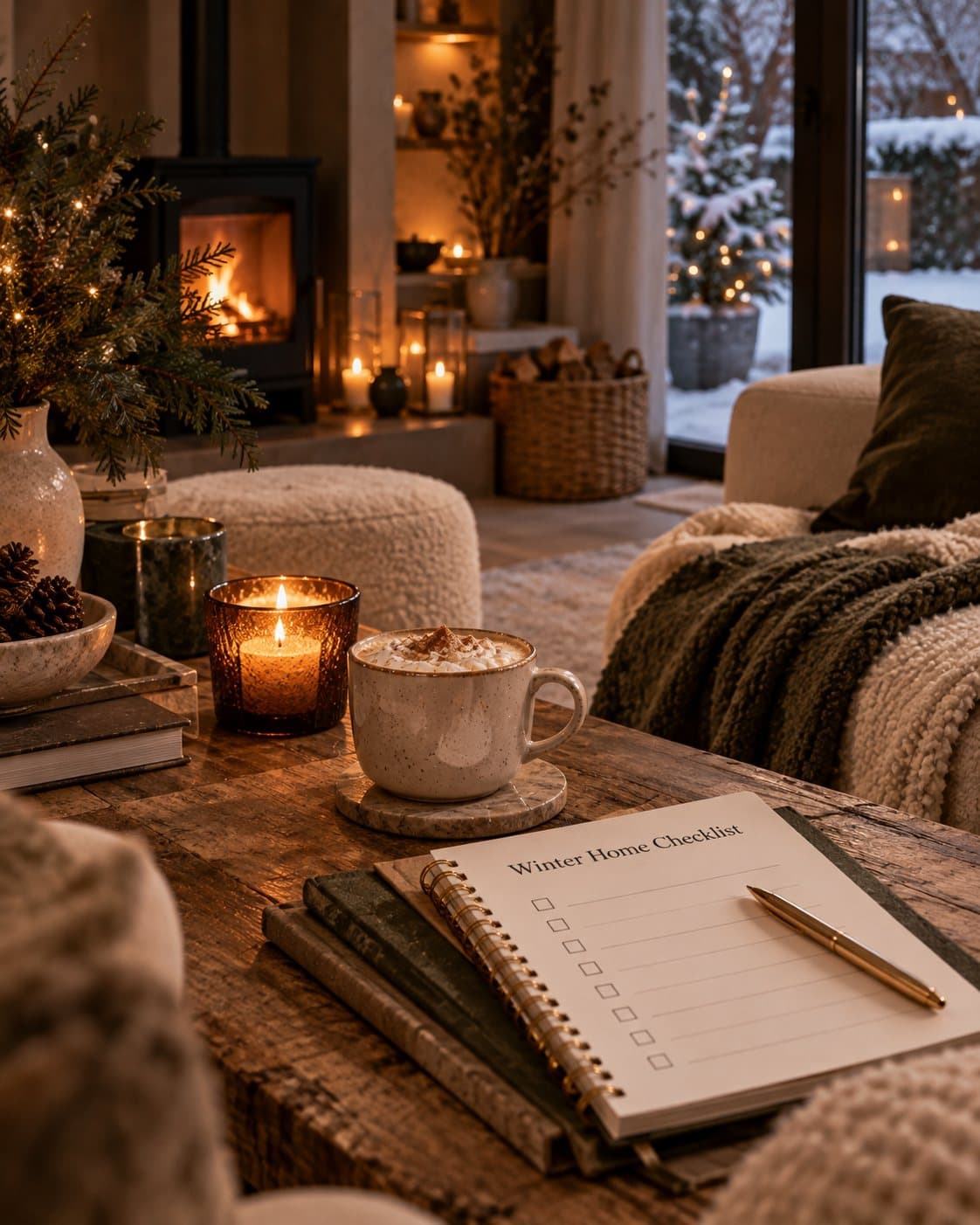
Print the winter home checklist
A printable version of the checklist with tick boxes, free to download.
Download the printablePair It With
Continue reading
Questions, answered
What should I do to prepare my home for winter?
Start with safety, heating, ventilation, draughts, exterior drainage and weather-exposed water or outdoor items. Then prepare high-use areas such as the entrance, living room, bedroom and kitchen for darker, colder routines. Use qualified professionals where inspection, maintenance or repair is outside your competence.
When should I prepare my house for winter?
Begin before consistently cold or freezing weather arrives. Exterior water, drainage, heating and weatherproofing tasks are most useful when completed early enough to correct problems before winter conditions make them urgent.
What should be on a winter home checklist?
A useful checklist covers safety alarms, heating, ventilation, draughts, gutters/drainage, outdoor taps, storm preparation, exterior lighting, the entrance, living spaces, bedroom, bathroom, kitchen staples and seasonal timers or smart-home settings.
How do I make winter preparation less overwhelming?
Separate inspection from action. Spend an hour checking the house and writing down what needs attention. Complete quick resets immediately, then schedule maintenance, purchases or professional jobs separately rather than trying to solve everything in one day.

Written by Esther
Esther is a photographer and storyteller, and the founder of Essy's Essentials - a seasonal home for stories, rituals, recipes and everyday luxuries.
More about Esther →