Home & Living
How to Make Your Home Feel Warmer in Winter (Before You Touch the Thermostat)
Warmth is partly temperature and partly perception. Before buying another blanket or nudging the heating higher, look at what the room is asking your body — and your eyes — to believe.
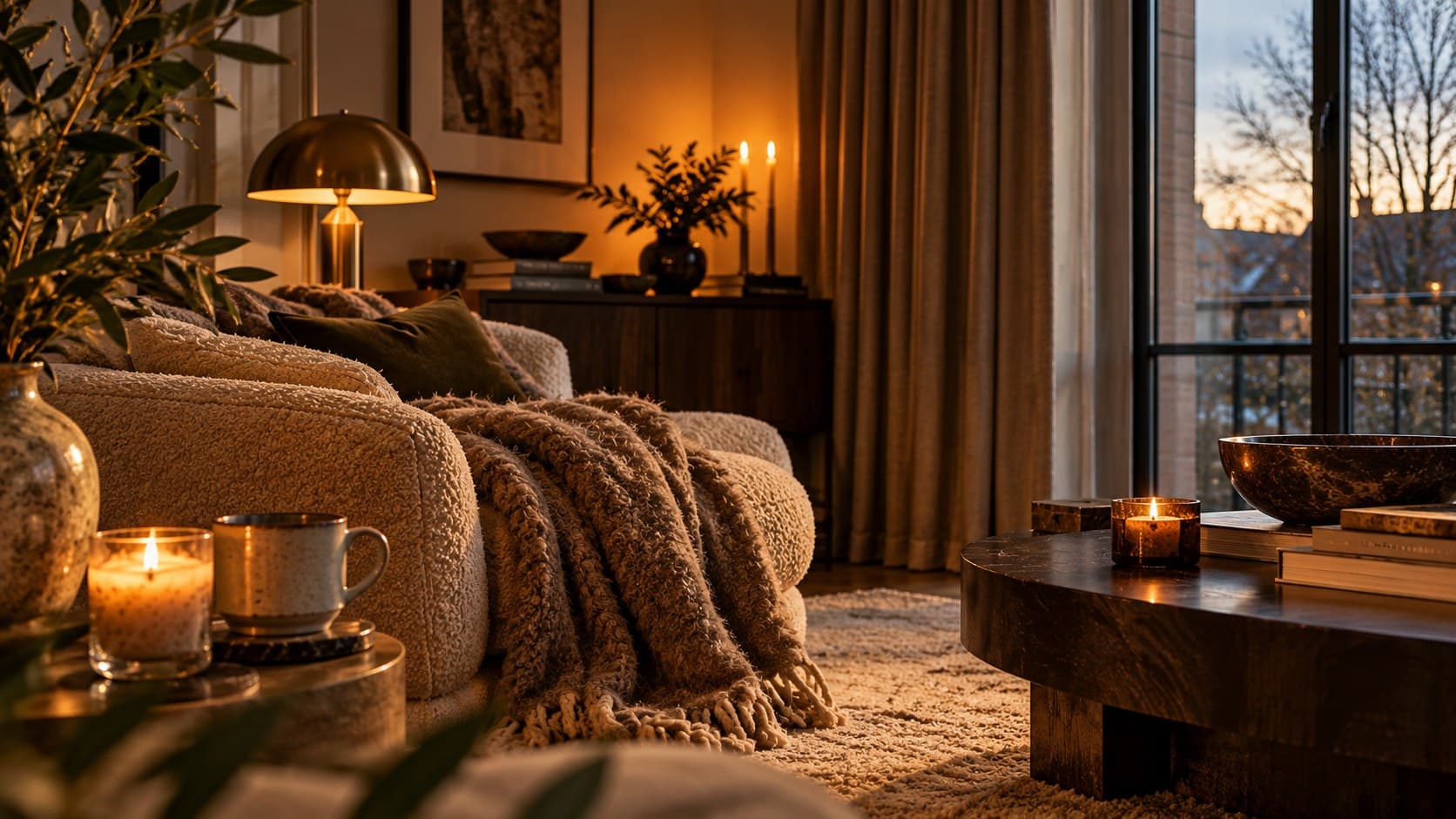
The short answer
To make a home feel warmer in winter, first reduce genuine draughts and keep heating unobstructed, then work on perceived warmth: use lower, warmer lighting, place soft texture where you actually sit, close curtains after dark, move seating away from cold zones and create one concentrated evening area rather than lighting the whole room equally.
Every winter there is a moment when the house looks cold before it actually feels cold.
The daylight turns blue. The windows become dark rectangles. The coffee table suddenly looks like stone rather than beautiful stone. You consider turning the thermostat up and, somehow, also buying a different sofa.
This is where temperature and atmosphere get tangled together.
A room can be technically warm and still feel chilly. It can also feel wonderfully cocooning without being tropical. The trick is to separate actual thermal comfort from the visual and sensory signals that tell us a room is warm.
Start with the real cold. Then style the feeling.
First: fix cold, do not decorate over it
If there is a persistent draught, a heating problem, damp or an unusually cold room, treat that as a practical home issue rather than an atmosphere problem.
Check whether windows and exterior doors are letting in obvious draughts. Keep radiators and other heat sources clear enough to distribute heat effectively. Use curtains appropriately and keep ventilation functioning rather than sealing a home indiscriminately.
This article is about comfort and atmosphere, not a substitute for professional advice on heating, insulation, ventilation, damp or safety.
Once the room is physically comfortable, the interesting part begins.
Stop lighting winter like summer
A single bright ceiling light can make a warm room look strangely cold.
Winter suits layers: a reading lamp where you sit, a smaller lamp on a console, perhaps another glow deeper in the room. The effect is not simply lower light. It creates pockets of attention and lets the boundaries of the room recede.
Choose bulbs and settings that give a comfortable warm appearance in living spaces, while keeping task lighting appropriate for anything that needs clear visibility.
Think less illuminate every square metre and more light the life happening in the room.
For a broader sensory audit, connect this section to The Home Atmosphere Edit.
Put softness where your body meets the room
The internet would happily sell us forty cushions in the name of winter.
You need fewer than forty.
Texture works best when it is functional: a substantial throw on the end of the sofa, a rug under bare feet, curtains that visually soften a wall of glass, a cushion supporting the chair you actually use.
Prioritise contact points.
If your feet are cold while the decorative throw is folded beautifully in another room, the throw has misunderstood its role.
Make the windows disappear after dark
During the day, windows connect a room to the outside. On a winter evening they can become large, cold-looking surfaces.
Closing curtains or blinds after dark can change the visual temperature of a room immediately, while suitable window coverings may also help reduce the sensation of cold near glazing. Do not obstruct required ventilation or create moisture problems.
The aesthetic effect matters too: fabric turns a black reflective rectangle back into part of the room.
Suddenly, the room has edges again.
Move winter life away from the coldest spot
Furniture does not have to stay in exactly the same relationship with a room all year.
You may not need a full seasonal rearrangement, but look at where you naturally spend winter evenings. Is the reading chair beside a draughty window? Is the sofa facing the television but miles from the lamp? Is your favourite seat technically beautiful and practically freezing?
A small shift can create a winter zone: lamp, table, blanket, charger, book, drink — everything within reach.
This is particularly useful if you already have a dedicated reading place. Link here to How to Create a Cosy Reading Spot.
Warm the room with contrast, not clutter
Warm does not require rustic. Nor does it require turning a neutral interior into a seasonal gift shop.
Against pale upholstery or walls, introduce a few deeper notes: dark wood, tobacco, olive, burgundy, bronze, smoked glass, brown ceramics, aged brass.
The contrast gives the lighter elements more depth.
One dark cushion can do more than six vaguely beige accessories competing for employment.
And if your home already contains warm materials, let them show. Clear the unnecessary objects around them instead of adding more. The existing Five-Minute Room Reset is useful here because visual order often makes intentional materials more noticeable.
Use sound to remove the emptiness
A winter room can feel colder when it sounds empty.
You do not need background noise all evening, but sound can change the perceived intimacy of a space: low classical music, jazz, an album you know well, the quiet murmur of a film from another room.
Keep it low enough to belong to the room rather than dominate it.
Silence can be warm too. The point is choosing it rather than ending up with the accidental hum of appliances and notifications.
Let scent suggest warmth, lightly
Warm scent is powerful precisely because the brain does half the decorating for you.
Wood, amber, tea, coffee, baking, gentle spice, something resinous or smoky — used with restraint — can make a room read as warmer.
One source is usually enough. A strongly scented candle plus diffuser plus room spray plus simmer pot is less winter sanctuary and more department-store fragrance floor.
If dinner is cooking or coffee has just been made, you may already have all the scent the room needs.
Bring the evening into a smaller radius
One of the easiest ways to make a home feel warmer is to stop using all of it at once.
In summer, life spreads out: doors open, rooms connect, the garden becomes another living space.
Winter can do the opposite.
Choose the room you are actually using. Switch off unnecessary lights elsewhere. Bring the blanket closer. Put the book on the side table. Make the drink. Close the curtains. Let the rest of the house go quiet.
This is not shrinking your life.
It is concentrating it.
The 10-Minute Warmth Test
Stand in the room you use most on winter evenings and check five things:
- Can you feel a genuine draught? Address the source rather than compensating with styling.
- Is the main light coming from the ceiling? Switch it off and turn on the lamps you actually need.
- Is there something warm and soft where you sit? Move the throw; add the rug; use the cushion.
- Does the window still dominate the room after dark? Close the appropriate curtains or blinds.
- Does the room know what tonight is for? Bring the book, drink, music, film or conversation into one comfortable zone.
Then stop.
You do not need a winter décor haul. You need the room to cooperate.
Warmth is a feeling of being looked after
The loveliest winter homes are not necessarily the ones with the most candles, blankets or seasonal decorations.
They are the ones that seem to anticipate what happens next.
There is a light where you need one. The blanket is close enough to use. The chair is not in the draught. The coffee corner is ready in the morning. The room changes when evening arrives.
That is what makes a home feel warm before you ever start describing its style.
And conveniently, none of it requires another cushion.
Continue reading
Questions, answered
How can I make my house feel warmer without turning up the heating?
First address real draughts and make sure heating can work effectively. For perceived warmth, use warmer layered lighting, close suitable curtains after dark, add soft texture at seating and floor level, move your main evening seat away from cold zones and concentrate activity in one comfortable area.
Does warm lighting make a room feel warmer?
Warm-toned, lower-level lighting can make a room look and feel more visually intimate than a single bright overhead light. It does not raise the room temperature, but it can strongly affect perceived atmosphere and comfort.
What colours make a room feel warmer in winter?
Warm neutrals and deeper accents such as brown, olive, burgundy, bronze, aged brass and dark wood can visually warm a room. You do not need to repaint: a few well-placed textiles or objects can create enough contrast.
Should I close curtains in winter?
Closing suitable curtains or blinds after dark can make a room feel more enclosed and may reduce discomfort near cold glazing. Keep necessary ventilation working and address condensation, damp or persistent draughts appropriately.

Written by Esther
Esther is a photographer and storyteller, and the founder of Essy's Essentials - a seasonal home for stories, rituals, recipes and everyday luxuries.
More about Esther →