The Home Atmosphere Edit
A sensory review for creating a home that feels warm, balanced and appropriate to the season.
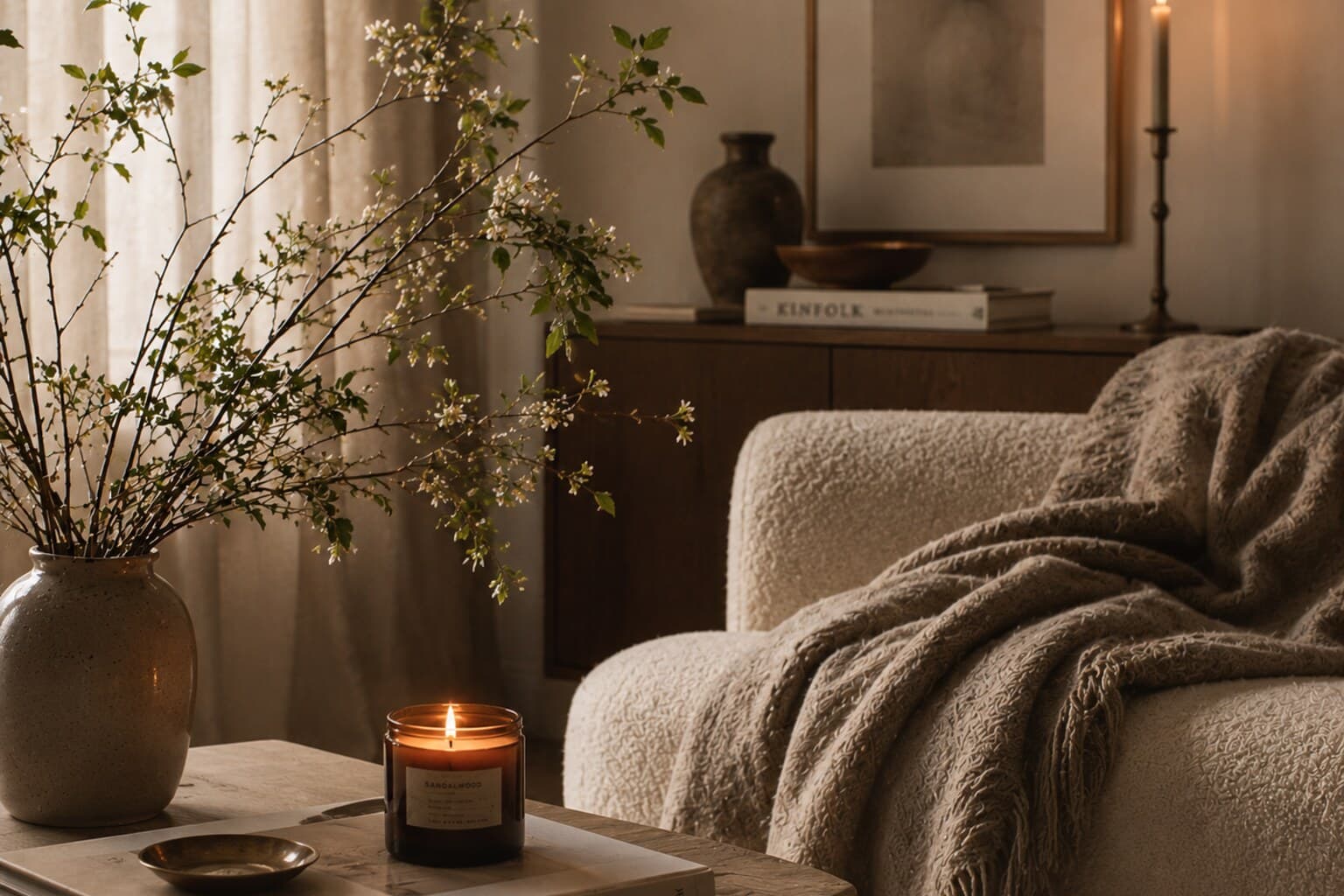
At a Glance
- Light
- Air
- Sound
- Scent
- Temperature
- Texture
- Visual order
- Seasonal detail
Atmosphere is often treated as something added after a room has been designed - a candle, a playlist, flowers, a new cushion.
In reality, atmosphere is created through the relationship between many small elements: light, air, sound, scent, temperature, texture and order.
The Home Atmosphere Edit is a review of these elements. It helps identify what the home needs before adding more decorative objects.
Part 1: Light
Ask: where is the light too harsh? Which corner becomes dark too early? Is there a useful reading light? Does the evening rely on one ceiling fixture? Do the bulbs create a consistent warmth?
Possible action: move a lamp, change one bulb, add a dimmer, use a small rechargeable lamp, or reduce unnecessary overhead lighting.
Part 2: Air
Ask: does the home feel fresh? Are rooms ventilated regularly? Are strong fragrances disguising another issue? Does one area feel damp, stuffy or overheated?
Possible action: open windows safely, review ventilation, wash textiles, remove expired flowers, or clean scent sources. Seek appropriate advice for persistent moisture or air-quality concerns.
Part 3: Sound
Ask: what is normally heard in the room - television, traffic, appliances, conversation, silence, music?
Possible action: use a quiet playlist, turn off background television, add soft materials where echo is strong, or create one period without added sound. Sound should support the room’s purpose.
Part 4: Scent
Ask: what does the home naturally smell like - cooking, laundry, wood, coffee, fresh air, cleaning products, candles?
Use scent with restraint. Choose one primary fragrance source per area - a candle, a diffuser, fresh herbs, flowers, open air, baking, or a seasonal room spray. Do not layer several strong scents in the same space.
Part 5: Temperature
Ask: does the room support the activity taking place? Is seating placed in a draught? Are blankets accessible? Is the home overheated? Would curtains, shading or ventilation improve comfort?
Atmosphere begins with physical comfort.
Part 6: Texture
Review the balance between soft and hard, smooth and rough, matte and reflective, warm and cool.
Possible additions include linen, wool, wood, ceramic, a textured rug, a single blanket, or a fabric lampshade. Texture is especially important in neutral interiors.
Part 7: Visual Order
Ask: which surface creates the most visual noise? Which objects appear accidental? Is there too much small decoration? Where is practical storage missing? Would removing one item improve the room?
Atmosphere often improves through editing rather than adding.
The Checklist
- Lighting reviewed
- Air refreshed
- Background sound considered
- Scent simplified
- Temperature adjusted
- Textures balanced
- One noisy surface edited
- Seasonal detail added
- Nothing unnecessary purchased
Part 8: Seasonal Detail
Spring
- Fresh branches.
- Lighter linen.
- A clear glass vase.
- A soft green detail.
Summer
- Open windows.
- A bowl of fruit.
- Lighter textiles.
- Fresh herbs.
Autumn
- A warmer lamp.
- One wool layer.
- Branches.
- A deeper candle.
Winter
- A substantial blanket.
- Evergreen foliage.
- Brass or bronze details.
- Soft evening lighting.
Pair It With
Atmosphere does not come from filling a home with more things.
It comes from noticing how the space feels and adjusting the elements that shape everyday experience.
Enjoyed this?
The Seasonal Letter brings more stories, recipes and rituals like this one - a few times a season, never more.

Written by Esther
Esther is a photographer and storyteller, and the founder of Essy's Essentials - a seasonal home for stories, rituals, recipes and everyday luxuries.
More about Esther →