Homemade Staples & Seasonal Preserves
The Art of a Small Homemade Pantry
A practical approach to making a few useful kitchen staples without turning ordinary cooking into a constant production project.
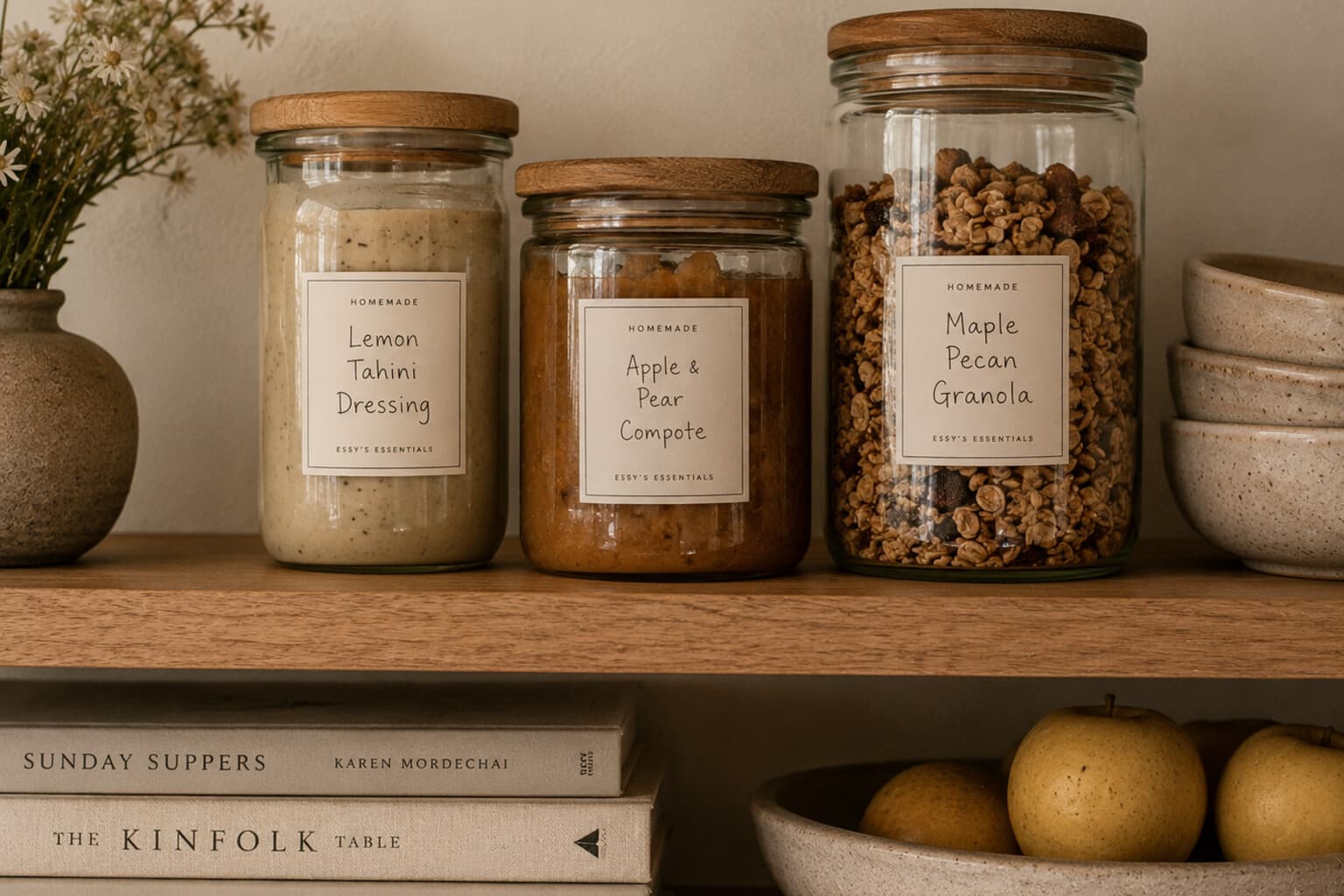
Homemade food is often presented as an all-or-nothing ideal - bread baked every week, granola made from scratch, several sauces waiting in the refrigerator, fruit preserved at the height of the season, stock simmering on the stove, every jar carefully labelled.
There can be pleasure in making these things, but a homemade pantry should support daily life rather than create another demanding system to maintain. The most useful approach is selective - making only what tastes noticeably better, is used frequently, fits naturally into the week, can be stored safely, and does not require more time than it saves.
A small homemade pantry may contain only three or four recurring items - a jar of dressing, a seasonal compote, a tray of granola, a simple tomato sauce in the freezer. That is often enough to make ordinary meals feel more considered.
Begin with Real Household Use
Before making anything, ask how often it will be eaten, whether the household already buys a version it enjoys, whether the homemade version will genuinely improve flavour, cost or convenience, whether it can be stored safely, whether there is enough time to use it before quality declines, and whether making it creates excessive washing up.
A homemade item is useful only when it fits the household rhythm, not because it sounds admirable in principle.
Choose One Staple from Each Useful Category
A manageable collection might include one breakfast staple (granola, fruit compote or an overnight oat mixture), one lunch or supper staple (a salad dressing, pesto, tomato sauce or flavoured butter), one baking staple (a crumble topping, cookie dough or measured cake components), and one seasonal staple (preserved lemons, apple butter, pear compote or herb oil).
There is no need to keep something from every category. Choose only what is regularly used.
Start with One Recipe
Use a tested recipe from a reliable source and repeat it before making large adjustments. Record the ingredient quantities, preferred sweetness, storage method, how long it remained at its best, and what it was used with.
Familiarity makes the process faster and safer each time it is repeated.
Make Smaller Quantities
Large batches can appear efficient but may create pressure to consume more than needed. Begin with one jar, one tray, two freezer portions, or enough for one week.
A smaller batch is easier to store, label and finish, and it allows recipes to change with the season rather than committing to months of the same flavour.
Use Suitable Containers
Choose containers that are food-safe, easy to clean, appropriate for the contents, able to close securely, and suitable for refrigeration or freezing where required.
Do not reuse containers that are damaged or unsuitable for repeated food storage, and for freezing, allow appropriate space for expansion where necessary.
Label Every Prepared Item
Include the name, preparation date, use-by guidance, freezer instructions where relevant, and allergen information when sharing.
A container without a label often becomes an unidentified item that remains unused.
Understand the Difference Between Storing and Preserving
A refrigerator sauce, compote or dressing is not automatically a shelf-stable preserve. True preserving methods require correct acidity, safe sterilisation, tested processing times, suitable jars and reliable recipes.
Do not improvise shelf-stable canning or bottling methods. Where proper preserving knowledge or equipment is unavailable, refrigerate or freeze the product instead.
Keep the Homemade Pantry Visible
Store items where they can be seen - one refrigerator shelf, one freezer section, one small labelled basket, or a short digital inventory.
Use homemade items before opening a similar shop-bought product, so nothing quietly goes to waste at the back of a shelf.
Review the Effort Honestly
After several attempts, ask whether it was used, whether it reduced later work, whether the quality was better, whether the household enjoyed it, and whether the recipe would be made again.
A homemade staple that repeatedly becomes a burden can be replaced with a good ready-made option without that counting as a failure.
Pair It With
A small homemade pantry is not a demonstration of self-sufficiency.
It is a collection of a few useful things made with care, ready to make the next meal easier.

Written by Esther
Esther is a photographer and storyteller, and the founder of Essy's Essentials - a seasonal home for stories, rituals, recipes and everyday luxuries.
More about Esther →