The Seasonal Butter, Oil & Spread Edit
A restrained collection of flavoured accompaniments for bread, vegetables and simple meals.
At a Glance
- Choose the right base
- Create one savoury butter or alternative
- Create one flavoured oil
- Create one sweet spread
- Plan several uses
- Store and label carefully
- Keep the collection small
A small finishing ingredient can change a very simple meal - herb butter melting over potatoes, lemon oil spooned over beans, apple butter spread on toast, a yoghurt-based herb spread served with warm bread.
These accompaniments are useful because they bring flavour quickly. They can also become another collection of open jars and short-lived experiments. The Seasonal Butter, Oil & Spread Edit keeps the selection limited to one savoury accompaniment, one sweet spread, and one seasonal flavour - each with several planned uses.
Choose the Right Base
Possible savoury bases include butter, lactose-free butter, a plant-based alternative, olive oil, yoghurt or an alternative, soft cheese or an alternative, and tahini. Possible sweet bases include cooked fruit, nut butter, honey, or soft butter or an alternative.
Choose according to dietary needs and storage requirements.
Create One Savoury Butter or Alternative
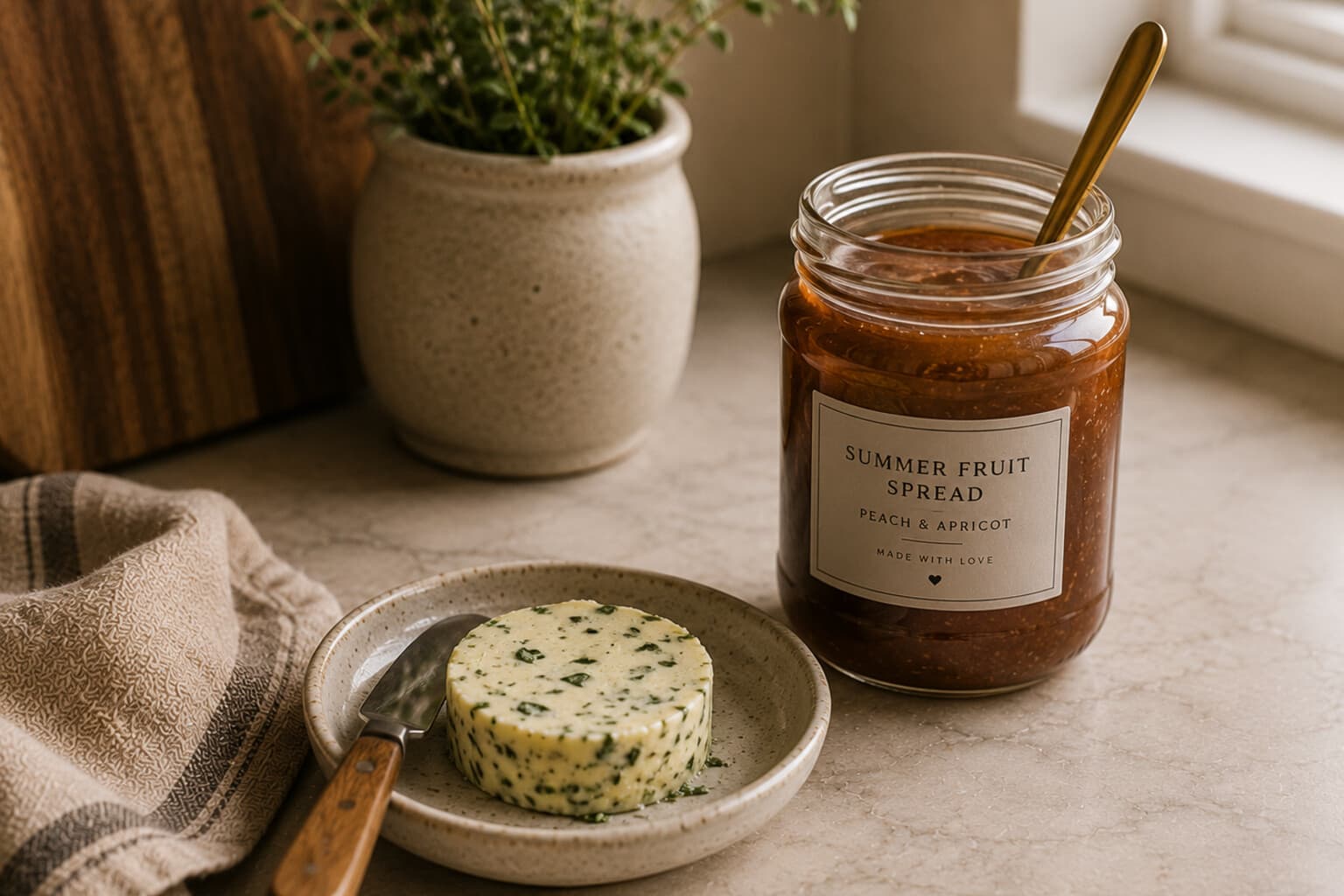
Possible combinations include parsley and lemon, rosemary and garlic, sage and black pepper, or chive and mustard - used with bread, potatoes, vegetables, pasta, or fish, meat or alternatives.
Fresh garlic and herbs affect storage life. Refrigerate or freeze appropriately and follow a reliable recipe.
Create One Flavoured Oil
Possible combinations include lemon zest and herbs, basil oil, rosemary oil, or chilli oil where preferred. Garlic oil requires particular food-safety care, because improperly prepared or stored garlic-in-oil mixtures can present serious risks.
Use tested recipes, refrigerate where instructed, and never assume homemade infused oils are shelf stable. For a lower-risk everyday approach, add fresh herbs or garlic to oil immediately before serving rather than storing the mixture.
Create One Sweet Spread
Possible options include apple butter, pear and cinnamon spread, berry compote, honey with cinnamon, or nut butter with cocoa - used with toast, yoghurt, porridge, cake or breakfast bakes.
Keep sweetness balanced and batch size small.
Plan Several Uses
Before making the item, list three uses - for example, herb butter on bread, with roasted potatoes, and stirred through vegetables; or apple butter on toast, in yoghurt, and in a croissant bake.
If three realistic uses are difficult to identify, make a smaller quantity or skip it.
Store and Label Carefully
Include the contents, preparation date, use-by guidance, allergens, and freezing instructions where relevant.
Use separate clean utensils to avoid contamination between items.
Keep the Collection Small
At one time, the refrigerator may contain one savoury spread, one sweet spread and one dressing. This is usually enough.
Finish or safely discard older items before making new versions.
The Checklist
- Base suits dietary needs
- Recipe is tested
- Storage guidance understood
- Three uses planned
- Batch kept small
- Container labelled
- Risky infused-oil methods avoided
- Collection limited
Match the Edit to the Season
Spring
- Lemon and herb butter or alternative.
- Strawberry compote.
- Mint yoghurt spread.
Summer
- Basil oil prepared safely.
- Peach compote.
- Tomato and herb spread.
Autumn
- Sage butter or alternative.
- Apple butter.
- Pear and walnut spread.
Winter
- Orange and cinnamon butter or alternative.
- Cranberry compote.
- Roasted garlic spread prepared and stored safely.
Pair It With
A good spread or finishing oil does not need to become another kitchen category.
It needs only to make bread, vegetables or breakfast taste more complete with one small spoonful.
Enjoyed this?
The Seasonal Letter brings more stories, recipes and rituals like this one - a few times a season, never more.

Written by Esther
Esther is a photographer and storyteller, and the founder of Essy's Essentials - a seasonal home for stories, rituals, recipes and everyday luxuries.
More about Esther →