The Seasonal Fruit Compote
A gentle method for turning ripe or softening fruit into a useful breakfast, dessert and baking companion.
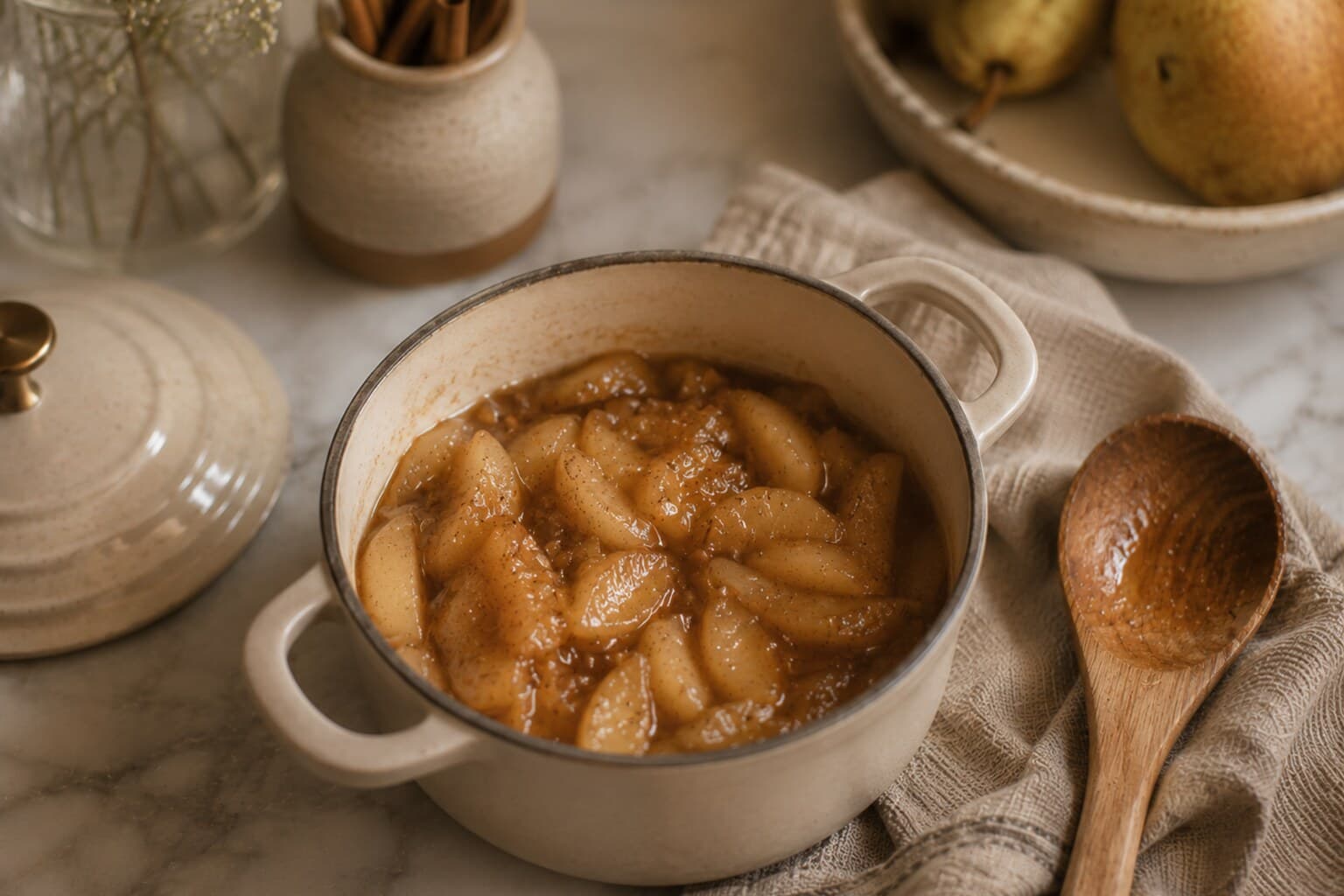
At a Glance
- Choose suitable fruit
- Prepare the fruit
- Add a small amount of liquid
- Choose one flavour note
- Sweeten after tasting
- Cook to the intended texture
- Store safely
- Use the full batch intentionally
Fruit does not need to remain perfectly firm to be useful. Pears soften, berries lose their shape, apples become slightly tired, and stone fruit ripens faster than expected.
A small batch of compote allows this fruit to become something new - spooned over yoghurt, porridge, toast, cake, pancakes or ice cream. The method is simple, but the result should remain fresh and fruit-led rather than overly sweet.
Choose Suitable Fruit
Useful fruits include apples, pears, plums, peaches, apricots, berries, cherries and rhubarb.
Use fruit that is ripe but still safe and free from spoilage. Cooking does not make unsafe or mouldy fruit suitable to eat.
Prepare the Fruit
Depending on the variety, wash, peel where preferred, remove stones or cores, and cut into even pieces. Remove damaged sections only when the remaining fruit is clearly safe.
Berries may remain whole; apples and pears may be diced or sliced.
Add a Small Amount of Liquid
Possible liquids include water, orange juice, apple juice or lemon juice.
Use only enough to prevent sticking and support gentle cooking - many fruits release considerable liquid as they soften.
Choose One Flavour Note
Possible additions include vanilla, cinnamon, cardamom, ginger, lemon zest, orange zest or rosemary used lightly.
Choose one main direction. The fruit should remain the dominant flavour.
Sweeten After Tasting
Ripe fruit may need little or no added sweetness. Possible sweeteners include honey, maple syrup or sugar.
Add a small amount after the fruit begins to cook, then taste again once the flavours have concentrated.
Cook to the Intended Texture
For a spoonable compote, cook until the fruit is soft but partly retains its shape. For a smoother sauce, cook slightly longer and mash or blend where appropriate. For a baking filling, cook until excess liquid has reduced.
Stir gently to avoid turning all fruit into purée unless that is the intention.
Store Safely
Cool the compote promptly and transfer it to a clean food-safe container. Label the contents, preparation date and use-by guidance.
Refrigerate and use within a safe period appropriate to the recipe, or freeze small portions where suitable - this is a refrigerated or frozen product unless a tested preserving method has been followed.
Use the Full Batch Intentionally
Plan several uses in advance - a yoghurt bowl one day, porridge the next, toast after that, and served with cake at the weekend.
This prevents the jar from being opened once and forgotten at the back of the refrigerator.
The Checklist
- Fruit safe and ripe
- Flavour direction selected
- Liquid kept minimal
- Sweetness added after tasting
- Texture chosen intentionally
- Compote cooled promptly
- Container labelled
- Several uses planned
Seasonal Combinations
Spring
- Rhubarb and vanilla.
- Strawberry and lemon.
Summer
- Peach and thyme.
- Apricot and almond flavouring used carefully.
- Berry and vanilla.
Autumn
- Pear and cardamom.
- Apple and cinnamon.
- Plum and ginger.
Winter
- Apple and orange.
- Pear and vanilla.
- Cranberry and citrus.
Pair It With
Compote gives fruit a second form rather than a final rescue.
What was becoming too soft for the fruit bowl becomes something warm, fragrant and useful for several mornings to come.
Enjoyed this?
The Seasonal Letter brings more stories, recipes and rituals like this one - a few times a season, never more.

Written by Esther
Esther is a photographer and storyteller, and the founder of Essy's Essentials - a seasonal home for stories, rituals, recipes and everyday luxuries.
More about Esther →