The Freezer Sauce Collection
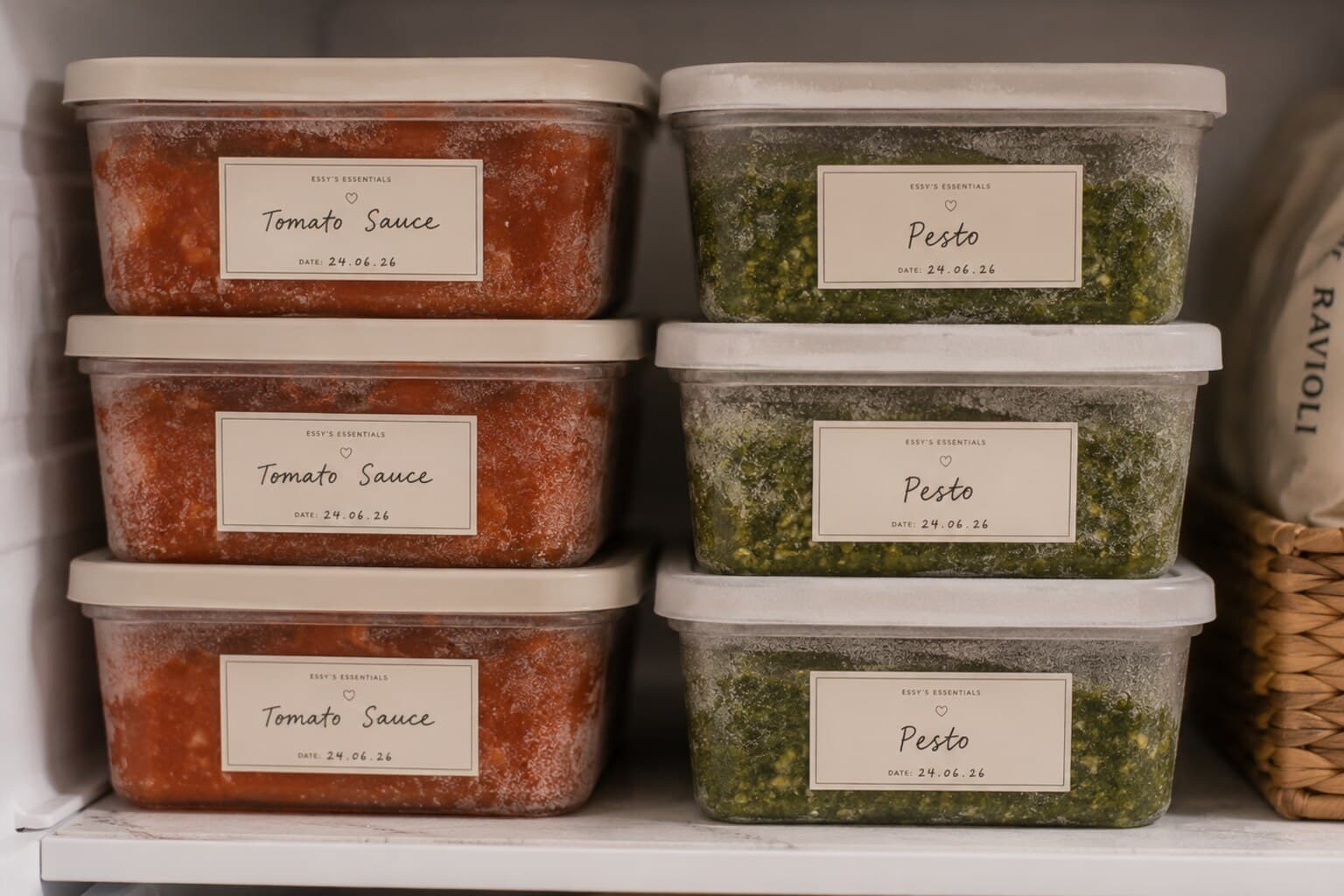
A small collection of clearly labelled sauces that can turn pasta, grains and vegetables into a complete meal with little preparation.
At a Glance
- Choose three dependable sauces
- Make the sauce as part of another cooking session
- Cool safely before freezing
- Choose useful portion sizes
- Label with practical information
- Keep a freezer inventory
- Rotate rather than collect
- Thaw and reheat safely
The freezer is most useful when it contains beginnings rather than unidentified leftovers - a small container of tomato sauce, a portion of roasted vegetable sauce, a herb sauce frozen before the season ends. These provide a clear answer on evenings when cooking energy is limited.
The Freezer Sauce Collection should remain small. Three dependable sauces are often more useful than many experimental containers. Each one should have a clear purpose, a realistic portion size, a label, and a planned use.
Choose Three Dependable Sauces
A useful collection might include a tomato sauce (for pasta, pizza, beans, soup or tray bakes), a roasted vegetable sauce (for pasta, grain bowls, soup or baked dishes), and a herb or pesto-style sauce (for vegetables, bread, pasta, eggs, fish or alternatives). Other options may include a curry base, a mushroom sauce, or a slow-cooked onion base.
Choose sauces suited to the household’s regular meals rather than sauces that sound interesting but rarely get used.
Make the Sauce as Part of Another Cooking Session
Efficiency improves when the sauce is prepared alongside normal cooking - roast extra tomatoes while making dinner, double a simple pasta sauce, use remaining herbs before they decline, or blend extra roasted vegetables.
This avoids creating a separate production day just for the freezer.
Cool Safely Before Freezing
Allow the sauce to cool according to safe food-handling guidance, and divide into shallow portions where helpful.
Do not leave cooked sauce at room temperature for an extended period - freeze promptly once safely cooled.
Choose Useful Portion Sizes
Possible portions include a one-person lunch, a two-person supper, a family pasta meal, or a small flavour portion.
Avoid freezing an entire large batch in one container unless it will be used at once - smaller portions thaw more efficiently and reduce waste.
Label with Practical Information
Include the sauce name, preparation date, number of portions, main allergens and suggested use - for example, "Roasted tomato sauce - two portions - pasta or soup base."
A useful label answers the question of what the container can become.
Keep a Freezer Inventory
Use a short list, organised by category - sauces, soups, bread, prepared meals, fruit.
Remove an item from the list when it is used. The inventory should remain simple enough to maintain.
Rotate Rather Than Collect
Use the oldest suitable sauce first, and add new portions only when space is available. Avoid maintaining several versions of nearly identical sauces.
The freezer should support meals, not become long-term storage for indecision.
Thaw and Reheat Safely
Follow safe guidance appropriate to the sauce. Some sauces may be reheated from frozen; others should thaw in the refrigerator. Stir thoroughly and ensure even heating.
Do not repeatedly thaw and refreeze food unless official safety guidance confirms it is appropriate.
The Checklist
- Three useful sauces selected
- Recipes suited to regular meals
- Sauce cooled safely
- Portions practical
- Containers labelled
- Inventory updated
- Oldest portions used first
- Reheating instructions understood
Seasonal Freezer Sauce Ideas
Spring
- Pea and herb sauce.
- Light lemon pesto.
Summer
- Roasted tomato sauce.
- Courgette and basil sauce.
Autumn
- Pumpkin and sage sauce.
- Mushroom base.
Winter
- Slow tomato and lentil sauce.
- Roasted root-vegetable sauce.
Pair It With
A labelled sauce in the freezer is more than stored food.
It is a future meal with the difficult first decision already made.
Enjoyed this?
The Seasonal Letter brings more stories, recipes and rituals like this one - a few times a season, never more.

Written by Esther
Esther is a photographer and storyteller, and the founder of Essy's Essentials - a seasonal home for stories, rituals, recipes and everyday luxuries.
More about Esther →