The Everyday Food Prep Edit
A light preparation routine that makes weekday meals easier without spending an entire day cooking in advance.
At a Glance
- Begin with the meal plan
- Choose one item from each preparation category
- The thirty-minute preparation rhythm
- Prepare ingredients, not identical meals
- Store food safely
- Make fresh food visible
- Keep some items unprepared
Food preparation is often presented as a large weekly project - several meals are cooked, containers fill the refrigerator, and a long afternoon disappears into chopping, roasting and washing up. This can work for some households.
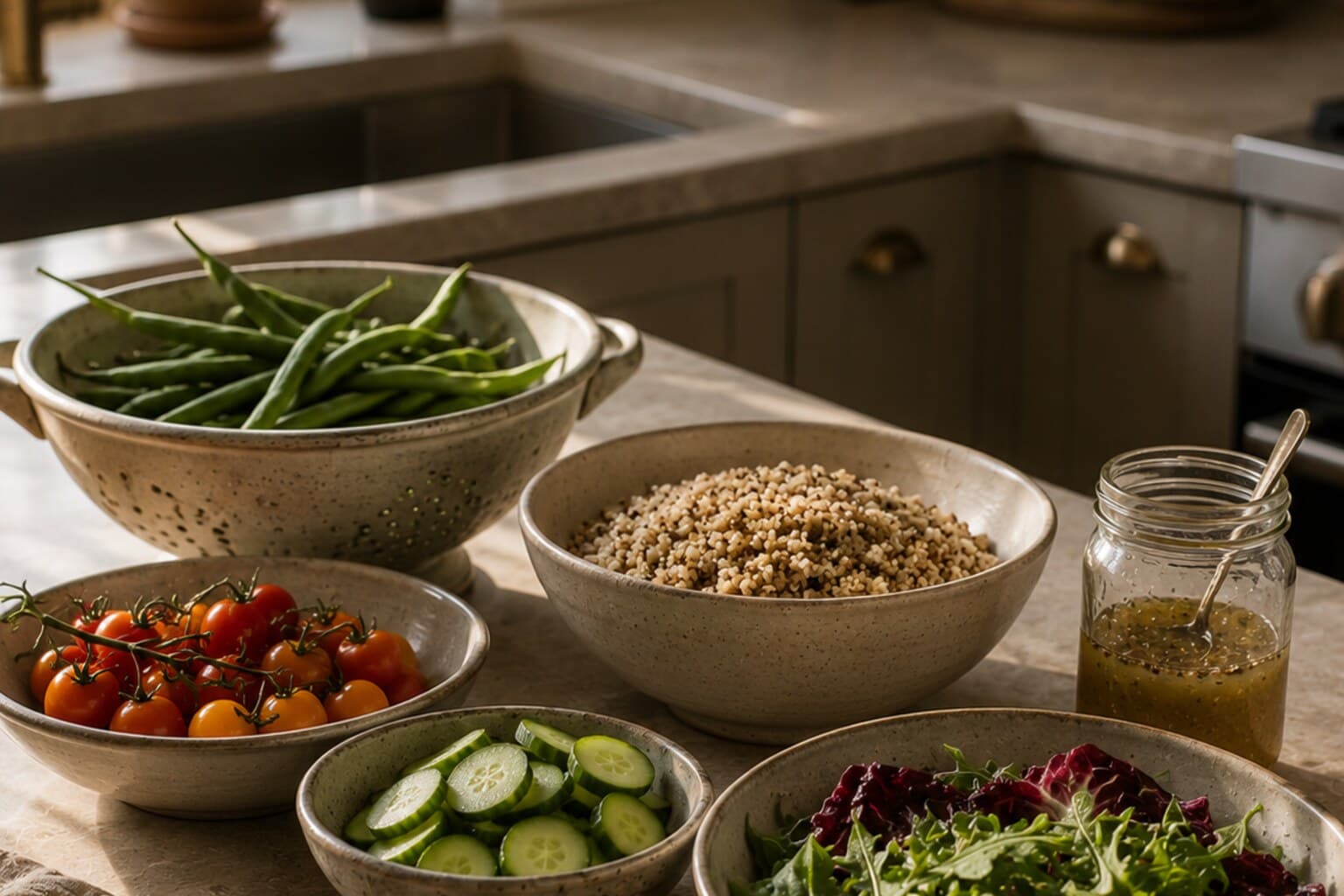
But preparation does not need to mean completing every meal in advance. The Everyday Food Prep Edit focuses on small actions that remove friction later - one dressing, a washed vegetable, a cooked grain, a pot of soup, fruit made easy to reach.
The purpose is not to prepare everything. It is to prepare the things that repeatedly slow the week down.
Begin with the Meal Plan
Review the meals selected for the coming days. Identify ingredients that appear more than once - fresh herbs, roasted vegetables, rice, lemon, salad leaves, cooked chicken, beans, yoghurt or an alternative.
Prepare only what will clearly be used. Avoid cooking generic components without a plan for them.
Choose One Item from Each Preparation Category
Wash: fruit, leaves, herbs, vegetables. Chop: onions, carrots, snack vegetables, roasting vegetables. Cook: grains, eggs, soup, beans, one tray of vegetables. Mix: dressing, sauce, marinade, breakfast mixture. Portion: nuts, breakfast ingredients, lunch components, freezer items.
There is no need to complete every category every week. Choose two or three actions with the greatest practical value.
Minutes 0–5
Review meals and clear the worktop.
Minutes 5–15
Wash produce and begin one cooking task.
Minutes 15–25
Prepare one sauce, dressing or secondary component.
Minutes 25–30
Cool, store and label. Clean the main tools. Stop when the selected tasks are complete.
Prepare Ingredients, Not Identical Meals
Prepared components create flexibility - roasted vegetables may become a salad, pasta or side dish; cooked rice may become a bowl, fried rice or accompaniment; a herb dressing may work with vegetables, fish or bread; soup may serve as lunch or a light dinner.
This feels less repetitive than several preassembled versions of the same meal.
Store Food Safely
Use suitable clean containers. Label where needed with contents, preparation date and use-by guidance where appropriate. Follow safe cooling and refrigeration practices.
Do not leave cooked food at room temperature for extended periods. Use official food-safety guidance for uncertain ingredients or storage times - when in doubt, prioritise safety over reducing waste.
Make Fresh Food Visible
Produce is more likely to be used when it is easy to see - one refrigerator drawer for use-first vegetables, washed fruit at eye level, herbs stored appropriately near the front, a use-first container, or a written note on the refrigerator.
Avoid hiding the most perishable food behind drinks, jars and larger containers.
Keep Some Items Unprepared
Not every ingredient benefits from advance preparation. Some produce loses quality once cut. Some meals depend on fresh texture. Some foods may not store safely for the intended period.
Prepare only what remains useful and appealing. The aim is to make later cooking easier, not to create food that feels tired before it is served.
The Checklist
- Meals reviewed
- Ingredients shared across meals identified
- One produce task completed
- One cooking task completed
- One sauce or dressing prepared
- Food cooled and stored safely
- Use-first ingredients kept visible
- Worktop and sink restored
Pair It With
Useful preparation is not measured by the number of containers in the refrigerator.
It is measured by whether the next meal begins with less resistance.
Enjoyed this?
The Seasonal Letter brings more stories, recipes and rituals like this one - a few times a season, never more.

Written by Esther
Esther is a photographer and storyteller, and the founder of Essy's Essentials - a seasonal home for stories, rituals, recipes and everyday luxuries.
More about Esther →