Everyday Seasonal Cooking
The Calm Weekly Meal Rhythm
A flexible structure for deciding what to eat without planning every meal in exhausting detail.
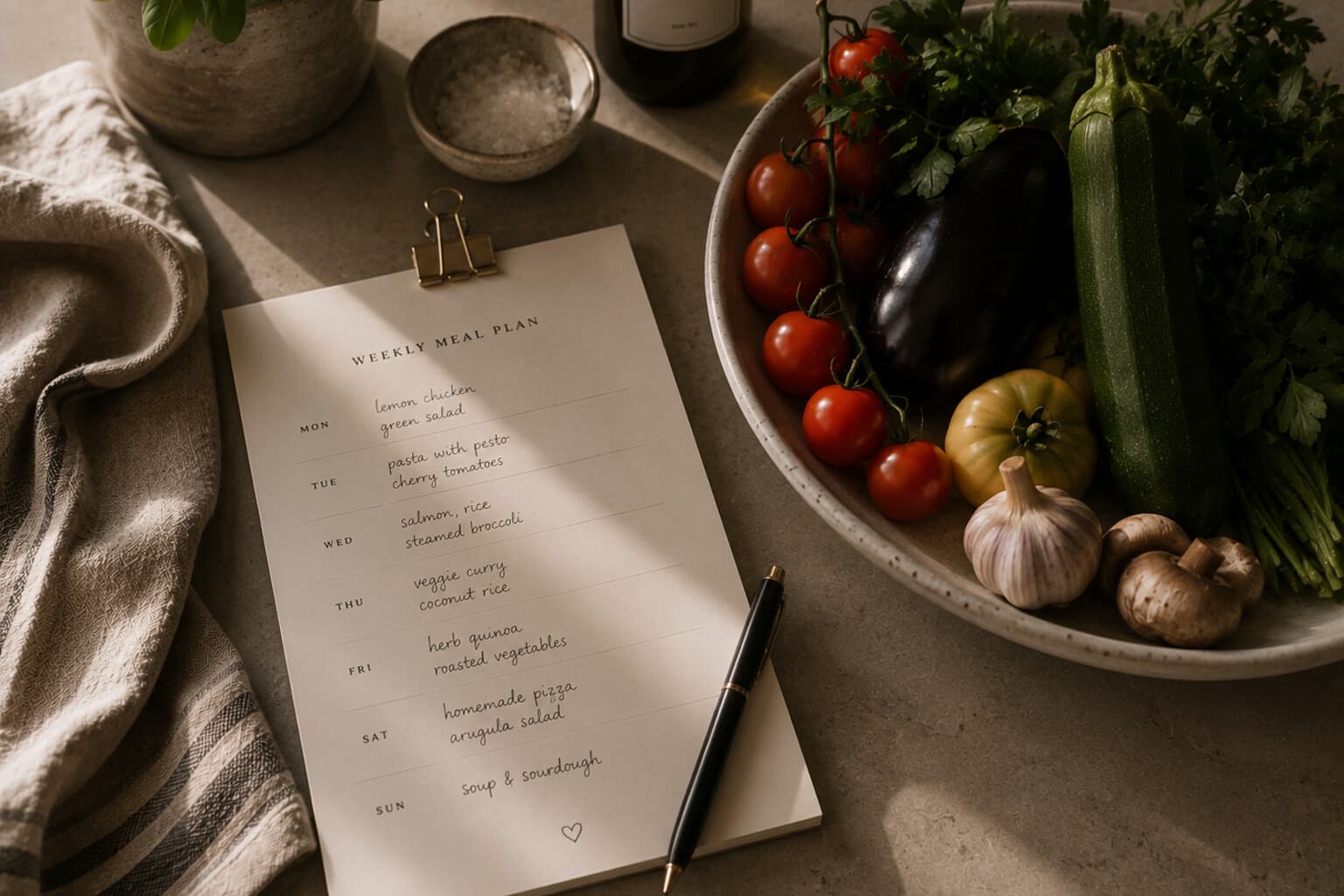
Meal planning often becomes another administrative task. Every breakfast, lunch and dinner is assigned in advance. Several new recipes are chosen. A long shopping list follows. Then the week changes - someone works late, plans move, energy is lower than expected, and ingredients remain unused because the plan became too rigid.
The Calm Weekly Meal Rhythm uses a lighter structure. Instead of planning fourteen or twenty-one separate meals, it creates a small number of dependable categories. This gives the week direction while leaving room for real life.
Begin with the Week Ahead
Before choosing meals, review evenings at home, late working days, appointments, guests, travel, exercise, days when cooking time is limited, and food already available.
Do not plan the meals first and force the week around them. Plan according to the week that will actually happen.
Choose Four Dinner Anchors
Most weeks do not require seven completely different dinner plans. Choose four main meal ideas - for example, one tray or oven meal, one pasta, rice or grain dish, one soup, salad or lighter meal, and one flexible favourite.
The remaining evenings may include leftovers, something from the freezer, a meal outside the home, bread, eggs or another simple meal, or a repeated favourite. This reduces both shopping and decision-making.
Use a Meal-Category Rhythm
A weekly rhythm may look like: Monday, an easy start with a familiar meal and few steps; Tuesday, a fresh meal of vegetables, salad, fish or another lighter option; Wednesday, a pantry meal of pasta, rice, pulses, soup or freezer ingredients; Thursday, a use-what-is-open meal of leftovers and ingredients that need finishing; Friday, a favourite meal that feels comforting, social or slightly more special; and the weekend, one slower meal such as a roast, bake, lunch or recipe that takes more time.
This is a guide rather than a fixed schedule.
Repeat Breakfast and Lunch Structures
Daily variety is not required. A dependable breakfast rotation may include yoghurt or a lactose-free alternative with fruit and granola, porridge, toast with eggs, or seasonal fruit and a warm drink.
A simple lunch rotation may include soup and bread, leftovers, salad with grains or protein, toast or a sandwich, eggs, or a prepared lunch bowl. Repetition saves time and reduces food waste - variety can come from seasonal toppings, fruit, herbs and dressings.
Plan Around Ingredients That Overlap
Choose meals that share some ingredients - roasted vegetables may appear in dinner, lunch and a frittata; fresh herbs may be used in pasta, dressing and soup; a loaf of bread may accompany soup and become toast the next morning; a pot of yoghurt or alternative may be used for breakfast and a sauce.
Ingredient overlap creates cohesion without making every meal taste the same.
Include One Low-Energy Meal and One Use-It-Up Moment
Every plan should contain at least one meal requiring very little effort - soup from the freezer, pasta with a simple sauce, eggs and toast, a filled baked potato, bread, cheese or alternatives and salad, a tray of roasted vegetables with hummus, or a dependable ready-made option. This is not a failure of planning - it is part of realistic planning.
Choose one meal or lunch for ingredients that need finishing - it may become soup, frittata, pasta, fried rice, a tray bake, toast, salad or a grain bowl. The use-it-up moment should happen before the next full shop.
Keep a Small Favourites List
Maintain a list of meals that are easy, dependable, liked by the household, made from familiar ingredients and suitable for different seasons. Divide the list into fifteen-minute meals, oven meals, freezer meals, guest-friendly meals, comfort meals and lighter meals.
This list becomes more useful than constantly searching for new recipes.
Pair It With
The Weekly Meal Rhythm template: this week includes late days, guests, meals outside the home and low-energy evenings. Four dinner anchors: meal one, meal two, meal three, meal four. Flexible meals: leftovers, freezer, simple pantry meal. Ingredients to use first: fresh produce, opened products, leftovers. One preparation task: cook grains, make dressing, wash leaves, bake something, prepare soup. One low-energy meal: selected in advance.
A calm meal rhythm does not decide every plate before the week begins.
It removes enough uncertainty to make feeding yourself and the household feel easier.

Written by Esther
Esther is a photographer and storyteller, and the founder of Essy's Essentials - a seasonal home for stories, rituals, recipes and everyday luxuries.
More about Esther →