Everyday Seasonal Cooking
The Art of a Well-Used Kitchen
A practical approach to creating a kitchen that supports ordinary meals, seasonal cooking and the small rituals that happen around food.
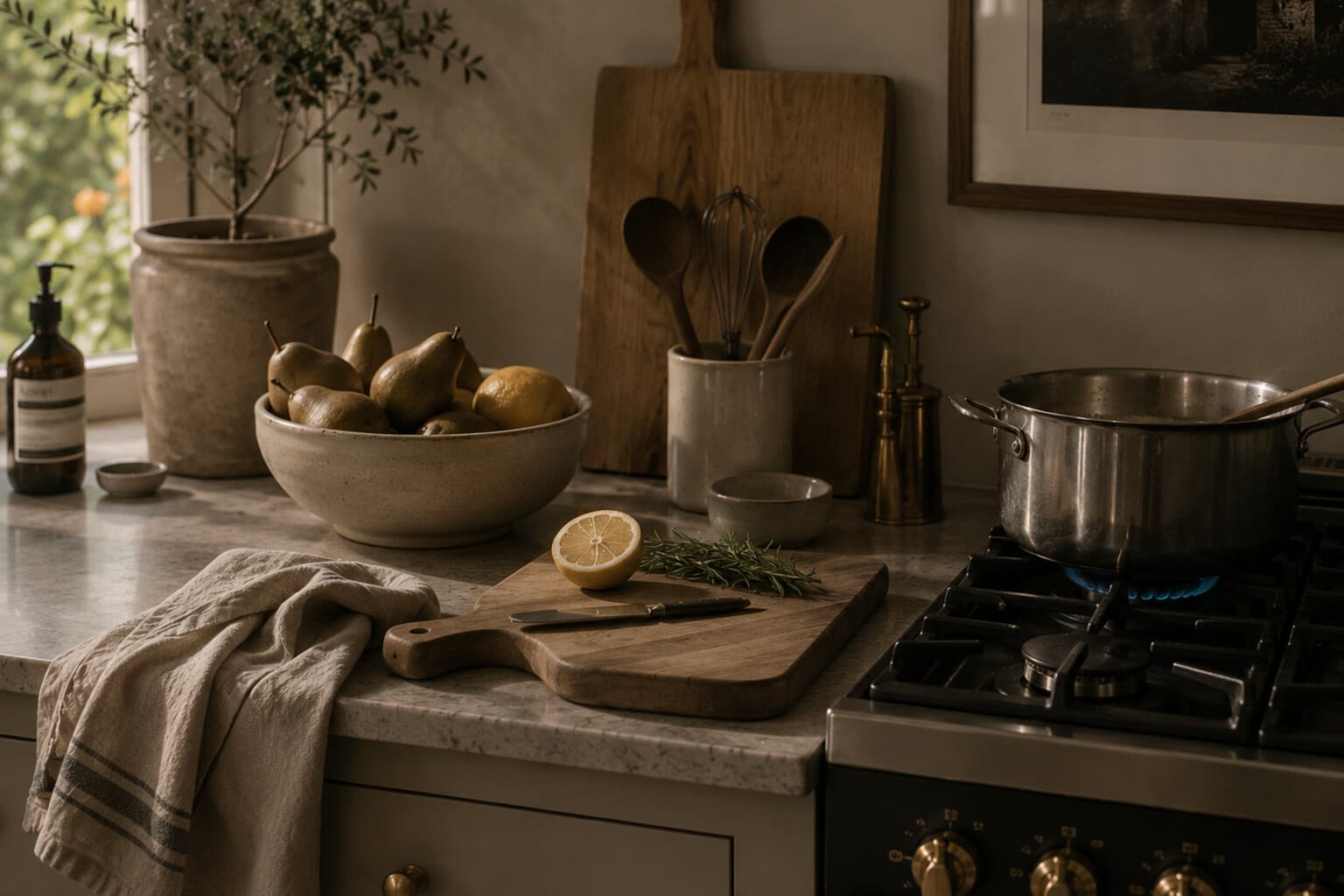
A beautiful kitchen is not defined by how untouched it looks. It is defined by how naturally it supports daily life - coffee made before the house is fully awake, fruit washed and left within reach, bread cut on a familiar board, a pot warming on the stove, dinner prepared without searching through several cupboards for the right utensil.
The most useful kitchens are not arranged for occasional perfection. They are organised around repeated actions - preparing, cooking, serving, eating, clearing, beginning again.
A well-used kitchen does not need every possible appliance or ingredient. It needs dependable tools, a manageable pantry and enough clear space to work comfortably. Its atmosphere comes from use.
Begin with the Meals Actually Prepared
Kitchen organisation should reflect real eating habits. Ask: what is cooked most often? Which breakfasts repeat? Which drinks are prepared every day? Are weekday meals quick or leisurely? Is the kitchen used for baking? Do several people cook? Are lunches prepared at home? Do guests gather in the kitchen?
The answers determine what deserves the easiest access. A household that cooks pasta several times a week may keep pans, olive oil, salt and dried pasta close together. A regular baker may need flour, scales and mixing bowls within one working zone. A household that mainly prepares simple meals does not need to organise the kitchen around equipment used twice a year.
Protect the Working Surface
Clear worktop space is one of the most valuable features in any kitchen. Keep only items that are used daily, difficult to store elsewhere, or visually quiet enough to remain visible - a coffee machine, kettle, knife block, fruit bowl, utensil pot, cutting board, or one tray of frequently used ingredients.
Move away unopened post, medicine, loose chargers, shopping bags, decorative objects that reduce usable space, and appliances used occasionally. The worktop should support cooking before it supports display.
Create Activity Zones
Group the kitchen around repeated actions. A drink zone holds coffee, tea, cups, sugar or alternatives, spoons and the kettle or coffee machine. A preparation zone holds knives, cutting boards, mixing bowls, measuring tools and frequently used seasonings.
A cooking zone holds pans, cooking utensils, oils, salt and heatproof tools. A serving zone holds plates, bowls, glasses, serving pieces and napkins. A cleaning zone holds dishwasher supplies, cloths, brushes, and waste and recycling.
The zones do not need to be formally labelled. They simply need to reduce unnecessary movement.
Keep the Everyday Tools Close
Prime storage should contain the items used most - one dependable chef’s knife, a small knife, two or three cutting boards, a few good pans, a baking tray, a casserole or oven dish, mixing bowls, a wooden spoon, spatula, tongs, whisk, colander and measuring jug.
The exact collection depends on the household. More tools do not automatically make cooking easier - too many similar utensils can make drawers harder to use.
Let the Kitchen Contain Signs of Life
A kitchen may feel warm through a bowl of pears, fresh herbs, a wooden board, a folded linen towel, a loaf of bread, a ceramic jug, or a favourite coffee cup.
These objects should still have a purpose. Useful objects often create more atmosphere than decorative kitchen accessories.
Make Clearing Part of Cooking
A meal is easier to complete when the kitchen is cleared in stages. While something simmers: return ingredients, load used bowls, wipe a surface, fill the sink, prepare serving pieces.
Do not aim to finish every dish before sitting down. Simply reduce the amount waiting afterwards.
Allow the Kitchen to Change with the Season
The foundation of the kitchen may remain the same while small details shift - fresh herbs, lemons, lighter meals and green vegetables in spring; tomatoes, stone fruit, cold drinks and open windows in summer; pears, apples, baking spices and warm drinks in autumn; citrus, soups, slow cooking, bread and candlelight in winter.
The season enters naturally through ingredients and routines. It does not require a complete decorative change.
Pair It With
A well-used kitchen is not preserved from mess. It moves through preparation, pleasure and restoration.
It becomes beautiful because it supports the life happening inside it.

Written by Esther
Esther is a photographer and storyteller, and the founder of Essy's Essentials - a seasonal home for stories, rituals, recipes and everyday luxuries.
More about Esther →