The Seasonal Pantry
A considered collection of dependable ingredients for creating simple meals without overfilling the cupboards.
At a Glance
- Begin with the year-round foundation
- Build around complete meal combinations
- Create a seasonal layer
- Store according to frequency
- Use decanting selectively
- Create an open-products zone
- Keep a pantry meal list
- The monthly pantry check
A useful pantry is not a large stockpile. It is a working collection of ingredients that regularly become meals - pasta waiting for a quick dinner, tinned tomatoes for soup or sauce, flour for a weekend bake, beans for a salad, oats for breakfast, spices that belong to the household’s actual cooking.
A pantry becomes difficult when it contains too many possibilities and too few ingredients that work together.
The Seasonal Pantry combines a dependable year-round foundation with a small number of ingredients that reflect the time of year.
Begin with the Year-Round Foundation
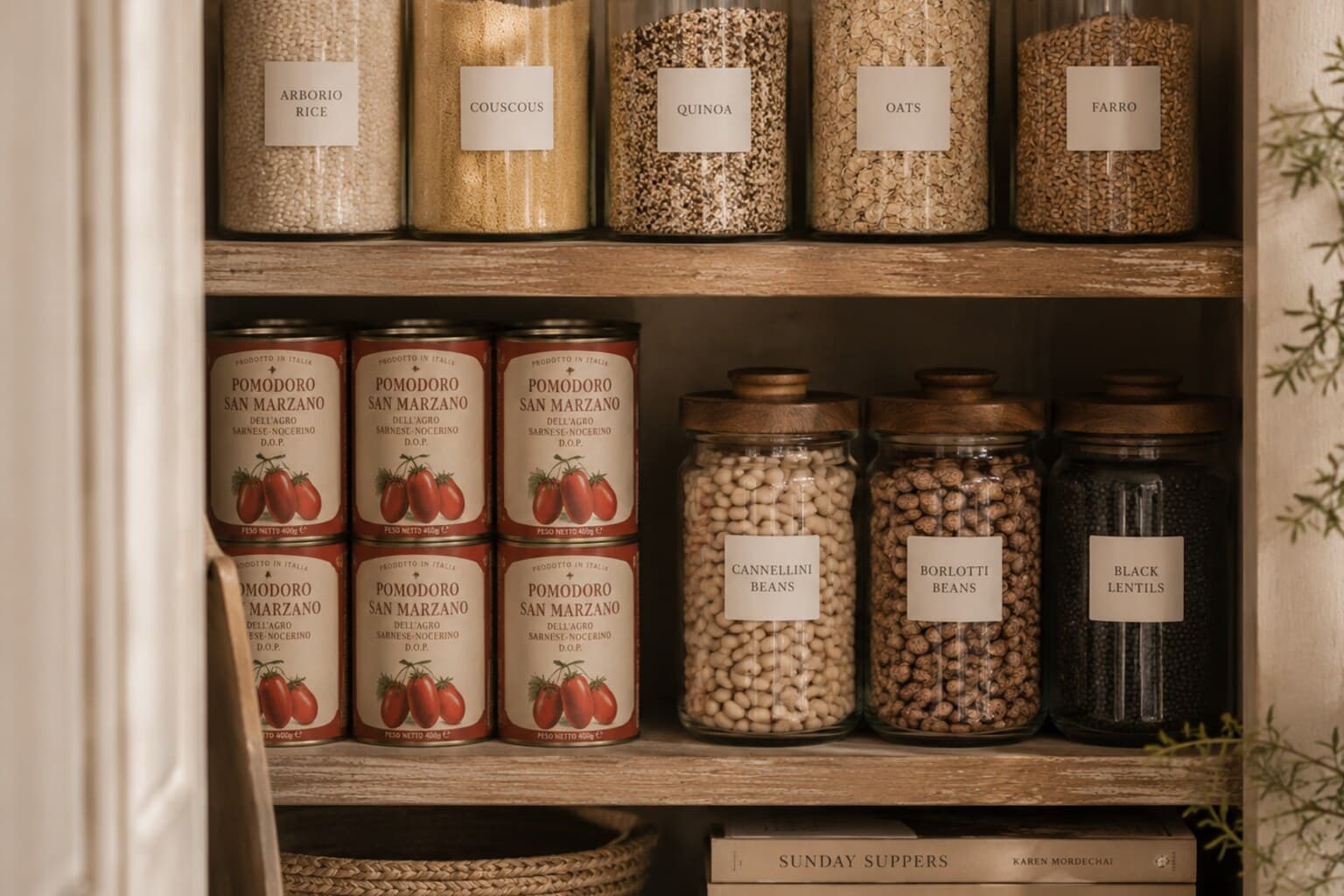
A practical pantry may include grains and starches (pasta, rice, couscous, oats, flour, breadcrumbs), tinned and jarred food (tomatoes, beans, chickpeas, lentils, tuna or another preferred protein, olives), cooking essentials (olive oil, neutral cooking oil, vinegar, mustard, stock, salt, pepper), baking essentials (sugar or preferred alternatives, baking powder, bicarbonate of soda where used, vanilla, cocoa, yeast), and flavour essentials (garlic, onions, dried herbs, a small collection of regularly used spices, honey or maple syrup, nuts and seeds).
The exact foundation should reflect the household’s cooking. Do not keep ingredients simply because a generic pantry list recommends them.
Build Around Complete Meal Combinations
A pantry is more useful when several ingredients can become a complete meal - pasta, tomatoes, olive oil and herbs; rice, beans, spices and stock; couscous, chickpeas, dried fruit and nuts; oats, fruit and seeds; flour, yeast, salt and olive oil.
Check whether the cupboard contains useful combinations rather than isolated products.
Store According to Frequency
Keep daily ingredients easiest to reach. A possible order: eye level for breakfast ingredients, pasta, rice and frequently used tins; lower shelves for heavier jars, oils and bulk ingredients; upper shelves for baking items, occasional ingredients and backups.
Do not scatter duplicates throughout the pantry. Keep opened products together and visible.
Use Decanting Selectively
Decanting may help with flour, sugar, oats, rice, pasta and nuts. Use appropriate food-safe containers and label contents, allergen information where relevant, expiry or best-before date, and cooking instructions when useful.
Do not decant products when the original packaging contains important safety or preparation information that will be lost. Transparent containers can improve visibility, but they are not necessary for every item.
Create an Open-Products Zone
Opened packets are often forgotten behind full packages. Use one basket, tray or shelf section for open pasta, open grains, half-used baking ingredients, open crackers and items to use soon.
Review this zone before beginning the shopping list.
Keep a Pantry Meal List
Place a short list inside the cupboard or in the household planning system - possible pantry meals include tomato pasta, bean soup, lentil stew, chickpea curry, fried rice, couscous salad, porridge, savoury pancakes, tuna and bean salad, or bread or focaccia.
These meals reduce the assumption that dinner requires another shop.
The Monthly Pantry Check
Review expired items, nearly empty packages, duplicates, ingredients to use soon, supplies genuinely running low, spills, and evidence of moisture or pests.
Remove everything only when a deeper clean is actually needed. A regular light check is usually enough.
The Checklist
- Foundation ingredients match real cooking
- Several complete meal combinations are available
- Seasonal layer remains small
- Opened products are visible
- Duplicates are grouped
- Containers are clearly labelled
- Expiry dates are reviewed
- Shopping begins with existing stock
Create a Seasonal Layer
Spring
- Lemon preserves.
- Green herbs.
- Peas in the freezer.
- Light stock.
- Almonds.
- White beans.
Summer
- Olives.
- Capers.
- Tinned fish.
- Couscous.
- Tomato products.
- Herb oils.
Autumn
- Oats.
- Lentils.
- Baking spices.
- Walnuts.
- Apple or pear preserves.
- Polenta.
Winter
- Beans.
- Pulses.
- Rich stock.
- Cocoa.
- Dried fruit.
- Bread-making ingredients.
Pair It With
A good pantry does not offer endless choice.
It offers a reliable answer to the ordinary question: what can we make from what is already here?
Enjoyed this?
The Seasonal Letter brings more stories, recipes and rituals like this one - a few times a season, never more.

Written by Esther
Esther is a photographer and storyteller, and the founder of Essy's Essentials - a seasonal home for stories, rituals, recipes and everyday luxuries.
More about Esther →