The Use-First Food System
A practical method for reducing household food waste by making perishable ingredients visible and easier to use.
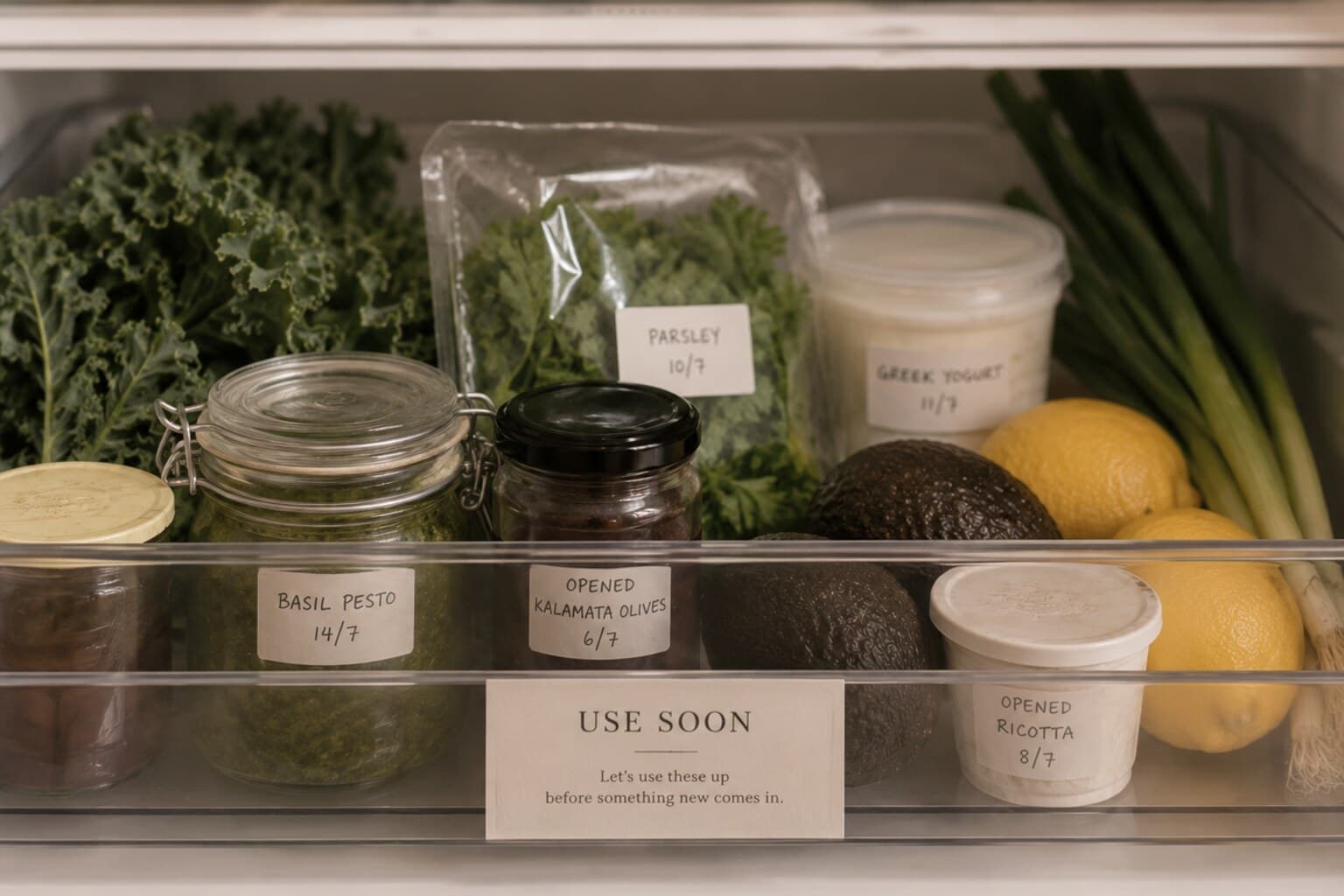
At a Glance
- Create one use-first area
- Add a use-first note
- Review before shopping
- Use a three-level priority
- Build meals from the priority ingredient
- Create a weekly use-it-up meal
- Freeze with a purpose
- Distinguish dates correctly
Food waste often begins with invisibility. A vegetable disappears into the back of a drawer. Half a jar is hidden behind a full one. Leftovers are stored without a clear plan. A new shop arrives before the existing food has been reviewed.
The Use-First Food System creates one visible priority. It separates ingredients that should be used soon from food with a longer life. This makes the next meal easier to decide and reduces unnecessary purchasing.
Create One Use-First Area
Choose one location in the refrigerator - a clear container, a shallow tray, one shelf section, or a labelled drawer. Place here opened products, small leftovers, produce nearing the end of freshness, partially used ingredients, and items removed from the freezer for use.
Keep the area visible. A use-first system hidden in an opaque box will not work as well.
Add a Use-First Note
Keep a short list where the household will see it - on the refrigerator, inside a planning notebook, or in a shared digital note. Include only the highest-priority items, for example half a cucumber, cooked rice, open tomato sauce, two pears, fresh herbs, or soup.
The list should take less than a minute to update.
Review Before Shopping
Before making the shopping list, open the refrigerator, check the use-first area, review fruit and vegetables, check bread, look at leftovers, and review the freezer.
Then decide which ingredients are genuinely needed. This prevents shopping from becoming a repeated habit disconnected from existing food.
Use a Three-Level Priority
Use today: prepared food, very ripe fruit, delicate leaves, opened perishables. Use this week: vegetables, dairy or alternatives, cooked ingredients, fresh herbs. Longer life: unopened products, hardier produce, frozen food, pantry ingredients.
This creates a more useful hierarchy than relying only on purchase dates.
Build Meals from the Priority Ingredient
Begin with the ingredient that needs using. Ask: what can this become? A soft vegetable may become soup. Ripe fruit may become compote or cake. Cooked grains may become a lunch bowl. Fresh herbs may become dressing. Bread may become toast, croutons or breadcrumbs. Leftover roasted vegetables may become pasta or frittata.
The meal does not need to use every remaining ingredient at once.
Create a Weekly Use-It-Up Meal
Choose one predictable moment - Thursday dinner, Saturday lunch, or Sunday soup. Use it for leftovers, open products and produce needing attention.
This does not need to become a random combination - add one dependable foundation such as eggs, pasta, rice, stock, bread or beans. A reliable foundation makes mixed ingredients feel intentional.
Freeze with a Purpose
Freezing delays waste only when frozen food is later used. Label contents, date, number of portions and possible use - for example "roasted tomato sauce, two portions, pasta" or "pear compote, porridge".
Avoid freezing unidentified containers. Keep a simple freezer list when the contents are difficult to see.
Distinguish Dates Correctly
Food labels may indicate different things - a use-by date concerns safety, while a best-before date generally concerns quality.
Follow local official food-safety guidance. Do not rely on appearance or smell alone when a food presents a safety risk.
The Checklist
- Use-first area visible
- Open products grouped
- Leftovers labelled
- Priority note updated
- Refrigerator checked before shopping
- One use-it-up meal planned
- Freezer items identifiable
- Food-safety dates understood
Pair It With
Reducing food waste does not require perfect prediction.
It requires noticing what is already present before adding something new.
Enjoyed this?
The Seasonal Letter brings more stories, recipes and rituals like this one - a few times a season, never more.

Written by Esther
Esther is a photographer and storyteller, and the founder of Essy's Essentials - a seasonal home for stories, rituals, recipes and everyday luxuries.
More about Esther →