The Everyday Dressing Formula
A flexible structure for creating balanced dressings that bring together salads, grains, vegetables and simple lunches.
At a Glance
- Choose the fat
- Add acidity
- Season properly
- Choose one flavour direction
- Add sweetness only where useful
- Use the correct consistency
- Make only what will be used
- Pair the dressing intentionally
A good dressing can turn several separate ingredients into a coherent meal - leaves become a salad, cooked grains become lunch, roasted vegetables become a complete side dish, beans become something worth placing on toast.
The Everyday Dressing Formula is built around five elements: fat, acidity, seasoning, one flavour direction, and optional sweetness. The formula is simple enough to repeat and flexible enough to change with the season.
Element 1: Choose the Fat
Possible options include extra-virgin olive oil, neutral oil, nut or seed oil used in smaller amounts, yoghurt or an alternative, or tahini.
The fat carries flavour and softens acidity. Use an ingredient that suits the dish and dietary needs.
Element 2: Add Acidity
Possible options include lemon juice, lime juice, red-wine vinegar, white-wine vinegar, apple-cider vinegar, or balsamic vinegar.
Different acids vary in intensity and sweetness. Add gradually and taste.
Element 3: Season Properly
Use salt, black pepper, mustard, garlic, shallot, fresh herbs or dried herbs.
The dressing should taste slightly more intense on its own than it will once distributed over food.
Element 4: Choose One Flavour Direction
A herb and lemon direction uses olive oil, lemon juice, parsley or basil and mustard. A honey mustard direction uses oil, vinegar, mustard and honey. A yoghurt and herb direction uses yoghurt or an alternative, lemon, herbs and garlic. A tahini and citrus direction uses tahini, lemon, water and garlic. A balsamic direction uses olive oil, balsamic vinegar, mustard and black pepper.
Keep the flavour direction clear - one direction, followed properly, reads better than several combined at once.
Element 5: Add Sweetness Only Where Useful
Possible sweeteners include honey, maple syrup, sugar or fruit preserve.
Sweetness can balance strong acidity or bitterness. It should not dominate the dressing - taste before adding it.
Use the Correct Consistency
For leafy salads, the dressing should coat lightly. For grain bowls, it may be slightly thicker. For roasted vegetables, a more acidic dressing can bring contrast. For dipping or spooning, yoghurt or tahini dressings may be thicker.
Add water, oil, citrus juice or yoghurt gradually until the texture suits the intended use.
Make Only What Will Be Used
Prepare one small jar - enough for two or three meals - and make a larger batch only when the dressing is part of a clear plan.
Homemade dressings may contain fresh ingredients with limited storage life. Refrigerate appropriately and follow safe-storage guidance.
Pair the Dressing Intentionally
Use herb dressing with potatoes, beans, fish or tomatoes. Use tahini dressing with roasted vegetables, grains or chickpeas. Use honey mustard with bitter leaves, chicken or roasted roots. Use yoghurt dressing with warm vegetables, flatbread or grain bowls.
A dressing chosen to suit the dish, rather than reached for automatically, does more work with less effort.
The Checklist
- Fat selected
- Acid added gradually
- Seasoning balanced
- One flavour direction chosen
- Sweetness kept optional
- Consistency matched to the dish
- Jar labelled
- Storage time kept realistic
Seasonal Dressing Ideas
Spring
- Lemon, mint and honey.
Summer
- Tomato, basil and red-wine vinegar.
Autumn
- Apple-cider vinegar, mustard and maple.
Winter
- Orange, balsamic and black pepper.
Pair It With
A dependable dressing is one of the smallest forms of kitchen preparation with one of the greatest effects.
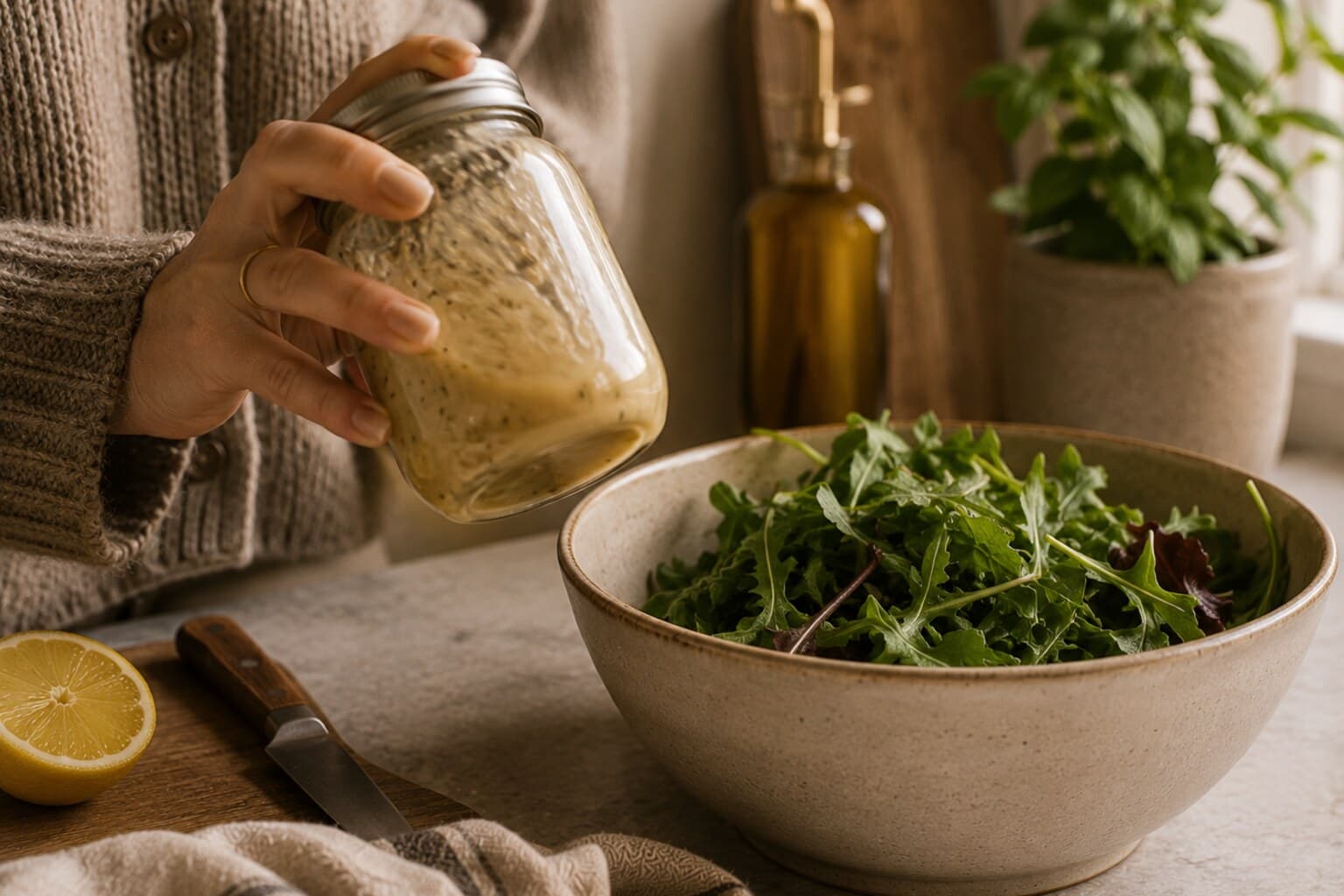
A few ingredients shaken in a jar can make several ordinary meals feel newly made.
Enjoyed this?
The Seasonal Letter brings more stories, recipes and rituals like this one - a few times a season, never more.

Written by Esther
Esther is a photographer and storyteller, and the founder of Essy's Essentials - a seasonal home for stories, rituals, recipes and everyday luxuries.
More about Esther →