The Everyday Table
A simple approach to making ordinary meals feel considered without saving the best pieces for special occasions.
At a Glance
- Clear the table before serving
- Use the tableware you enjoy
- Keep the setting minimal
- Add one centre detail
- Adjust the lighting
- Serve from the kitchen or the table intentionally
- Keep a table drawer or basket
The table is often styled for guests and overlooked during everyday life. Meals are eaten beside post, chargers and unfinished household tasks. Useful tableware remains in cupboards while the quickest options are used repeatedly.
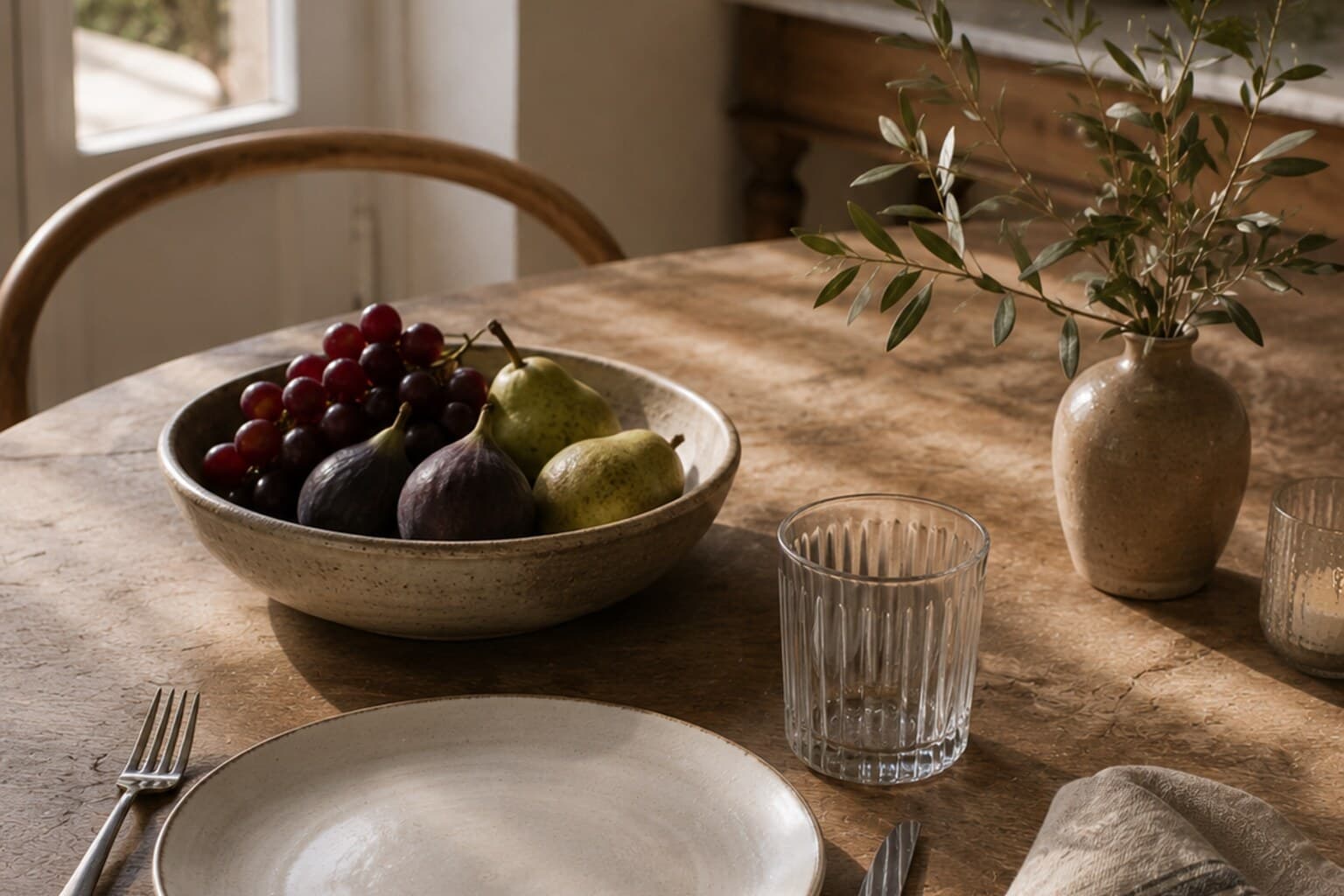
The Everyday Table is not a formal table setting. It is a small act of separation between preparing the meal and sitting down to eat it - a cleared surface, a glass of water, a proper plate, a napkin, a lamp or candle.
These details do not turn dinner into an event. They allow the meal to feel like a moment in its own right.
Clear the Table Before Serving
Remove post, work materials, shopping, technology and unrelated household items. The table does not need to be completely empty - one vase, candle or bowl may remain.
But the meal should have enough physical and visual space.
Use the Tableware You Enjoy
Do not save every favourite item for guests - use the ceramic bowl, the linen napkin, the glass that feels good to hold, the serving dish, the wooden board.
Objects become meaningful through repeated use. Choose durable pieces appropriate for daily life and care for them accordingly.
Keep the Setting Minimal
An everyday place setting may include a plate or bowl, necessary cutlery, a glass and a napkin. Nothing more is required.
Serve water in a bottle, jug or carafe when practical. Place condiments on a small tray rather than leaving several packages across the table.
Add One Centre Detail
Possible options include a small vase, fresh herbs, a low candle, a bowl of fruit, a branch, or a small lamp. Keep it low and simple.
The centrepiece should never make ordinary serving more difficult.
Adjust the Lighting
During the day, use natural light where possible. In the evening, reduce harsh overhead lighting, use a pendant, wall light or nearby lamp, and add candlelight safely where appropriate.
The lighting should allow the food to be seen while creating a clear transition from the rest of the day.
Serve from the Kitchen or the Table Intentionally
Serve from the kitchen when the table is small, the dish is hot or difficult to pass, portions need to be controlled, or several serving pieces would create clutter.
Serve at the table when the meal suits sharing, there is enough space, serving dishes contribute to the atmosphere, or guests or household members can participate. Do not place every pan on the table by default - transfer food only when it improves the experience.
Keep a Table Drawer or Basket
Store nearby napkins, coasters, matches, a candle snuffer, small trivets and frequently used placemats. This makes setting the table easier.
Avoid storing so much that the drawer becomes another mixed household category.
The Checklist
- Surface cleared
- Proper tableware used
- Water placed
- Napkins available
- Lighting adjusted
- One centre detail retained
- Technology moved aside
- Meal given its own moment
Let the Table Change Subtly with the Season
Spring
- Pale linen.
- Herbs.
- Fresh green detail.
Summer
- Fruit.
- Clear glass.
- Lighter textiles.
Autumn
- Warm ceramic.
- Pears.
- Deeper napkins.
Winter
- Candlelight.
- Darker wood.
- Textured linen.
Pair It With
An everyday meal does not need ceremony. But it benefits from attention.
The table says: the tasks can pause, the food is ready, sit down.
Enjoyed this?
The Seasonal Letter brings more stories, recipes and rituals like this one - a few times a season, never more.

Written by Esther
Esther is a photographer and storyteller, and the founder of Essy's Essentials - a seasonal home for stories, rituals, recipes and everyday luxuries.
More about Esther →