Hosting & Gatherings
The Relaxed Dinner Table
A flexible table-setting approach that feels thoughtful without becoming formal.
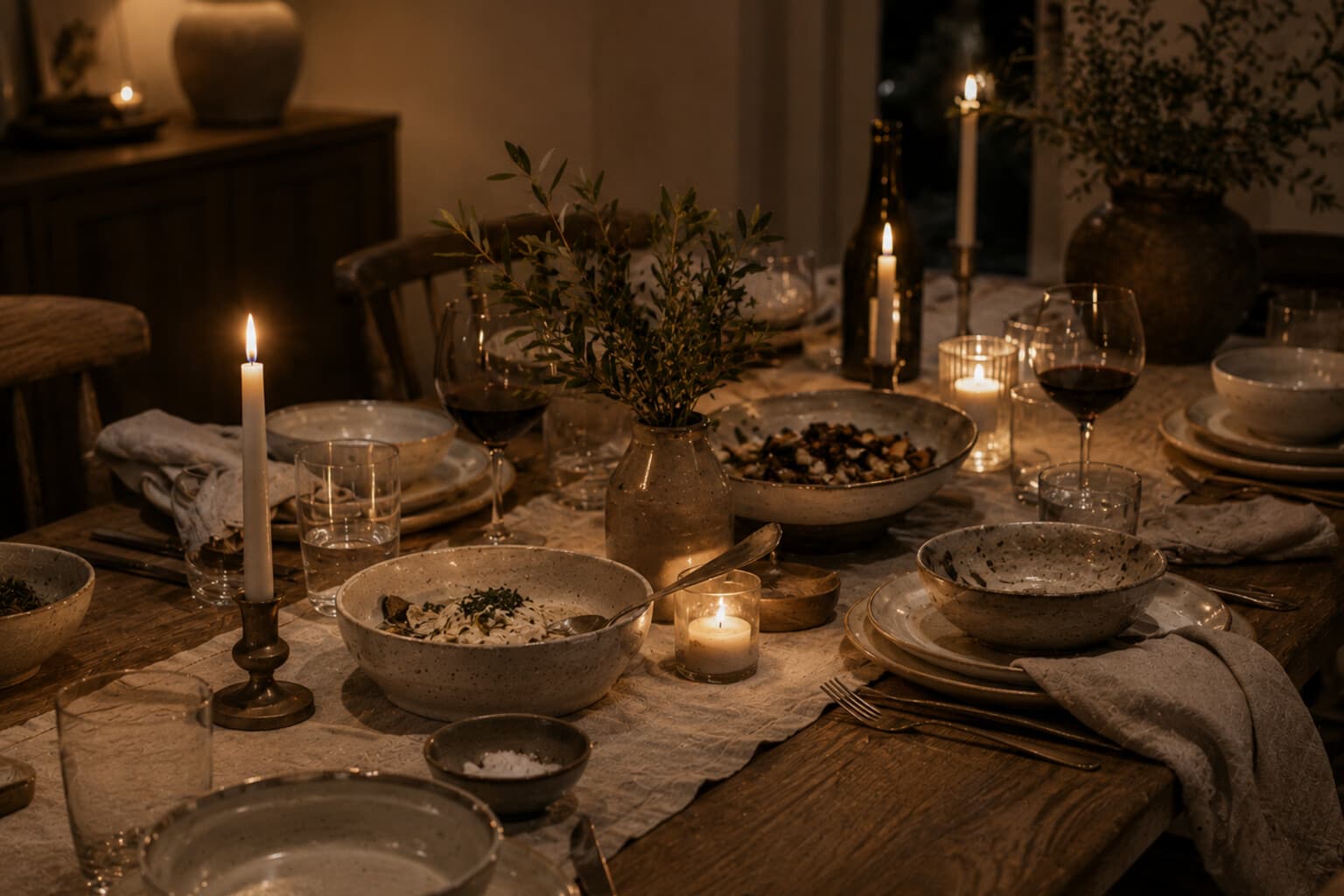
A table does not need elaborate decoration to feel special.
It needs proportion, rhythm and enough space for people to eat comfortably. The most inviting tables often use familiar pieces arranged with care - a cloth or runner, simple plates, glasses that catch the light, soft napkins, candles, and one natural detail.
The Relaxed Dinner Table is designed to work for everyday meals, small dinners and seasonal occasions.
Begin With the Table Surface
Decide whether to use the bare table, a full tablecloth, a runner, or placemats. A tablecloth creates softness and occasion. A runner adds structure without covering the entire surface. The bare table may work beautifully when the wood itself contributes warmth.
Choose one main textile approach. Avoid layering several competing patterns unless the effect is deliberate.
Use a Restrained Place Setting
A relaxed place setting may include one dinner plate, one smaller plate or bowl where needed, fork and knife, water glass, and napkin.
Additional cutlery should be added only when the menu requires it. Do not place unnecessary pieces simply to make the setting appear formal.
Fold Napkins Simply
Possible napkin arrangements include folded beneath the fork, placed on the plate, tied loosely with string or ribbon, or folded beside the plate.
A simple linen napkin already adds texture. It does not need an elaborate shape.
Create a Low Centre
The centre of the table should support conversation. Use a small group of bud vases, one low bowl, branches arranged horizontally, seasonal fruit, low candles, or small potted herbs.
Avoid tall arrangements that block the view between guests.
Use Candlelight in Rhythm
Several small candles often feel softer than one large central candle. Possible arrangement: two or three candlesticks, small votives distributed along the table, or one lantern for an outdoor meal.
Keep flames away from flowers, paper and fabric.
Allow Room for Serving
Before completing the styling, decide where the food will go - plated in the kitchen, shared dishes on the table, a serving station on a sideboard, or a buffet in the kitchen.
A table can appear beautiful when empty but become impractical once serving dishes arrive. Protect space for the actual meal.
Mix Rather Than Match
A relaxed table may include different but related glasses, mixed ceramic plates, several shades of linen, vintage cutlery, or different candleholders in one finish family.
The pieces should share a relationship through colour, material or scale. Variation can make the setting feel collected rather than staged.
The Final Table Check
Sit in one of the chairs. Check: is there enough room for the knees and arms? Can guests see each other? Can water be reached? Is the lighting comfortable? Are serving dishes accessible? Does anything feel fragile or obstructive?
The table should work from the guest’s perspective, not only from above.
One Seasonal Gesture
Spring
- Herbs or small flowers.
Summer
- Tomatoes, lemons or garden flowers.
Autumn
- Pears, figs, leaves or warm candles.
Winter
- Evergreen branches, nuts or deeper linens.
Pair It With
A relaxed dinner table does not ask guests to admire it from a distance.
It invites them to sit down, move things, pass food and remain at the table after the plates are cleared.

Written by Esther
Esther is a photographer and storyteller, and the founder of Essy's Essentials - a seasonal home for stories, rituals, recipes and everyday luxuries.
More about Esther →