The Simple Seasonal Menu
A reliable method for building a generous menu with fewer dishes and less last-minute work.
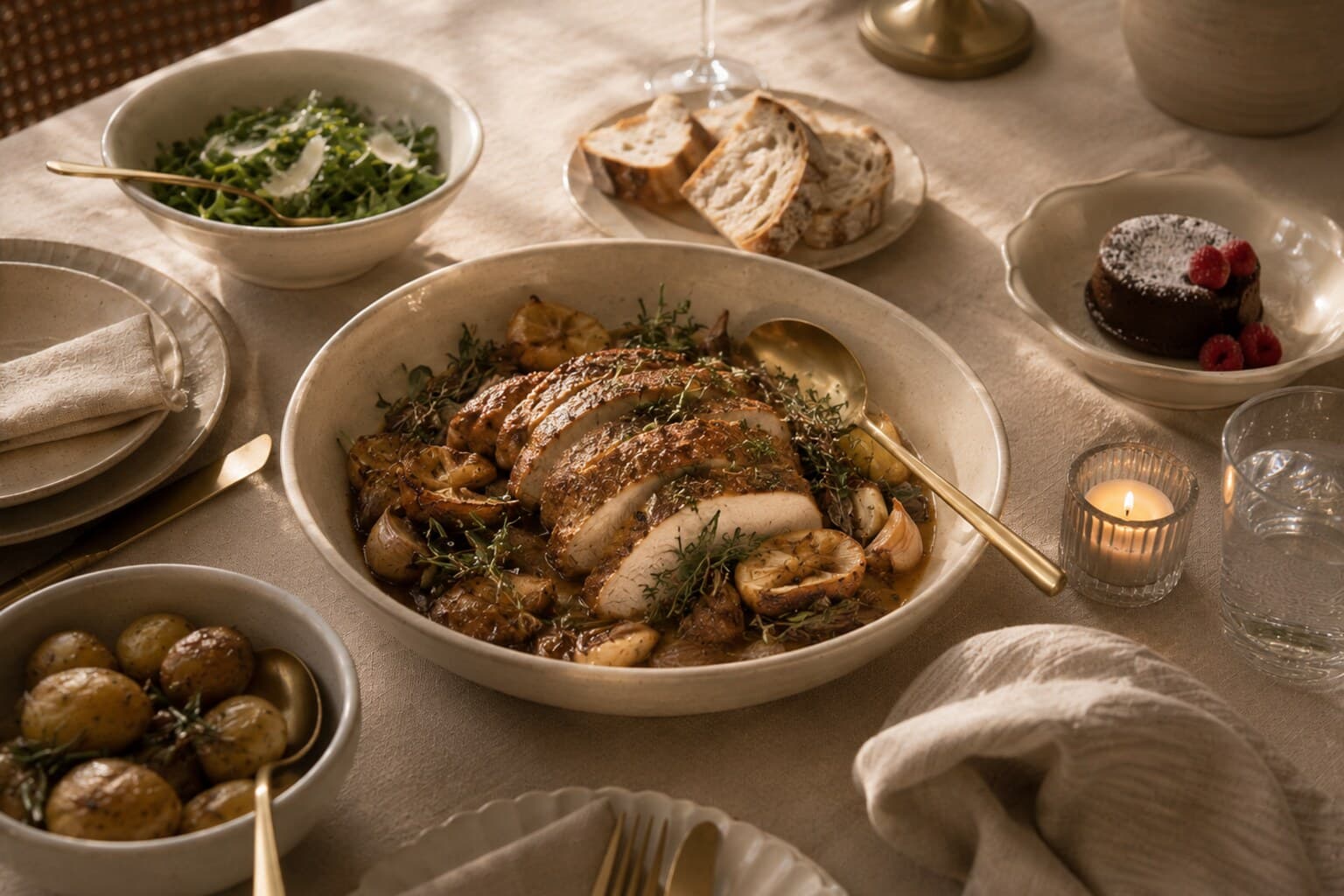
At a Glance
- Choose the main dish first
- Add one contrasting side
- Decide whether bread or starch is needed
- Choose an easy arrival snack
- Choose a dessert that waits well
- Repeat ingredients
- Limit cooking methods
A good hosting menu should support the gathering. It should not require the host to disappear into the kitchen for most of the evening.
The Simple Seasonal Menu is built around one main dish and a limited number of supporting elements: one arrival snack, one main dish, one fresh or vegetable side, one bread or starch where needed, and one dessert. This is usually enough.
1. Choose the Main Dish First
The main dish should determine the rest of the menu. Choose something that can serve several people, can be prepared partly in advance, allows a flexible serving time, does not require individual last-minute cooking, and works with the season.
Suitable formats include tray bakes, roasts, pasta dishes, savoury tarts, soups, stews, large salads, and baked brunch dishes.
2. Add One Contrasting Side
Balance the main dish - if it is rich, add something fresh or acidic; if it is light, add something warm or substantial.
Examples: green salad with lemon dressing, roasted vegetables, tomato salad, fennel and orange, beans with herbs, or bitter leaves.
Keep the side simple enough to prepare quickly.
3. Decide Whether Bread or Starch Is Needed
Add bread, potatoes, rice, polenta, couscous or focaccia - only when it makes the meal more complete.
Do not add a starch automatically when the main dish already provides enough.
4. Choose an Easy Arrival Snack
Suitable options include olives, nuts, cheese and crackers, bread with butter, a dip, marinated vegetables, or one small baked item.
The snack should take pressure off the exact serving time. It should not become a separate first course unless intentionally planned.
5. Choose a Dessert That Waits Well
Good hosting desserts may include cake, tart, tiramisu-style desserts, pavlova components prepared ahead, baked fruit, cookies, or ice cream with a seasonal topping.
Avoid desserts requiring complicated assembly while guests are waiting.
6. Repeat Ingredients
Use some ingredients across the menu - for example, lemon in the drink, salad and dessert, fresh herbs in the main and side, or pears on the table and in the dessert.
This creates cohesion and simplifies shopping.
7. Limit Cooking Methods
Avoid a menu in which every dish needs the oven at a different temperature. Aim for one oven dish, one stovetop element, one cold side, and one make-ahead dessert.
The kitchen should have enough capacity for the plan.
The Checklist
- Main dish selected first
- One contrasting side added
- Starch included only if useful
- Arrival snack kept simple
- Dessert prepared in advance
- Ingredients repeated
- Cooking methods coordinated
- Dietary needs checked
- Serving dishes assigned
Seasonal Menu Examples
Spring
- Arrival snack: radishes with salted butter.
- Main: herb and leek tart.
- Side: tender leaves with lemon.
- Dessert: almond cake with strawberries.
Summer
- Arrival snack: olives and focaccia.
- Main: tomato and ricotta pasta.
- Side: courgette ribbon salad.
- Dessert: peaches with cream or a dairy-free alternative.
Autumn
- Arrival snack: cheese, apple and walnuts.
- Main: roast chicken with grapes and herbs.
- Side: bitter leaves with mustard dressing.
- Dessert: pear and almond cake.
Winter
- Arrival snack: warm nuts and bread.
- Main: slow-cooked stew or baked pasta.
- Side: cabbage and herb salad.
- Dessert: chocolate cake or baked apples.
Pair It With
A generous menu is not measured by the number of dishes.
It is measured by whether there is enough, whether the food belongs together and whether the host can sit down too.
Enjoyed this?
The Seasonal Letter brings more stories, recipes and rituals like this one - a few times a season, never more.

Written by Esther
Esther is a photographer and storyteller, and the founder of Essy's Essentials - a seasonal home for stories, rituals, recipes and everyday luxuries.
More about Esther →