Beauty & Fragrance
The Art of Scent Stacking
How to combine fragrance notes, experiment with niche perfume and create a scent that feels entirely your own.
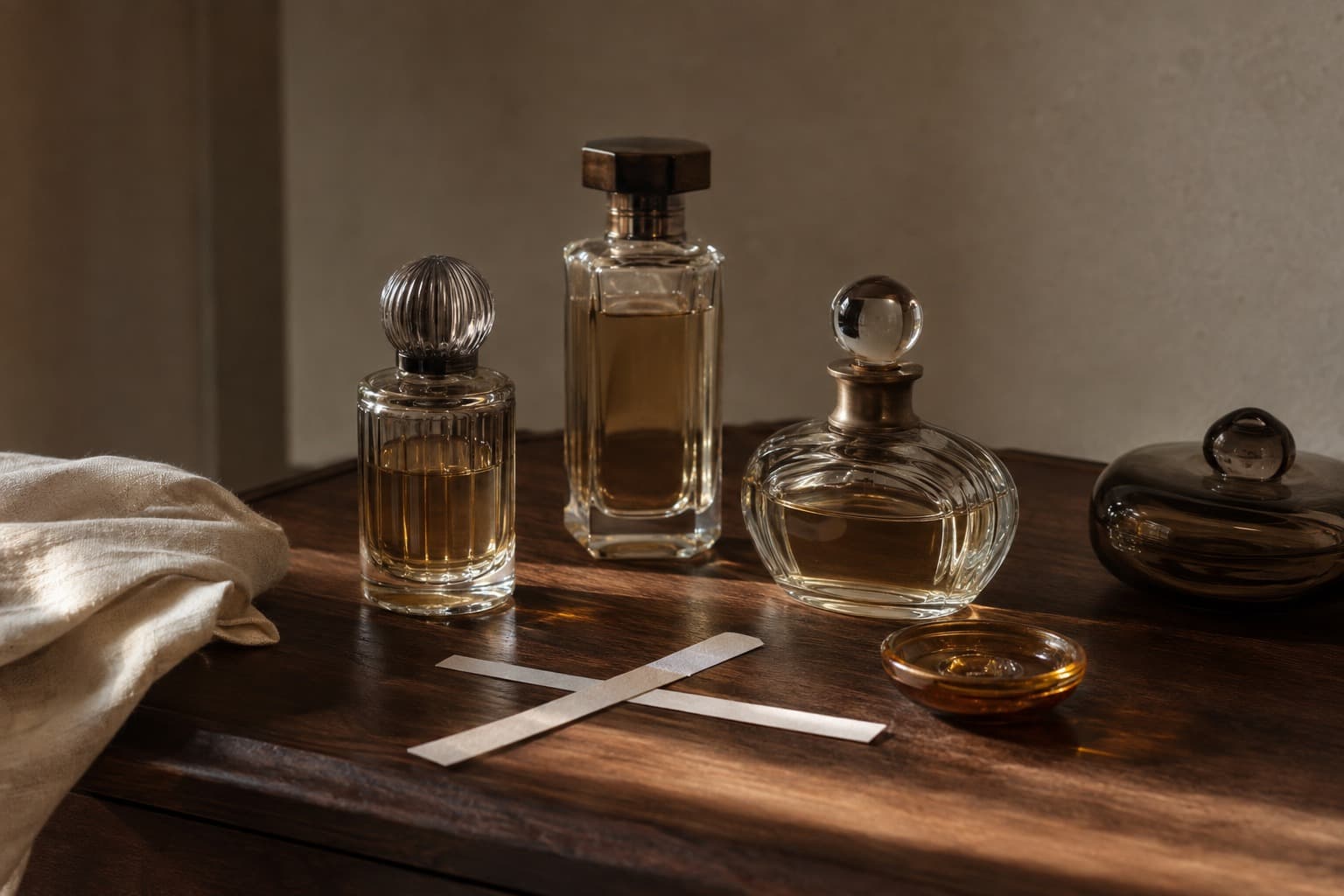
“There are perfumes you wear and perfumes you seem to enter.”
Niche fragrance is particularly good at the second kind. One spray can feel like polished wood, warm skin, a hotel bar, cold stone or a place you have never visited but are suddenly rather nostalgic for. It is probably why I find niche perfume so interesting. These bottles are not merely trying to make everything smell generically lovely. They have opinions.
Which raises a slightly dangerous question: if one beautiful perfume can create an entire atmosphere, what happens when you add another?
Scent stacking - also called perfume layering or fragrance layering - is the practice of combining scented products to create a more personal result. That may mean wearing two perfumes together, but it can also be as simple as applying perfume over a body oil. The latter is where my own layering habit began: a little body oil first, then fragrance, partly for the ritual and partly because the scent seemed to linger more comfortably on my skin.
I have not spent years conducting elaborate perfume experiments at a marble vanity, however appealing that job description sounds. My own shelf includes Tom Ford Vanilla Sex, Xerjoff 1861 Naxos and Marc-Antoine Barrois Ganymede - three fragrances with very different personalities, and three useful reminders that layering is as much about knowing when to stop as knowing what to add.
So this is not a set of commandments for combining expensive bottles. It is a considered place to begin: how to layer perfume without overwhelming either fragrance, how to read perfume notes, how to test combinations and how to make a fragrance feel more personal without removing the thing that made it beautiful in the first place.
There Are Perfumes You Wear and Perfumes You Seem to Enter
There are perfumes you wear and perfumes you seem to enter.
What is scent stacking? It is the practice of wearing more than one scented product so that the fragrances interact. It can take several forms: applying perfume over an unscented or scented body oil, using a fragranced body cream beneath a related perfume, combining a fragrance enhancer with an eau de parfum, layering two perfumes on the same pulse point, or applying different perfumes to separate areas of the body so they meet more softly in the air.
The objective is not necessarily to make perfume stronger. It may be to add warmth, freshness, softness, depth or contrast. A bright citrus can lift a dense amber. Musk can soften a floral. Sandalwood can give a sheer fragrance more shape. And sometimes a neutral body oil simply gives the perfume a comfortable base without changing its character very much at all.
The most successful combinations still allow you to recognise the original fragrances. If the result smells blurred, crowded or merely louder, the layering has probably not improved either bottle.
Begin with the Effect, Not the Bottles
Before choosing two perfumes, decide what you want to change about the first one.
Do you want it to feel warmer, fresher, creamier, drier, softer and closer to the skin, more floral, more suitable for evening, or a little less sweet?
This is easier than staring at an entire perfume shelf and asking which two bottles might become friends. Start with one fragrance you already like, identify the effect you want, then choose a second layer with one clear role.
A vanilla perfume does not automatically need more sweetness. It may become more interesting with citrus, woods or something aromatic. A leather scent might welcome mandarin or a soft floral, while adding smoke, oud and amber all at once could make it feel less nuanced rather than more.
A Simple Guide to Perfume Notes
Perfume is often described through top, heart and base notes. They do not operate as three perfectly separate chapters, but the structure is helpful when you are learning how a fragrance develops.
Top notes tend to create the first impression: citrus, light herbs, pepper or airy fruit. They are often brighter and more volatile.
The heart gives much of the perfume its character. Florals, spices, tea, honey and aromatic notes often appear here.
Base notes usually create depth and remain closer to the skin for longer. Think woods, vanilla, amber, musk, tobacco, tonka, leather and resins.
When layering perfume, you can look for either a bridge or a contrast. A bridge is a note both fragrances share - vanilla in one perfume recognising vanilla or tonka in another, for example. It helps the scents meet naturally. A contrast changes the direction - bright bergamot against warm amber, or clean musk beneath a lush floral. Contrast can be more interesting, but it is wise to keep one side simple.
1. Start with Skin, Not a Second Perfume
If your main aim is to help a fragrance sit more comfortably and remain noticeable, begin with moisturised skin. An unscented lotion or body oil gives you the most neutral experiment. A scented oil becomes part of the composition, so treat it as a genuine first layer rather than invisible preparation.
Allow the oil or cream to settle before applying perfume. Avoid making a universal longevity promise: skin, climate, formula and application all affect how a fragrance behaves.
2. Test on Blotters First
Spray each perfume on a separate blotter, then hold the two strips together and move them beneath your nose. This does not replicate skin perfectly, but it lets you reject an unhappy combination without wearing it for the next eight hours.
If the pairing still appeals after ten to fifteen minutes, try it on skin on a day when you have nowhere scent-sensitive to be.
3. Use a One-Plus-One Rule
Begin with one spray of each fragrance. Stronger is not automatically more successful, particularly with concentrated or highly diffusive niche perfumes. You can adjust the ratio later: two sprays of the quieter scent and one of the more dominant fragrance often works better than equal volume.
4. Give Each Fragrance a Little Space
You can layer both fragrances on the same pulse point for a more blended result. Alternatively, place one on the wrist and another near the collarbone or on the opposite arm. Wearing them side by side allows their trails to meet without forcing the formulas to merge immediately.
For complex niche fragrances, separate placement is often the more forgiving first test.
5. Apply with Intention
A useful starting order is the quieter, softer or more skin-like layer first, followed by the fragrance intended to lead. Some brands recommend lighter scents first and richer scents second, but perfume is not a sandwich with strict architectural regulations. Test both orders if the products are subtle enough.
Do not rub the wrists together. Let the fragrances settle and notice the result after the opening has faded, not only during the first minute.
6. Keep Notes
A combination may be beautiful in cool evening air and exhausting on a warm train. Record the products, number of sprays, placement, weather and how the pairing smelled several hours later. This turns a random experiment into a small personal fragrance library.
12 Perfume Layering Combinations to Try
These are note pairings rather than guarantees about every perfume containing those notes. Formula, concentration and proportion matter. Begin on blotters, keep the application light and allow the combination to develop.
1. Vanilla and Bergamot
Bergamot brings brightness to vanilla and can make a dense gourmand feel more open. This is a useful bridge between summer and autumn: warm underneath, but still lifted at the top.
2. Vanilla and Sandalwood
This pairing tends to feel creamy, smooth and quietly enveloping. Choose a dry sandalwood if the vanilla is already sweet, or a softer milky wood if the vanilla is more powdery.
3. Vanilla and Tobacco
Tobacco can give vanilla dryness, warmth and evening depth. Both notes can project strongly, so use the sweeter fragrance sparingly and avoid adding a third rich layer.
4. Honey and Lavender
Lavender adds aromatic structure to honey; honey softens lavender’s sharper or more traditional edges. The effect can feel warm, polished and unexpectedly comforting.
5. Mandarin and Leather
Bright mandarin creates contrast against leather and makes it feel more luminous. This is not only a theoretical pairing: the tension between mandarin and a mineral leather accord is part of Ganymede’s own composition.
6. Rose and Woods
Rose gains depth from cedar, sandalwood or guaiac wood, while the floral note prevents the woods from feeling too dry. Start with a sheer rose if the woody perfume is already powerful.
7. Fig and Sandalwood
Green fig leaf, creamy fig and dry sandalwood can produce very different results, but the family resemblance is often harmonious. This is an elegant route for someone who wants softness without obvious vanilla.
8. Citrus and Aromatic Herbs
Lemon, bergamot or grapefruit can sharpen lavender, rosemary, sage or tea. The result tends to feel clear and energetic, particularly in warmer weather.
9. White Florals and Amber
Amber adds warmth beneath jasmine, orange blossom or tuberose. Because both families can become expansive, use one perfume as a veil and allow the other to lead.
10. Clean Musk and Almost Anything
A restrained musk can soften florals, warm citrus, make woods feel closer to the skin or smooth the edges of a gourmand. This is why musk oils and fragrance enhancers are such useful entry points for layering.
11. Sea Salt and Woods
Mineral or salty fragrances can feel more grounded with cedar, vetiver or oak. Keep the wood dry rather than sweet if you want to preserve the open-air quality.
12. Body Oil and One Perfume You Already Love
The least dramatic combination may be the most useful. Begin with an unscented body oil, then apply one familiar perfume after the oil has settled. You will learn how the fragrance behaves on a different base without asking it to compete with another complete composition.
From My Own Fragrance Shelf
My own niche perfume shelf provides three very different starting points. I would not recommend putting all three on at once, unless the desired effect is “duty-free shop during a small electrical fire”. Each is interesting precisely because it already has a strong identity.
Tom Ford Vanilla Sex: The Warm Foundation
Vanilla Sex is built around vanilla tincture and vanilla absolute, with sandalwood, jasmine, orris and an animalic accord. That makes it the most obvious of my three perfumes to use as a warm base - but not necessarily as a way to make another sweet fragrance even sweeter.
I would begin by testing one spray beside a clean citrus, a dry wood or a restrained musk. An unscented body oil underneath is the quieter option when the aim is simply to enjoy its vanilla and sandalwood character for longer.
Xerjoff 1861 Naxos: The Composition That Already Layers Itself
Naxos moves from lemon, bergamot, lavender and incense into honey, cinnamon and jasmine, before settling into vanilla, tobacco and tonka. It already demonstrates several of the combinations in this guide: honey with lavender, vanilla with tobacco and citrus above a warm base.
For that reason, Naxos is also a lesson in restraint. Rather than placing another equally intricate perfume directly over it, I would first try it over a neutral body oil or beside an extremely simple musk. If experimenting with citrus, use very little and test whether it brightens the opening without thinning the character that makes Naxos itself.
Marc-Antoine Barrois Ganymede: The Beautiful Argument for Leaving a Fragrance Alone
Ganymede combines mandarin, osmanthus, a leather accord, Akigalawood and immortelle. It feels bright, mineral, salty and almost metallic - not the natural candidate for being wrapped in something syrupy.
This is where scent stacking becomes interesting: the right decision may be not to stack at all. I would wear Ganymede alone first and learn its development properly. For an experiment, I would begin with separate placement and a very quiet layer: perhaps clean musk, or the smallest touch of a dry vanilla on a blotter to see whether it softens the mineral leather without erasing it.
Owning niche perfume does not create an obligation to customise every bottle. Sometimes the most personal thing you can do is recognise that a perfumer has already finished the sentence.
Where Skins Fits into the Story
Skins has long been one of the places I associate with discovering niche fragrance: not simply rows of familiar bottles, but houses, notes and compositions you may not encounter everywhere else. That makes it a natural place to explore scent stacking through samples rather than immediate full-bottle commitment.
It also carries products created specifically to alter or support another fragrance. EX NIHILO’s Musc Perfume Oil is intended for layering, while Layer+ offers enhancers such as Ambery and Milky that can be worn alone or combined with an existing perfume.
Those products are not compulsory equipment. In fact, the most sensible first purchase may be no purchase at all: test the fragrances you already own, use an unscented oil and discover which note you genuinely want to add. If you do explore a niche perfumery or a store such as Skins, ask for samples and test one idea at a time.
Combining Two Dominant Fragrances at Full Strength
Two complex perfumes may compete rather than complement each other. Reduce the number of sprays, separate the placement or choose one simple supporting layer.
Judging the Combination Immediately
Top notes can make the opening feel brilliant or alarming. Give the fragrances time to reach their heart and base before deciding.
Adding Sweetness to Solve Everything
Vanilla is not a universal editing tool. A sweet perfume may need citrus, herbs, woods or air rather than another gourmand layer.
Copying a Combination Without Considering Your Skin
The same pairing can develop differently from one person to another. Treat recommendations as experiments, not promises.
Testing Too Many Combinations at Once
After several strong fragrances, your nose becomes a rather unreliable committee. Test one or two combinations, then stop.
Forgetting the Room
Fragrance is personal, but the air is shared. Layer lightly for work, restaurants, public transport and any setting where others cannot move away from your experiment.
How to Build a Small Niche Perfume Collection for Layering
A useful fragrance wardrobe does not need twelve versions of the same mood. For flexible layering, consider a small collection with different roles: a fragrance you love entirely on its own as the anchor, not a project requiring improvement; a clean or skin-like scent such as musk, soft woods or a subtle enhancer to support other compositions; a bright fragrance - citrus, green or aromatic notes - to lift warmer perfumes; a warm fragrance such as vanilla, amber, sandalwood or tonka to add softness and depth; and one wildcard - leather, incense, an unusual floral or something mineral - to keep the collection personal.
Samples and discovery sets are particularly valuable here. A large bottle is an expensive way to discover that two perfumes prefer not to socialise.
Frequently Asked Questions
What is the correct order for layering perfume?
A practical starting point is to apply the softer, quieter or more skin-like fragrance first and the scent you want to lead second. Some people begin with the lighter fragrance and finish with the richer one. There is no universal order, so test both on blotters and use a restrained number of sprays.
What perfumes layer well together?
Perfumes often layer well when they share a bridge note or have one clear contrast. Useful pairings include vanilla and bergamot, honey and lavender, mandarin and leather, rose and woods, fig and sandalwood, or white florals and amber.
Can I layer perfume with body oil?
Yes. An unscented body oil creates a neutral base, while a scented oil becomes part of the fragrance combination. Allow the oil to settle before applying perfume and test scented products together before wearing them for a full day.
Does body oil make perfume last longer?
Many people find that fragrance behaves differently on moisturised skin, but longevity varies with skin, climate, perfume concentration, formula and application. Treat body oil as a useful personal experiment rather than a guaranteed fix.
How many perfumes should I layer at once?
Begin with two scented products and one spray of each. More layers make it harder to understand what is working, particularly when using concentrated niche fragrances.
Can you layer two niche perfumes?
You can, but many niche perfumes are already complex and highly distinctive. Test on blotters first, reduce the spray ratio and consider applying them to separate areas. Sometimes leaving the stronger composition alone produces the best result.
How do I create a signature scent through layering?
Start with one perfume you already enjoy and decide what you want to add: warmth, freshness, softness or depth. Repeat the same successful combination and application ratio until it becomes familiar. A signature is created through consistency, not necessarily complexity.
Where should layered perfume be applied?
You can apply both fragrances to the same pulse point for a blended effect or place them separately on wrists, inner elbows, neck or collarbone so their scent trails meet more subtly. Apply with consideration in shared or scent-sensitive spaces.
Editorial note: this article is independently written and is not sponsored by Skins or any fragrance house mentioned.
The pleasure of scent stacking is not that it turns every perfume into something better. It makes you pay attention: to the notes, the dry-down, your own skin and the small difference between adding warmth and burying the entire composition beneath vanilla.
Begin with a body oil. Try one perfume beside another on paper. Use fewer sprays than your enthusiasm initially suggests. And remember that a signature scent does not have to be a formula nobody else can decode.
It only has to feel like you.
Verified Fragrance Notes & Sources
- Tom Ford Beauty — Vanilla Sex Eau de Parfum - official product page
- Xerjoff — Naxos (1861 Collection) - official product page
- Marc-Antoine Barrois — Ganymede - official product page
- Skins — EX NIHILO Musc Perfume Oil 15ml
- Skins — Layer+ Ambery Eau de Parfum Enhancer 100ml
- Skins — Layer+ Milky Eau de Parfum Enhancer 100ml
Read Also

Written by Esther
Esther is a photographer and storyteller, and the founder of Essy's Essentials - a seasonal home for stories, rituals, recipes and everyday luxuries.
More about Esther →