The Scent Stacking Ritual
A method for layering two or three fragrances into one composite scent that belongs to no one else.
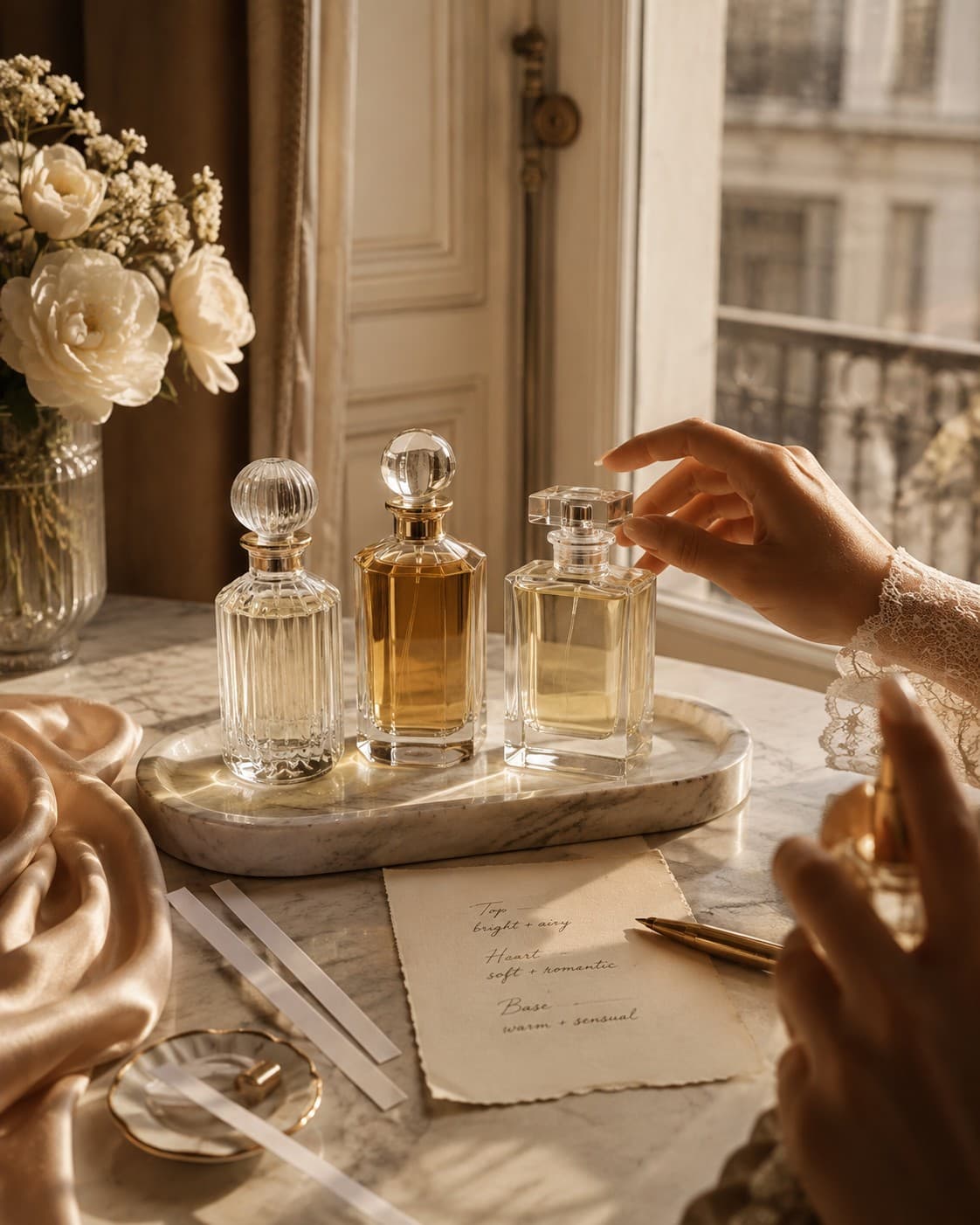
“A single signature scent says one fixed thing. A stacked scent says several true things at once.”
At a Glance
- Choose a base layer
- Add one contrasting or complementary note
- Apply lightest to heaviest
- Layer by concentration, not just scent family
- Test the stack for a full day before repeating it
- Keep a record of what worked
- Let the stack change with mood and season
For decades, the standard fragrance advice was to find one scent, wear it always, and let it become recognisably yours. That approach still works beautifully for many people. But a newer idea has taken hold alongside it: rather than choosing a single fixed fragrance, layer two or three - a scented oil, a body mist, an eau de parfum - to build a composite scent that is genuinely difficult for anyone else to replicate.
This is not a new invention. Layering oud, rose, musk and amber has been standard practice in Middle Eastern perfumery for centuries. What is new is treating it as a considered, everyday technique rather than something reserved for special occasions.
Choose a Base Layer
Start with something worn close to the skin and low in intensity - a scented body lotion, an unscented moisturiser layered under fragrance, or a very light body oil. This is the foundation the rest of the stack will sit on.
The base does not need to smell like much on its own. Its job is to help the later layers last, not to lead.
Add One Contrasting or Complementary Note
Choose a second product - a perfume oil, a hair mist, or a second eau de parfum - that either shares a note with the base (for a deeper, more unified effect) or offers a clear contrast (for something more distinctive, such as a warm amber under a bright citrus).
Two layers are often enough. A third should only be added once the first two are genuinely settled and understood together.
Apply Lightest to Heaviest
Build from the lightest concentration to the strongest - body lotion or oil first, then a mist, then the eau de parfum last, closest to pulse points.
Applying in the reverse order tends to let the lightest layer disappear entirely rather than contribute anything.
Layer by Concentration, Not Just Scent Family
It is not only about which scents smell good together - it is also about which concentrations sit well together. A very strong oil under an equally strong parfum can become overwhelming, while a light mist under a considered parfum usually stays balanced.
When in doubt, let one layer lead and keep the others quieter in support.
Test the Stack for a Full Day Before Repeating It
A new stack should be worn through an ordinary day - not just smelled from the wrist in a shop or at a counter - before deciding whether it is worth remembering.
Notice how it changes over several hours, not only its first ten minutes.
Keep a Record of What Worked
A stacked scent is easy to forget precisely, since it is not a single named product. A short note - which two or three products, in which order, for which season or mood - makes a favourite stack repeatable rather than accidental.
The Essence Library is a natural place to keep this record alongside existing fragrance notes.
Let the Stack Change With Mood and Season
A stack built for a bright summer morning is unlikely to suit a dark winter evening. Keep two or three favourite combinations rather than a single permanent one, and treat stacking as something to adjust rather than settle once and never revisit.
This is the real appeal of the technique: it can hold more than one mood at a time, rather than asking one scent to represent all of them.
The Checklist
- A light base layer chosen
- One contrasting or complementary layer added
- Applied lightest to heaviest
- Concentration balanced, not just scent family
- Worn a full day before being judged
- Combination written down somewhere it will be found again
- At least one alternate stack kept for a different season or mood
Make It Seasonal
Summer
- A citrus or green base layer under a single warmer note, so the stack stays light in the heat.
- A hair mist can carry a stack further than skin alone on a warm day.
Autumn
- A warmer, spiced base layer under a soft amber or woody top note.
- Good weather for testing a new stack for the first time - cooler air lets fragrance sit more clearly.
Winter
- Heavier concentrations hold up better in cold, dry air - a good season for a bolder third layer.
- A scented oil under an evening parfum for occasions that call for more presence.
Spring
- A green or floral base with a single soft, transparent top layer.
- A good season to retire a stack that felt right in winter but now reads as too heavy.
Make It Your Own
- Keep two or three go-to stacks rather than experimenting from scratch each morning.
- Use a stack to mark an occasion - a particular combination reserved only for one kind of evening.
- Build a stack around a single favourite note, layering different products that all share it.
- Let a stack evolve slowly over a year rather than replacing it all at once.
Pair It With
- How to Choose a Signature Scent
- The Essence Library
- The Essy’s Essentials Fragrance Wardrobe
- The Everyday Scent Ritual
A signature scent says one fixed thing about a person. A stacked scent can say several true things at once, and change again next season.
Neither approach is more correct than the other - only worth choosing on purpose, rather than by habit.
Enjoyed this?
The Seasonal Letter brings more stories, recipes and rituals like this one - a few times a season, never more.

Written by Esther
Esther is a photographer and storyteller, and the founder of Essy's Essentials - a seasonal home for stories, rituals, recipes and everyday luxuries.
More about Esther →