The Everyday Scent Ritual
A simple daily practice for using fragrance as a small transition, mood marker and personal finishing detail.
At a Glance
- Choose the moment
- Match the fragrance to the day
- Apply close to the body
- Create a fragrance station
- Add scent to dressing
- Use reapplication thoughtfully
- Create a scent-free day
- The evening scent transition
Fragrance does not need to be reserved for events. It can belong to the most ordinary parts of the day - after getting dressed, before leaving the house, when beginning work, after an evening shower, before reading.
The Everyday Scent Ritual is not about wearing more fragrance. It is about applying it with intention. A few seconds can create a clear transition between home and outside, work and evening, or practical routine and personal pleasure.
Choose the Moment
A scent ritual works best when attached to an existing habit - after skincare, after dressing, before jewellery, after brushing the hair, when putting on a coat, or after changing into evening clothes.
Consistency creates association.
Match the Fragrance to the Day
Consider weather, clothing, setting, energy and time. A bright citrus may suit a clear morning, a tea fragrance may feel right for work, a soft woody scent may suit rain, and a warm amber may belong to evening.
The fragrance does not need to mirror the day literally - it only needs to support it.
Apply Close to the Body
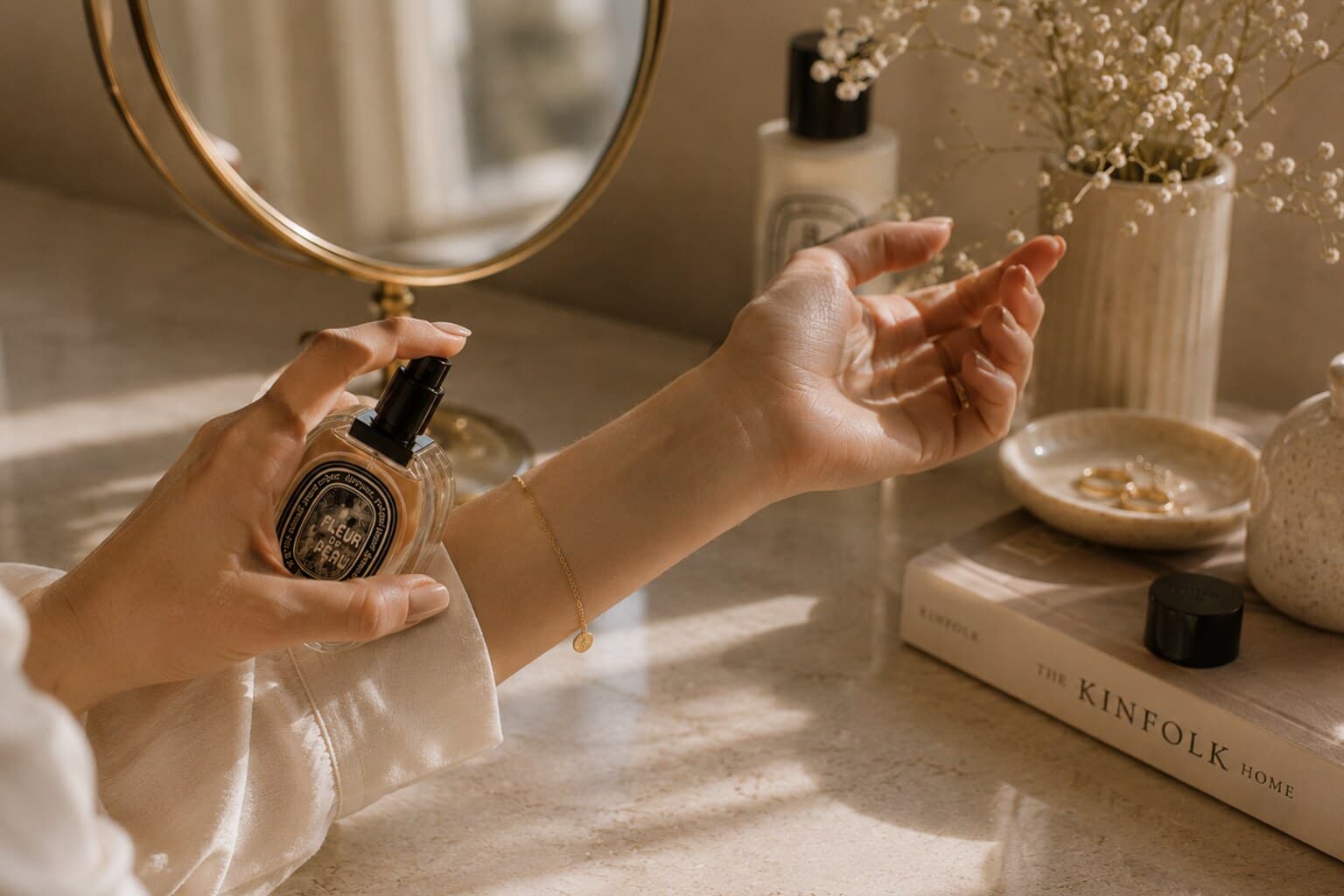
For an everyday ritual, begin with restraint. Use one or two application points, such as wrists, chest, neck or inner elbows.
Allow the scent to remain personal. Reapply later only when genuinely needed and appropriate.
Create a Fragrance Station
Keep the current scents together - a small tray, a shaded shelf, or a cabinet section. Include an everyday scent, a seasonal scent, an evening scent and a travel spray.
Avoid displaying bottles in direct sun or near heat.
Add Scent to Dressing
Fragrance can be considered alongside fabric, colour, jewellery and outerwear - for example a green fragrance with linen and cotton, a warm woody scent with wool and leather, a soft floral with a simple dress, or a powdery musk with a quiet home outfit.
This does not need to be exact - the aim is atmospheric coherence.
Use Reapplication Thoughtfully
Before reapplying, remember that the wearer may become accustomed to the scent while others may still detect it.
If uncertain, step outside briefly, smell clothing at a distance, ask someone trusted, and reapply lightly.
Create a Scent-Free Day
Occasional scent-free days may be useful - they can reset perception, reduce sensory fatigue, make a favourite fragrance feel distinct again, and support consideration in sensitive environments.
A fragrance ritual should remain a choice, not an obligation.
The Evening Scent Transition
At the end of the day, remove the daytime fragrance through washing where needed, change clothes, choose a softer or warmer scent, and apply a smaller amount.
This can signal that the pace of the day has changed.
The Checklist
- Application moment selected
- Fragrance matched to setting
- Amount kept appropriate
- Current scents stored safely
- Reapplication considered carefully
- Scent-free days allowed
- Evening fragrance kept quieter where desired
Pair It With
- The Essy’s Essentials Fragrance Wardrobe
- The Seasonal Scent Shift
- Fragrance for Home, Wardrobe and Skin
The everyday scent ritual is one of the smallest forms of self-styling.
Invisible. Brief. Yet able to change the atmosphere of an entire day.
Enjoyed this?
The Seasonal Letter brings more stories, recipes and rituals like this one - a few times a season, never more.

Written by Esther
Esther is a photographer and storyteller, and the founder of Essy's Essentials - a seasonal home for stories, rituals, recipes and everyday luxuries.
More about Esther →