The Seasonal Scent Shift
A gradual way to move the fragrance wardrobe from one season into the next through temperature, texture and atmosphere.
At a Glance
- Begin with temperature
- Choose the seasonal fragrance
- Create the transition tray
- Review before buying
- Record seasonal favourites
Fragrance changes with the weather. Heat amplifies some notes. Cold holds others closer to the skin. Humidity alters projection. Clothing changes how scent is experienced. A fragrance that feels beautiful in January may feel overwhelming in July, and a scent that sparkles in summer may disappear beneath winter layers.
The Seasonal Scent Shift is a quarterly edit. It does not require buying a new perfume. It simply brings the most appropriate fragrances forward and allows others to rest.
Begin with Temperature
In warmer weather, many people prefer lighter projection, freshness, transparency, citrus, green notes, tea, herbs or soft musks. In cooler weather, many people enjoy warmth, depth, resins, woods, vanilla, spices or amber.
These are tendencies, not rules - a light scent may be beautiful in winter, and a dark scent may be worn sparingly in summer.
Create the Transition Tray
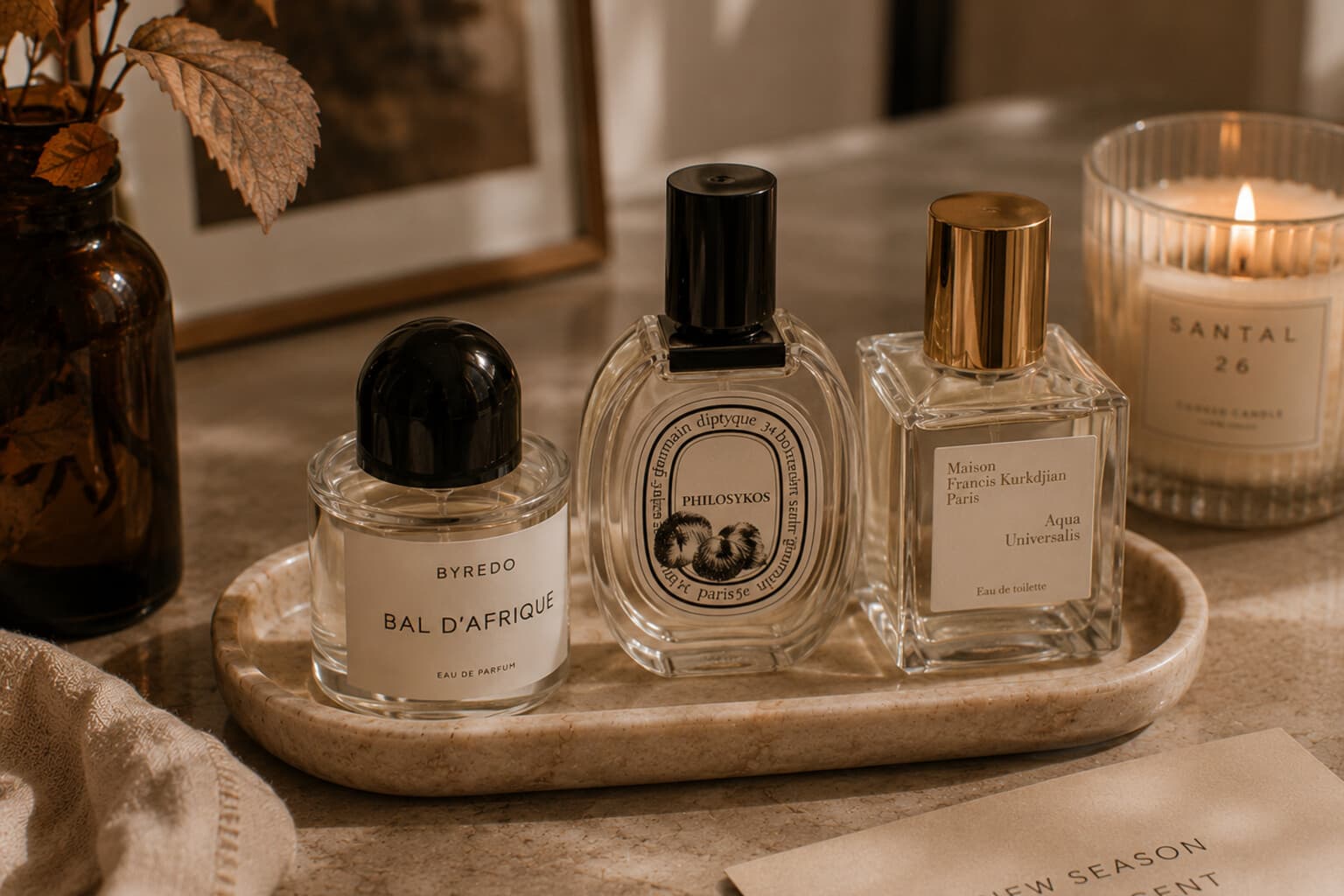
At the start of each season, select one everyday fragrance, one seasonal fragrance, and one evening or comfort fragrance.
Move these to the accessible fragrance station and store the rest safely.
Review Before Buying
Ask whether there is already a fragrance that suits this season, whether an existing scent could feel new in different weather, whether a sample would satisfy the interest, and whether the desired scent is distinct from the current collection.
Seasonal desire does not always require a seasonal purchase.
Record Seasonal Favourites
Note the season, weather, fragrance, best time of day, best clothing or setting, and how long it lasted.
This creates a personal Essence Library over time.
The Checklist
- Weather considered
- Three current fragrances selected
- Application adjusted for temperature
- Stored bottles protected
- Existing scents reviewed before buying
- Seasonal notes recorded
Choose the Seasonal Fragrance
Spring
- Fresh, leafy, softly floral, clean and airy.
- Possible note directions: fig leaf, iris, peony, green tea, neroli, soft woods.
- A transition between winter warmth and summer brightness - keep one warmer fragrance available for colder days.
Summer
- Citrus-led, herbal, aquatic, sun-warmed and lightly floral.
- Possible note directions: bergamot, orange blossom, basil, salt, coconut used lightly, white musk.
- Test projection carefully in heat - apply less where the fragrance becomes stronger with temperature.
Autumn
- Woody, spiced, tea-like, fruited without becoming sweet, dry and comforting.
- Possible note directions: fig, black tea, cedar, cardamom, pear, tobacco leaf.
- Particularly suited to fragrances that feel layered and textural.
Winter
- Ambered, resinous, smoky, creamy and darkly floral.
- Possible note directions: sandalwood, vanilla, incense, labdanum, cocoa, rose.
- Cold weather can support richer fragrances, though indoor shared spaces still require restraint.
Pair It With
The scent shift marks the season quietly.
Not through replacing everything. Through bringing one familiar bottle forward as the air begins to change.
Enjoyed this?
The Seasonal Letter brings more stories, recipes and rituals like this one - a few times a season, never more.

Written by Esther
Esther is a photographer and storyteller, and the founder of Essy's Essentials - a seasonal home for stories, rituals, recipes and everyday luxuries.
More about Esther →