Fragrance for Home, Wardrobe and Skin
A layered approach to scenting personal spaces without creating competition, heaviness or sensory overload.
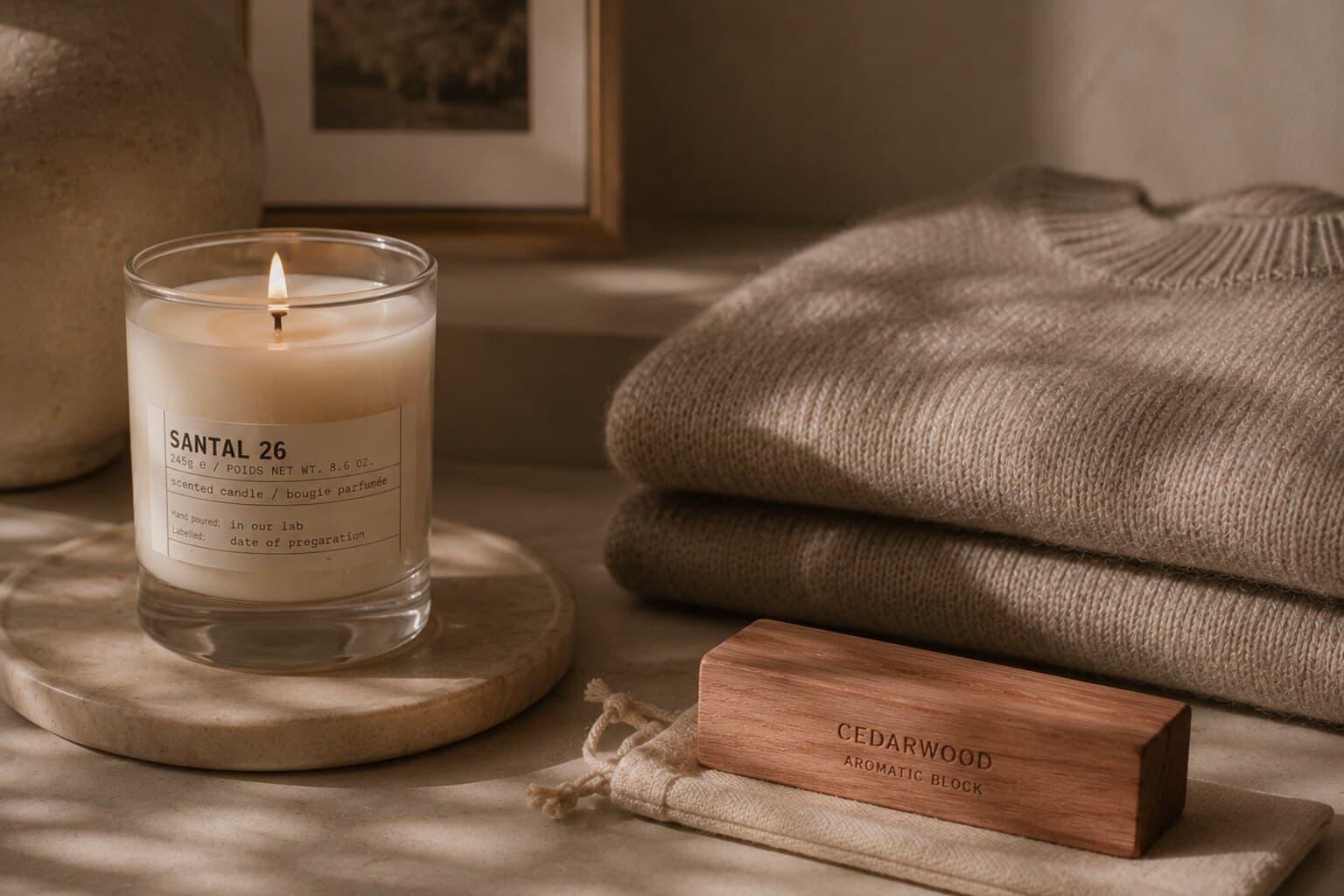
At a Glance
- Choose a scent hierarchy
- Keep laundry scent restrained
- Use wardrobe scent carefully
- Choose one home scent direction
- Use candles safely
- Use diffusers proportionately
- Let natural scent lead
- Create scent zones
Scent does not belong only on the skin. It may also appear through candles, room sprays, laundry products, wardrobe sachets, diffusers, cleaning products, fresh flowers, cooking, or an open window. When several scented elements exist at once, the home can quickly feel confused - a scented candle competes with perfume, laundry fragrance remains on clothing, room spray settles into upholstery.
The goal is not to make every surface fragrant. It is to create one clear atmosphere at a time.
Choose a Scent Hierarchy
Decide which scented element leads - for example, skin fragrance is central and home scent remains quiet, or a candle is central and personal fragrance is kept soft, or cooking aromas are present and no additional room scent is needed.
One dominant scent source usually creates more elegance than several competing ones.
Keep Laundry Scent Restrained
Laundry products remain close to the body for many hours. Consider sensitivity, layering with perfume, scent strength, towels and bed linen, and children and pets.
A neutral or softly scented laundry routine may allow personal fragrance to remain clearer.
Use Wardrobe Scent Carefully
Possible wardrobe scent methods include cedar blocks, lavender sachets, scented paper, or fabric spray suitable for the material.
Store these away from direct contact with delicate fabrics unless the product is designed for that purpose, and avoid oversaturating enclosed wardrobes.
Choose One Home Scent Direction
A home scent palette might be citrus and herbs, fig and woods, amber and spice, linen and soft musk, or flowers and green leaves.
The exact products do not need to match - they should feel related.
Use Candles Safely
Keep candles away from curtains and fabrics, out of reach of children and pets, on stable, heat-resistant surfaces, away from draughts, and within sight while burning.
Follow the manufacturer’s burn and wick guidance, and discontinue use when the vessel or wax level becomes unsafe.
Use Diffusers Proportionately
Adjust the number of reeds where possible, place the diffuser in a ventilated area, and avoid overcrowding small rooms.
Keep away from surfaces that may be damaged by oil, and follow pet and household safety guidance.
Let Natural Scent Lead
Natural scent may come from coffee, bread, citrus peel, fresh herbs, flowers, wood, or rain through an open window.
These may be enough - not every room needs an added fragrance product.
Create Scent Zones
Different areas may have different levels of scent - for example a subtle room scent at the entrance, a candle in the living room in the evening, a mostly neutral bedroom, a clean and fresh bathroom, cedar or a soft sachet in the wardrobe, and no competing artificial fragrance in the kitchen during cooking.
This prevents the entire home from carrying one heavy scent.
The Checklist
- One scent source leads
- Laundry fragrance kept compatible
- Wardrobe products used safely
- Home scent family defined
- Candles supervised
- Diffusers proportionate to room size
- Natural scent allowed to remain
- Sensitive spaces kept neutral
Pair It With
A beautifully scented life is not one in which everything smells of perfume.
It is one in which scent appears at the right distance, in the right place and in a form that leaves room to breathe.
Enjoyed this?
The Seasonal Letter brings more stories, recipes and rituals like this one - a few times a season, never more.

Written by Esther
Esther is a photographer and storyteller, and the founder of Essy's Essentials - a seasonal home for stories, rituals, recipes and everyday luxuries.
More about Esther →