How to Choose a Signature Scent
A slower method for finding a fragrance that feels familiar, distinctive and easy to wear repeatedly.
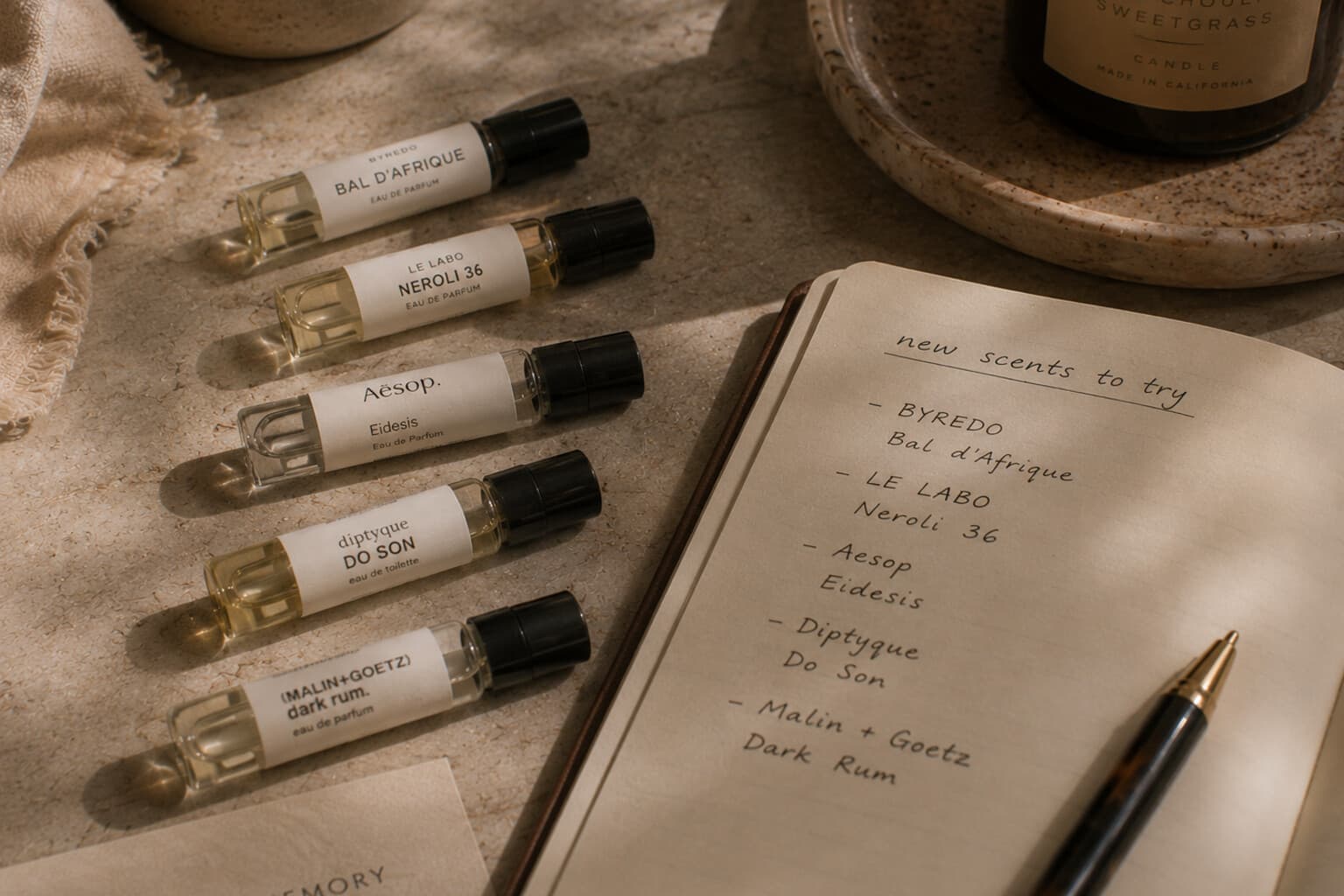
At a Glance
- Define the desired character
- Review fragrances already loved
- Sample across related families
- Test one fragrance per day
- Wear it in ordinary life
- Notice emotional ease
- Consider projection
- Try the smallest commitment first
- Allow more than one signature
- Choose a signature home scent the same way
A signature scent is often described as a perfume people immediately associate with you. That can happen, but it does not need to be the starting objective. The better question is: which fragrance do you genuinely enjoy wearing again and again?
A signature scent should survive more than the first impression. It should work on an ordinary day, remain pleasant after several hours, feel comfortable in different settings, and not require a particular mood to make sense. The process of choosing one should therefore be slow.
Define the Desired Character
Choose three to five words - for example warm, elegant, quiet, clean, woody, soft, European, green, comforting or polished.
These words become a reference when testing.
Review Fragrances Already Loved
Consider scents that have been worn repeatedly. Ask which notes appeared often, whether they were fresh or warm, transparent or dense, dry or sweet, floral or woody, and whether the fragrance sat close to the skin or projected strongly.
Previous favourites reveal preferences more reliably than trend lists.
Sample Across Related Families
Choose a small group that shares one general direction - for example three woody musks, three green florals, three tea fragrances, or three warm ambers.
This makes comparison clearer than testing unrelated scents at the same time.
Test One Fragrance Per Day
Apply in the morning and observe the first fifteen minutes, the first hour, the middle of the day and the final dry-down.
Notice whether it becomes too sweet, too sharp, too faint, too heavy, more beautiful, more comforting, or less recognisable. The final hours often matter more than the opening.
Wear It in Ordinary Life
Test the fragrance during work, errands, travel, an evening at home, a meal and outdoor time.
The scent should fit daily reality, not only a perfume counter.
Notice Emotional Ease
A potential signature scent should feel natural to apply - it should not create uncertainty every time. Ask whether you reach for it without effort, whether you miss it when you do not wear it, whether it feels like you rather than an admired idea, and whether you would still wear it without compliments.
This is often more revealing than technical analysis.
Consider Projection
The right scent should suit the wearer’s preferred presence. Some people enjoy a close skin scent, a soft personal cloud, a noticeable trail, or a stronger evening presence.
None is inherently better - the important point is whether the projection suits the setting and personality.
Try the Smallest Commitment First
Before buying a full bottle, finish a sample, use a travel size, and wear it in more than one season where possible.
Notice whether the desire remains once novelty has faded.
Allow More Than One Signature
A person may have a daytime signature, a cold-weather signature, an evening signature, or one signature for a particular period of life.
Consistency does not require wearing the same perfume every day of the year.
Choose a Signature Home Scent the Same Way
The same method works for a candle, a diffuser or a room spray - the only real difference is that a home scent has to suit a space rather than a single body temperature, so it is worth testing at both ends of the day.
Burn or diffuse it during a normal evening at home, not just when guests are coming - a home scent earns its place the same way a perfume does: by being reached for without thinking, not by being memorable for one hour.
The Checklist
- Desired feeling defined
- Past favourites reviewed
- Related scents sampled
- Each fragrance worn for a full day
- Ordinary-life testing completed
- Projection considered
- Small size used first
- Choice based on repeated enjoyment
- Home scent tested during an ordinary evening
Pair It With
A signature scent is rarely chosen in one perfect moment.
It becomes a signature because it is worn. Again. And again. Until it feels less like perfume and more like presence.
Enjoyed this?
The Seasonal Letter brings more stories, recipes and rituals like this one - a few times a season, never more.

Written by Esther
Esther is a photographer and storyteller, and the founder of Essy's Essentials - a seasonal home for stories, rituals, recipes and everyday luxuries.
·
More about Esther →