A story from Cortelume
The Woman at Fiora & Fig
At the flower shop on the sunlit lane, someone is arranging more than bouquets.
Set at Fiora & Fig
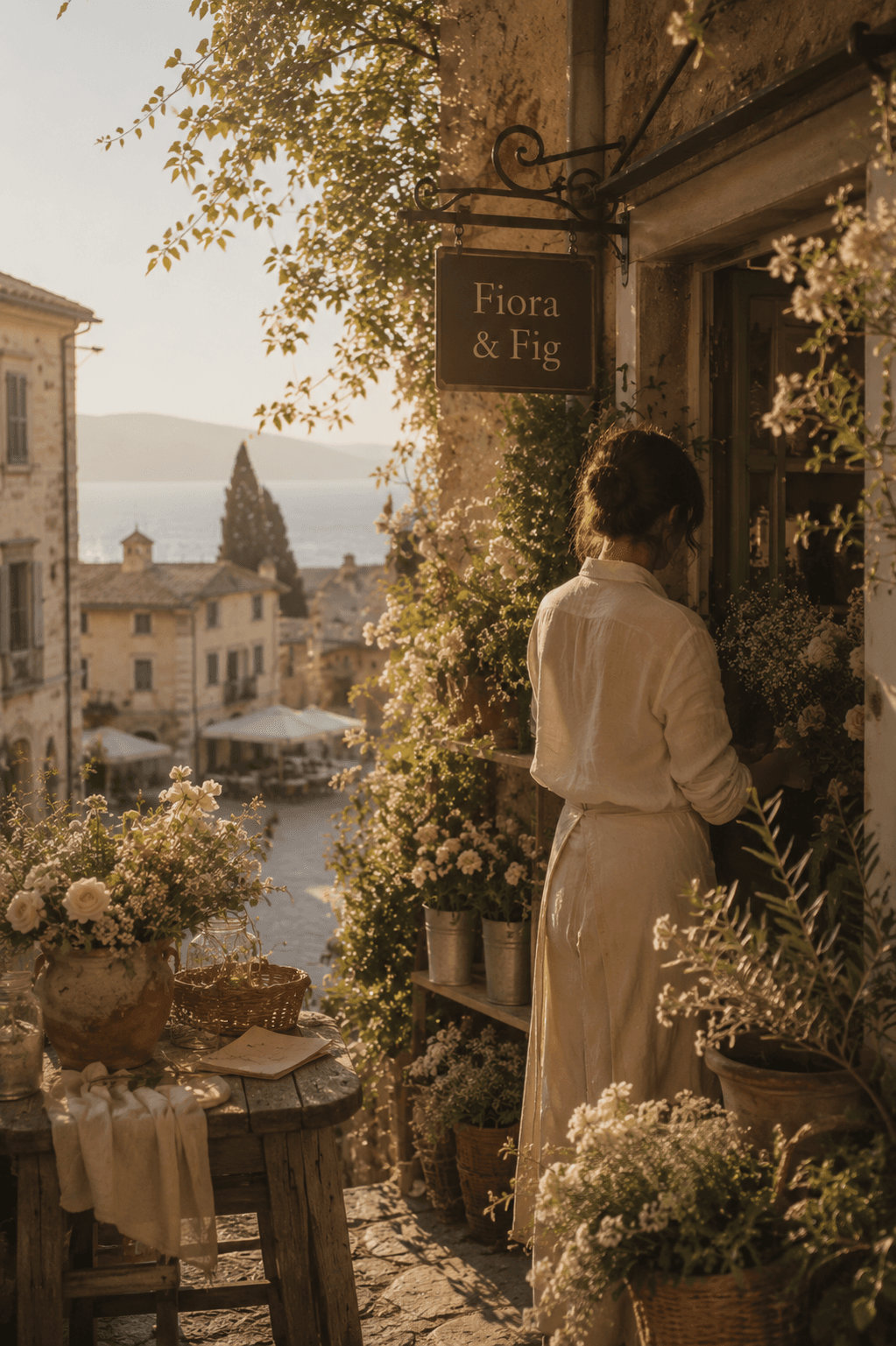
“Fruit tells you when it is ready. People do too, but they use more confusing methods.”
Fiora & Fig opened after the bakery but before Cortelume became warm.
Its door was painted the colour of fig skin before it split: green, purple, almost brown in the shadows. Buckets of flowers stood beneath the awning. Dahlias, rosemary, lavender, lemon branches, long stems Esther did not know the names of. Inside, figs were arranged in shallow bowls as if they had been placed by someone who understood ripeness as a kind of weather.
The woman behind the counter looked up before Esther stepped inside.
"You are late," she said.
Esther checked the small clock above the door. "It's half past ten."
"For figs."
The woman smiled just enough to soften the sentence.
"I'm Esther."
"I know," said the woman. "I'm Fiora."
Of course she was.
Fiora wrapped six figs in brown paper, then added two more without being asked.
"For Casa Alta," she said.
"Does everyone know where I'm staying?"
"In Cortelume? Yes. But we pretend not to, if it helps."
The shop smelled of flowers, fruit and old wood. On a side table, figs sat beside two amber glasses that caught the light like honey. A cream bowl held lemons and small handwritten tags. It should have looked styled. Instead, it looked inevitable.
Esther touched one of the figs. Its skin gave slightly under her finger.
"They're beautiful."
"They were quieter yesterday."
"Quieter?"
"Fruit tells you when it is ready. People do too, but they use more confusing methods."
Fiora folded the paper. Before tying it with string, she slipped something between the leaves.
Esther saw the movement.
Fiora saw that she saw.
Neither mentioned it.
Outside, the piazza was beginning to brighten. A boy carried crates toward Bottega Basso. At Forno Nica, someone laughed loudly enough that three pigeons left the church steps in a single offended movement.
Esther waited until she reached the fountain before opening the parcel.
Inside, between the figs, was a note.
For the one who notices what ripens quietly.
No signature.
Only the lemon branch.
Esther turned back toward the shop.
Fiora was in the doorway now, arms folded, watching her.
"Is this from Livia?"
"That depends," Fiora said.
"On what?"
"On whether you mean the woman, the house, or the habit."
Esther frowned. "A habit?"
Fiora stepped aside as an older man entered the shop, removed his hat and asked for flowers for someone who was not angry with him but would be, if he came home without them.
Fiora selected three stems without looking away from Esther.
"Livia had a way of leaving things exactly where people would find them too late to pretend they hadn't."
"She stayed at Casa Alta?"
Fiora tied the flowers. "Everyone stays at Casa Alta eventually."
"That's not an answer."
"No. But it's true."
The man paid and left with the flowers held awkwardly in both hands.
Fiora leaned against the counter.
"Livia came to Cortelume every summer for years. Then one summer she stayed longer. Then one day she left, or perhaps she didn't. People choose the version they prefer."
"What do you prefer?"
Fiora looked toward the harbour.
"I prefer figs when they are almost too ripe. I prefer coffee before conversation. And I prefer not to call something gone simply because it has stopped standing where I can see it."
Esther felt the note warm in her palm.
"Why leave it for me?"
"I didn't."
"But you put it in the parcel."
"I put the figs in the parcel. The rest was already there."
Esther almost laughed. Cortelume had a way of making impossible sentences sound like local custom.
Fiora picked up one of the remaining figs and cut it open with a small knife. The inside was red and gold and almost indecently soft.
"Eat one today," she said. "Not tomorrow. Tomorrow is for firmer fruit and different questions."
Esther carried the parcel back up Via Pietra.
At Casa Alta, she placed the figs in a bowl on the terrace table beside the second cup. She opened her notebook and wrote:
Fiora says people tell you when they are ready, but badly.
Then she made toast with ricotta, honey and the figs that were too beautiful to wait.
As she ate, she noticed something on the brown paper Fiora had used.
A faint circular mark, pressed into the fibres.
Not ink.
Not a stain.
The outline of the honey jar.

Written by Esther
Esther is a photographer and storyteller, and the founder of Essy's Essentials - a seasonal home for stories, rituals, recipes and everyday luxuries.
More about Esther →