The Small Outdoor Space Formula
A practical structure for creating a useful and atmospheric balcony, courtyard or compact terrace.
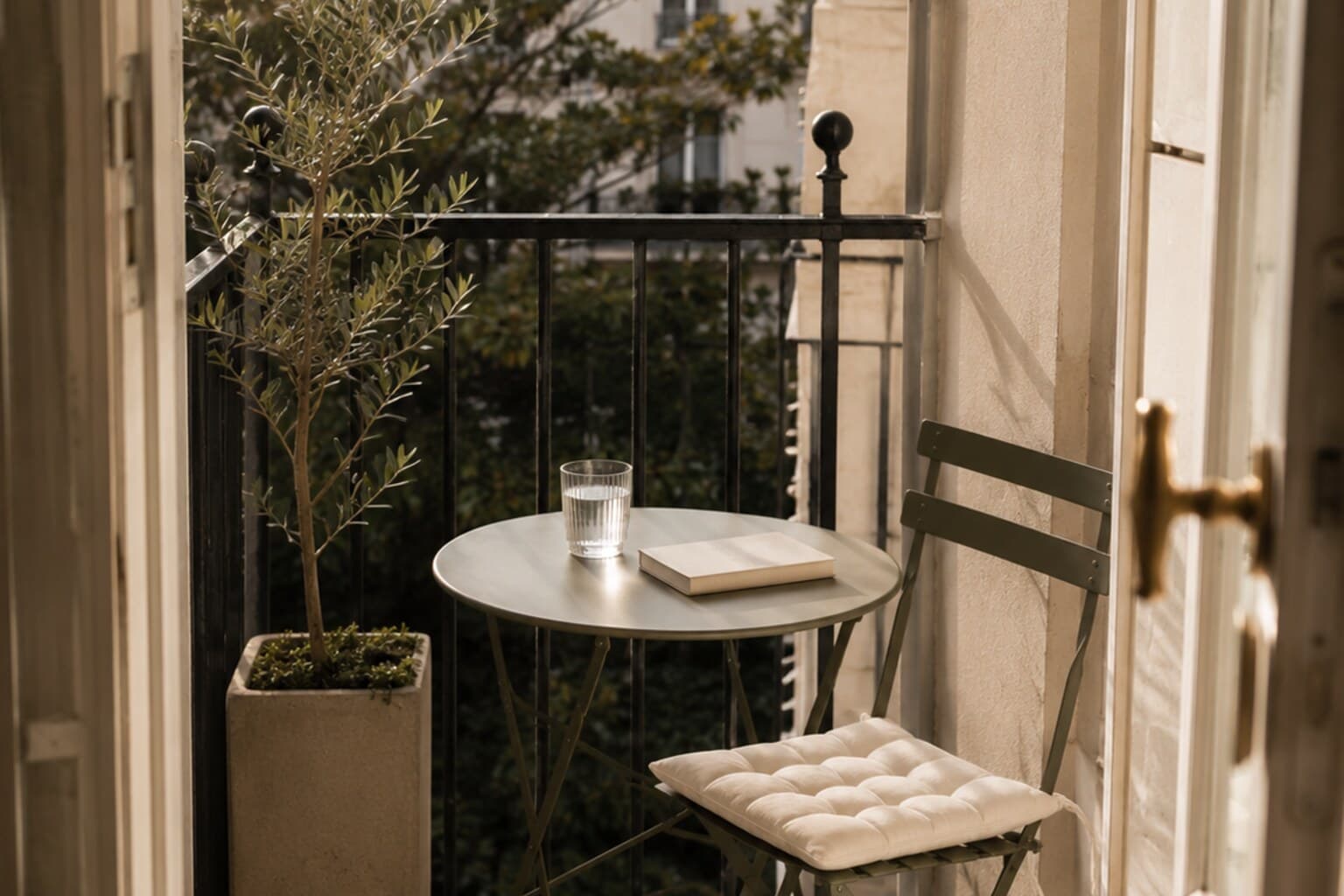
At a Glance
- Define the purpose
- Choose the right seat
- Add one useful surface
- Build the green layer vertically
- Add evening light
- Keep the route open
- The visual palette
- Privacy without heaviness
Small outdoor spaces require clear decisions. Every chair, planter and decorative object occupies valuable room.
The aim is not to reproduce a large garden on a smaller scale. It is to create one well-functioning setting.
The Small Outdoor Space Formula contains six elements: a purpose, a seat, a surface, a green layer, a lighting layer and an open route.
Element 1: Define the Purpose
Choose the main function - morning coffee, reading, dinner for two, growing herbs, evening drinks, or a small work area.
This decision should guide the scale and placement of everything else. A dining set may be unnecessary when the space is used mainly for reading. A lounge chair may take too much room when outdoor meals are the priority.
Element 2: Choose the Right Seat
Possible options include a narrow bench, two compact chairs, one comfortable lounge chair, a built-in seat, a folding chair, or a bistro set.
Measure before buying - check seat width, depth, door clearance, leg room, space required to pull out the chair, and whether the furniture can remain outside year-round. Folding or stackable furniture may be useful, but only when there is somewhere practical to store it.
Element 3: Add One Useful Surface
The surface should support the main activity - a small round table, wall-mounted folding table, narrow console, side table, stool, or built-in ledge.
A surface large enough for two cups may be sufficient. Avoid choosing a large table that dominates the entire area.
Element 4: Build the Green Layer Vertically
Use height where floor space is limited - wall planters, trellises, tall narrow pots, climbing plants, shelving designed for outdoor use, rail planters installed safely, or one small tree where conditions allow.
Check weight limits, drainage and secure installation. Do not attach objects to railings or walls without confirming safety and permission where relevant.
Element 5: Add Evening Light
Use lighting that suits the scale - a rechargeable table lamp, outdoor wall light, small lantern, safe low-voltage lighting, or solar lights where they receive adequate daylight.
One or two well-placed lights are often enough. Avoid dense strings of decorative lighting that create visual clutter or disturb neighbours.
Element 6: Keep the Route Open
Maintain a clear path to the door, seating, storage, drainage and emergency access. Do not force people to move pots or chairs every time they enter.
The space should remain easy to use.
The Visual Palette
Choose a restrained foundation - warm wood or dark metal, taupe cushions, terracotta pots, olive foliage, cream or sand textiles, and one deeper brown or bronze accent.
Use no more than two or three planter styles. Repeated materials make a compact area feel more coherent.
Privacy Without Heaviness
Possible privacy solutions include tall planting, a slatted screen, an outdoor curtain where suitable, climbing greenery, reed or natural screening used appropriately, or frosted panels.
Check local rules, building permissions and wind exposure. Privacy should not block all light or airflow.
The Checklist
- Primary use selected
- Furniture measured
- One useful surface included
- Plants use vertical space
- Lighting added
- Drainage remains clear
- Door opens fully
- Main route unobstructed
- Privacy considered
- Storage realistic
Pair It With
A small outdoor space becomes successful when it does one thing particularly well.
It does not need to contain every feature of a garden. It needs to offer one clear invitation to step outside.
Enjoyed this?
The Seasonal Letter brings more stories, recipes and rituals like this one - a few times a season, never more.

Written by Esther
Esther is a photographer and storyteller, and the founder of Essy's Essentials - a seasonal home for stories, rituals, recipes and everyday luxuries.
More about Esther →