The Outdoor Living Checklist
A complete review for creating an outdoor space that is comfortable, practical and ready to use.
At a Glance
- Purpose
- Layout
- Comfort
- Planting
- Materials
- Lighting
- Outdoor dining
- Storage
- Maintenance
- Atmosphere
- Final edit
An outdoor area may look attractive and still remain unused. The chairs are uncomfortable. The table is unstable. The lighting is inadequate. Cushions are stored too far away. Plants require more maintenance than the household can provide.
The Outdoor Living Checklist reviews the space as part of daily life. It can be used at the beginning of a season, before a gathering or when the area no longer feels functional.
Section: Purpose
Confirm the primary outdoor activity has been selected and a secondary activity identified. Consider the number of regular users, whether the furniture supports the intended use, and whether any unused items have been identified.
Section: Layout
Check that the door opens fully, the main route remains clear, seating faces the best view or light, furniture scale suits the space, drainage remains accessible, emergency access is unobstructed, and heavy objects are stable.
Section: Comfort
Review whether seating is comfortable, table height is appropriate, shade is available, wind exposure has been reviewed, blankets or cushions are accessible, temperature management has been considered, and privacy is sufficient.
Section: Planting
Confirm light conditions are understood and plants suit the position, watering needs are realistic, containers have adequate drainage, dead or struggling plants have been reviewed, herbs are easy to reach, large plants are safely positioned, and seasonal colour remains restrained.
Section: Materials
Check that furniture is suitable for outdoor use, textiles can be cleaned or stored, metal finishes are checked for corrosion, wood is maintained appropriately, terracotta and ceramics are suitable for weather conditions, and fragile items are protected.
Section: Lighting
Confirm the main access is safely lit, the dining or seating area has soft light, outdoor fittings are suitable for their use, cables and power sources are safe, lighting does not create excessive glare, candles have stable holders, and flames can be extinguished easily.
Section: Outdoor Dining
Check that the table is stable, the serving route is clear, a tray is available, water and glasses are easy to carry, food covers are available where needed, table textiles are wind-resistant, and the bin or waste plan is clear.
Section: Storage
Confirm cushions have a dry storage place, tools are stored safely, watering equipment is accessible, outdoor tableware has a clear location, seasonal items are labelled, and storage does not block movement.
Section: Maintenance
Review whether a watering rhythm is established, furniture cleaning is scheduled, containers are checked regularly, paths are kept clear, outdoor drains are reviewed, repairs are recorded, and specialist work is identified.
Section: Atmosphere
Confirm one focal point is visible, materials connect with the home interior, decorative objects remain limited, scent comes mainly from plants or food, the space works during both day and evening, and seasonal details can be changed easily.
Final Edit
Remove: broken pots, unused furniture, excess small decorations, empty containers, dead plants that will not recover, and outdoor products without a clear purpose.
Relocate: items that belong indoors, seasonal items not currently needed, tools left in view, extra chairs, and duplicate watering equipment.
Add only where needed: one comfortable seat, one useful surface, one light source, one structural plant, one storage solution, one shade solution.
The Checklist
- Remove broken pots
- Remove unused furniture
- Remove excess small decorations
- Remove empty containers
- Remove dead plants that will not recover
- Remove outdoor products without a clear purpose
- Relocate items that belong indoors
- Relocate seasonal items not currently needed
- Relocate tools left in view
- Relocate extra chairs
- Relocate duplicate watering equipment
- Add one comfortable seat if missing
- Add one useful surface if missing
- Add one light source if missing
- Add one structural plant if missing
- Add one storage solution if missing
- Add one shade solution if missing
Pair It With
Complete, in your own words: the outdoor area is mainly for... The best time to use it is... The element that already works well is... The main source of friction is... The one improvement that would make the greatest difference is...
An outdoor area becomes part of the home when it is easy to use, comfortable to remain in and simple enough to maintain.
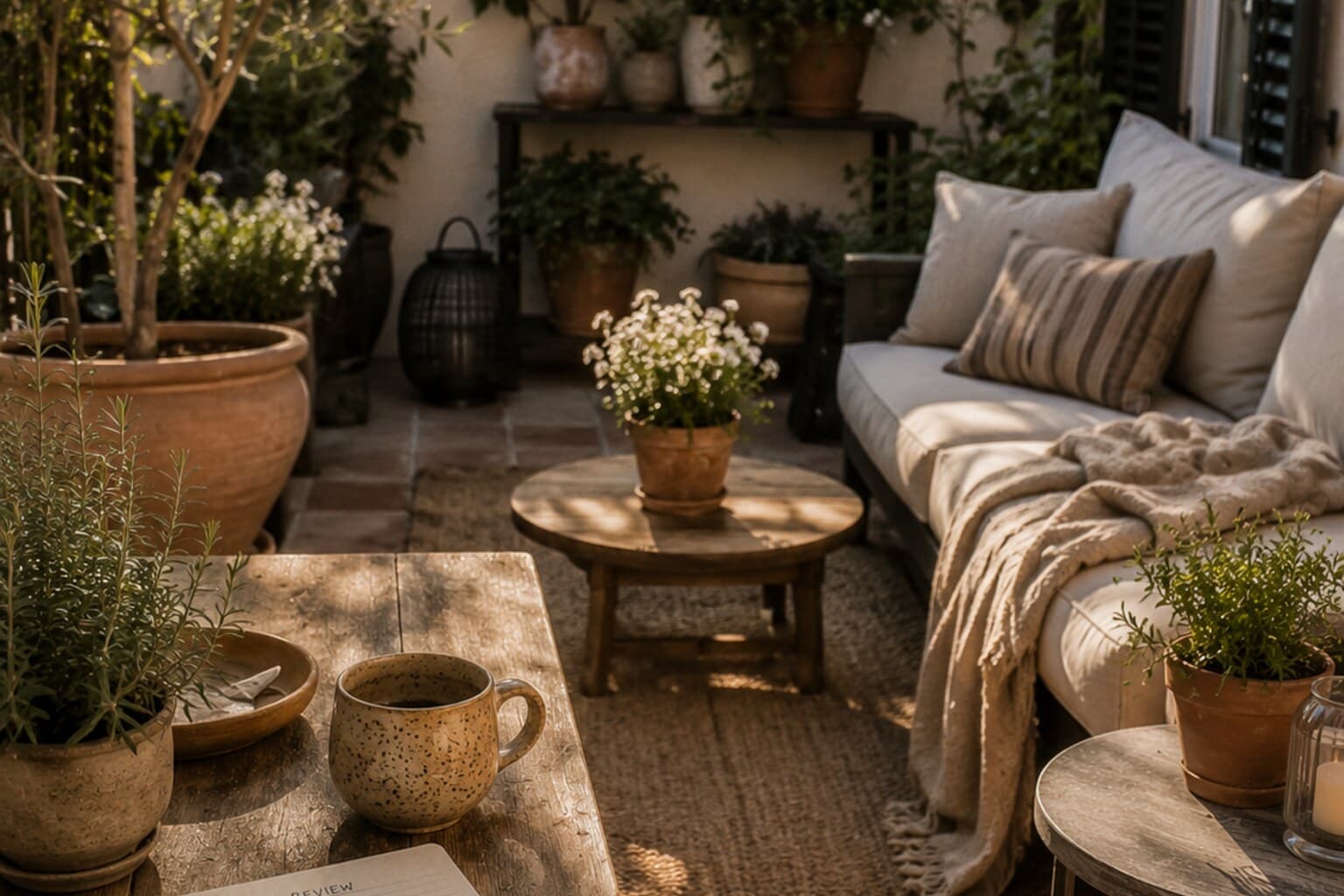
It does not need to be finished. It needs to be ready for the next cup of coffee, the next meal and the next quiet evening outside.
Enjoyed this?
The Seasonal Letter brings more stories, recipes and rituals like this one - a few times a season, never more.

Written by Esther
Esther is a photographer and storyteller, and the founder of Essy's Essentials - a seasonal home for stories, rituals, recipes and everyday luxuries.
More about Esther →