Garden & Outdoor Living
The Art of Outdoor Living
A thoughtful approach to making balconies, terraces and gardens feel like a natural extension of the home.
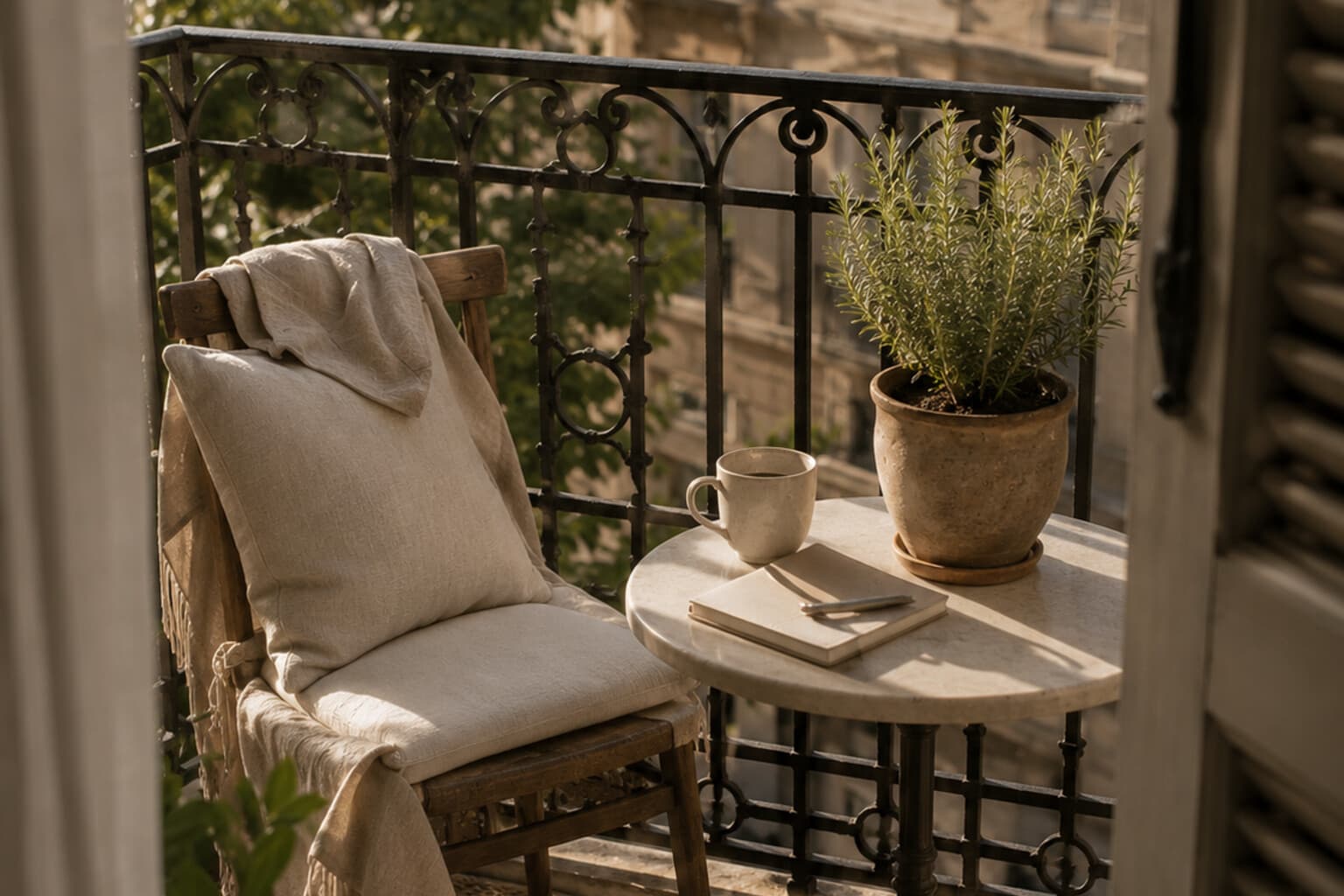
Outdoor living does not require a large garden or a perfectly designed terrace. A chair placed in morning light. A small table beside the door. A pot of rosemary. A blanket kept nearby. A tray carried outside with coffee.
These simple details can turn an overlooked outdoor area into a place that is genuinely used. The most successful outdoor spaces are not created only for appearance - they support real moments: breakfast before the day begins, a quiet drink at dusk, reading in the shade, dinner outdoors, a conversation that continues after the plates are cleared.
The goal is not to create another room that must be constantly maintained. It is to make being outside easy.
Begin with the Moment
Before buying furniture or plants, decide what you would most like to do outside - drink coffee in the morning, read, eat together, work occasionally, sit in evening light, grow herbs, entertain friends, or rest in the shade.
Choose one primary use. A small balcony designed well for morning coffee is more valuable than a crowded space trying to support six different activities.
Observe Light and Weather
Spend time noticing where the morning light falls, where the afternoon becomes too warm, which area is sheltered from wind, where rain collects, which direction feels most private and where the view is strongest.
Outdoor spaces change throughout the day and year. The best furniture position may not be the most obvious one - a chair placed according to sunlight and wind often feels more inviting than a perfectly symmetrical arrangement.
Create One Clear Destination
Every outdoor area benefits from a focal point - a dining table, a bench, a pair of chairs, a planted corner, an outdoor fireplace used safely and appropriately, a small water bowl, or a view.
Arrange the rest of the space around this destination. Avoid filling every edge with unrelated furniture and pots.
Make Access Easy
Outdoor living is more likely to happen when the transition from inside is simple. Keep nearby a tray, outdoor cushions, a blanket, a small lantern, napkins, a watering can and frequently used tableware.
Store these items close to the door where possible. If each outdoor moment requires carrying many things through the house, the space may remain unused.
Use the Same Design Language as Indoors
The outdoor area does not need to match the interior exactly, but repeated tones and materials create continuity - warm wood, taupe or sand textiles, olive green, terracotta, antique brass or bronze details, natural stone, linen-look fabrics, smoked or amber glass.
A familiar palette makes the terrace or balcony feel like part of the same home.
Prioritise Comfort
Outdoor furniture should be comfortable enough for the intended use - consider seat depth, back support, table height, shade, wind protection, cushions, space for feet and accessibility.
A beautiful chair that is uncomfortable will become decoration rather than seating.
Use Fewer, Larger Planters
Many small pots can become visually busy and difficult to water. A smaller number of larger planters may create stronger structure, more consistent moisture, better root space and a calmer composition.
Group pots according to water needs, sun requirements, colour and material. Choose containers that are appropriate for the weight, drainage and local weather conditions.
Allow the Space to Remain Seasonal
Outdoor areas change naturally - plants grow, flowers fade, leaves fall, furniture weathers, light moves. Do not expect the space to look identical throughout the year.
Allow the garden to express time. Seasonal change is not a failure of maintenance. It is part of the experience of living outdoors.
Pair It With
Outdoor living begins when the space becomes easy to enter and pleasant to remain in.
One comfortable seat. One useful surface. One plant worth noticing. And a reason to step outside before the moment passes.

Written by Esther
Esther is a photographer and storyteller, and the founder of Essy's Essentials - a seasonal home for stories, rituals, recipes and everyday luxuries.
More about Esther →