The European Container Garden
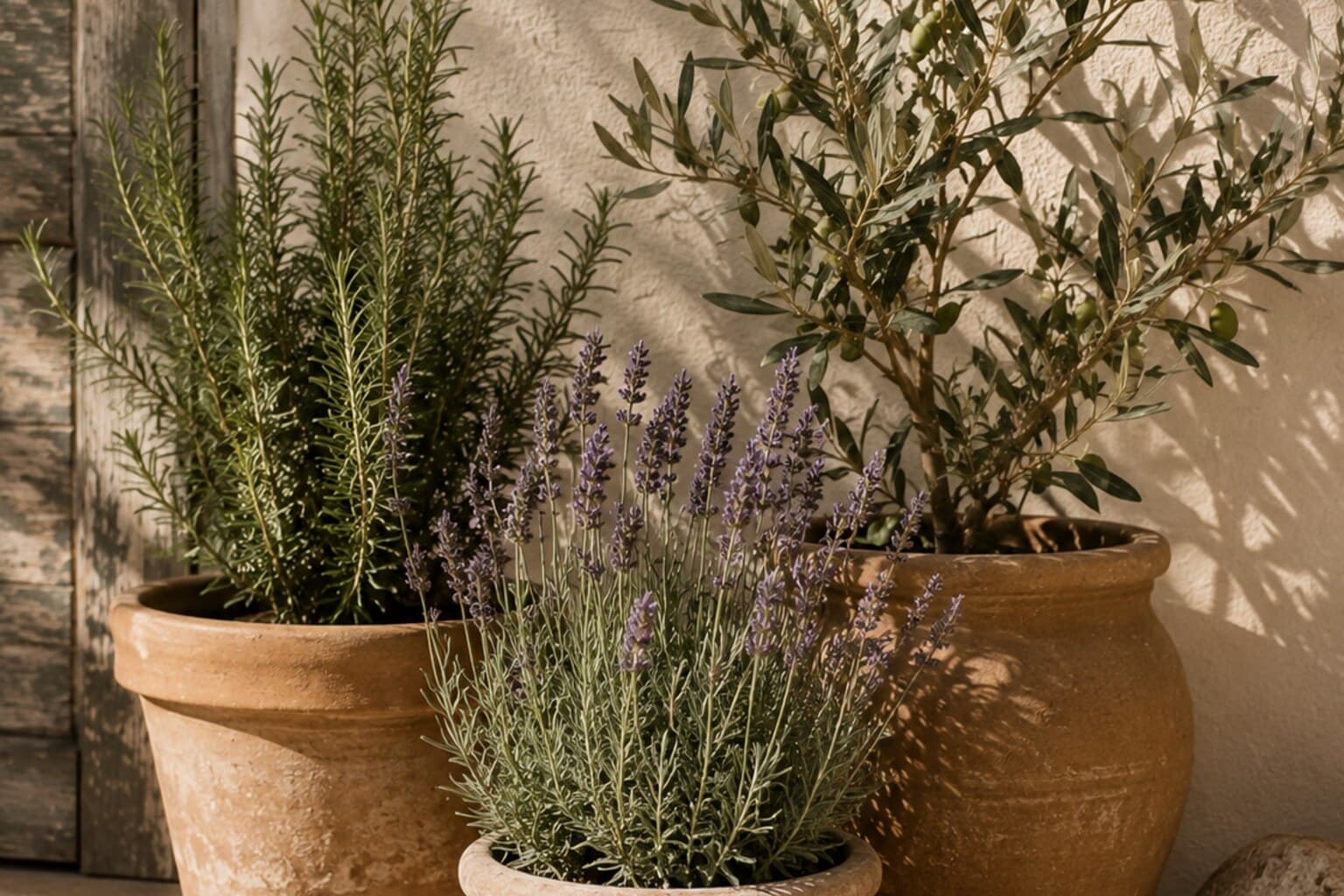
A restrained planting approach using herbs, silvery foliage and warm terracotta for a timeless outdoor atmosphere.
At a Glance
- Begin with the conditions
- Create the structural layer
- Add the aromatic layer
- Add silvery and soft foliage
- Add restrained seasonal colour
- Choose containers as a family
- Use good drainage
- Group for visual rhythm
- The scent layer
A European-inspired container garden feels gathered rather than highly designed. It may include rosemary, lavender, thyme, olive-green foliage, small trees, terracotta, weathered wood and stone. The effect is relaxed, sun-warmed and quietly structured.
The goal is not to imitate one specific country. It is to create a palette that feels natural beside warm architecture, neutral textiles and outdoor dining.
Begin with the Conditions
Before choosing plants, assess hours of direct sun, wind exposure, winter temperatures, rain, drainage, container depth and watering capacity.
A Mediterranean-looking plant may not thrive in every location or position. Choose plants suited to the real conditions - the garden should not depend on constant replacement.
Create the Structural Layer
Begin with one or two plants that provide height or year-round form - bay, olive in suitable climates or protected containers, dwarf conifers, upright rosemary, small ornamental trees, or structured evergreen shrubs.
These plants create the framework. Use them sparingly - one strong specimen may be more effective than several undersized plants.
Add the Aromatic Layer
Herbs create scent, texture and practical use - rosemary, thyme, sage, oregano, mint in its own container, parsley, basil in warmer periods, or chives.
Group plants according to similar water and light needs. Mint generally benefits from separate containment because it can spread vigorously.
Add Silvery and Soft Foliage
Silvery foliage reflects light and connects well with stone, terracotta and warm neutrals - lavender, santolina, artemisia, lamb’s ear or helichrysum.
Choose according to climate and soil conditions. Avoid forcing drought-tolerant plants into constantly wet containers.
Add Restrained Seasonal Colour
Use a limited colour palette - soft white and green, muted purple and silver, pale yellow and olive, or deep burgundy with warm foliage.
Avoid mixing many unrelated bright colours in a small area. Seasonal flowers should support the structure rather than replace it.
Choose Containers as a Family
Suitable materials include terracotta, aged clay, stone effect, dark metal, warm neutral ceramic, or wooden planters suitable for outdoor use.
The pots do not need to match - they should share colour temperature, material character and shape language. A group may include one tall pot, one medium rounded pot and one low bowl. Vary the height while maintaining cohesion.
Use Good Drainage
Containers need appropriate drainage - check drainage holes, suitable potting mix, pot feet where needed, saucers used carefully, and protection for vulnerable surfaces.
Do not allow containers to sit in standing water unless the plant requires those conditions. Watering needs vary with pot size, material, wind, heat, plant type and season.
Group for Visual Rhythm
Create groups of three or five pots where space allows, combining one tall element, one medium leafy element and one low or trailing element.
Leave enough space between groups. Do not line every pot evenly along the edge unless a formal effect is intended.
The Scent Layer
Place aromatic plants near seating, paths, doorways and outdoor tables - this allows the scent to be noticed when the leaves are touched or warmed by sunlight.
Do not position strongly scented plants where they overwhelm dining or attract unwanted insects close to seating.
The Checklist
- Light conditions assessed
- Plants suited to the climate
- One structural plant included
- Herbs grouped by care needs
- Seasonal colour restrained
- Containers coordinated
- Drainage checked
- Watering realistic
- Aromatic plants placed intentionally
- Space left between groupings
Pair It With
A container garden feels most timeless when its beauty comes from form, scent and material rather than constant colour.
Terracotta warmed by the sun. Rosemary near the door. Lavender moving in the air. A small garden, but a complete atmosphere.
Enjoyed this?
The Seasonal Letter brings more stories, recipes and rituals like this one - a few times a season, never more.

Written by Esther
Esther is a photographer and storyteller, and the founder of Essy's Essentials - a seasonal home for stories, rituals, recipes and everyday luxuries.
More about Esther →