The Outdoor Dining Edit
A practical guide to creating outdoor meals that feel easy, generous and connected to the season.
At a Glance
- Begin with comfort
- Choose the right time
- Keep the table simple
- Choose wind-friendly details
- Choose food that tolerates the setting
- Create a serving plan
- Use lighting for the later hours
- Keep a comfort basket
Outdoor dining does not need to become a formal event. A simple meal can feel special when it is moved outside - bread, a salad, cold drinks, a bowl of fruit, coffee after dinner.
The outdoor setting changes the pace of the meal. The light moves. Sounds travel differently. Conversation often lasts longer.
The Outdoor Dining Edit helps prepare the space without making the experience dependent on elaborate styling.
Begin with Comfort
Check: is the table stable? Are the chairs comfortable? Is there enough shade? Is the area protected from strong wind? Can guests move around the table? Is the temperature suitable? Are insects likely to be a problem?
Physical comfort matters more than table decoration. Use shade appropriately and follow safety guidance for umbrellas, canopies and heaters.
Choose the Right Time
Outdoor dining is affected by heat, sun direction, wind, rain, mosquito activity, neighbourhood noise and light.
A late breakfast, early lunch or evening meal may work better than the hottest part of the day. Plan according to the conditions rather than a fixed ideal.
Keep the Table Simple
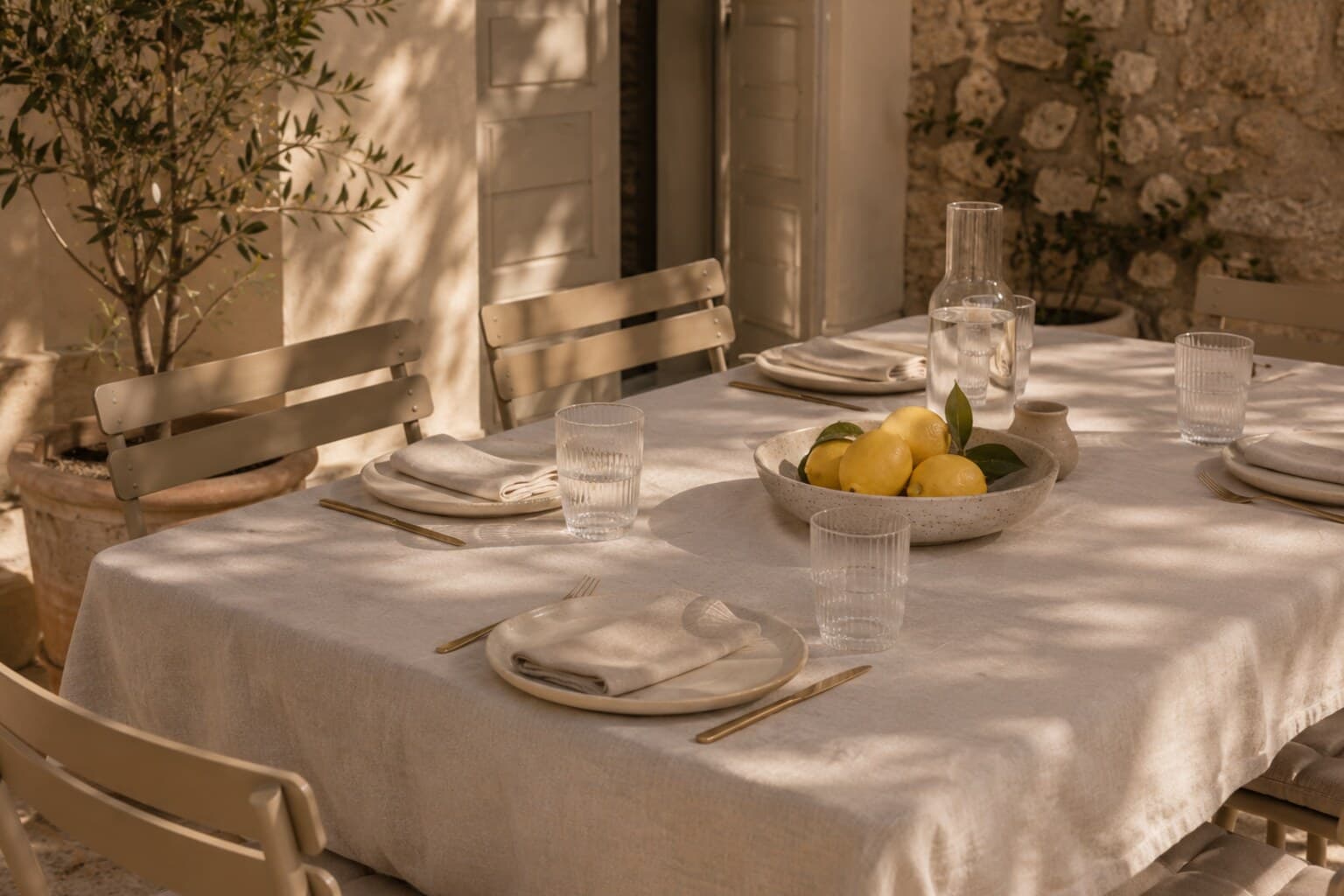
Use plates, glasses, cutlery, napkins, water and one low centre detail - a bowl of lemons, herbs in small pots, a vase with garden branches, candles in stable holders, or seasonal fruit.
The table should leave enough space for food and conversation.
Choose Wind-Friendly Details
Avoid loose paper napkins, very light tablecloths without clips or weights, tall unstable vases, open flames in windy conditions, and fragile glass near edges.
Use heavier napkins, low arrangements, stable lanterns, weighted cloths and durable serving pieces.
Choose Food That Tolerates the Setting
Outdoor meals work well when the menu does not depend on precise timing - focaccia, tarts, pasta salads, roasted vegetables, grilled dishes, large green salads, bread and spreads, cold desserts, or fruit.
Consider food safety - keep perishable items at safe temperatures, do not leave food exposed for extended periods, and protect dishes from insects and direct sun where necessary.
Create a Serving Plan
Decide whether food will be placed on the table, served from a side surface, plated indoors, or carried out in stages. A tray reduces repeated trips.
Prepare serving utensils, water, condiments, napkins, a bottle opener and a waste bowl where useful. A nearby serving station can keep the dining table uncluttered.
Use Lighting for the Later Hours
As daylight fades, add rechargeable lamps, safe lanterns, outdoor wall lighting, or candles where conditions allow.
Avoid waiting until the table becomes too dark - switch on lighting before it is fully needed.
Keep a Comfort Basket
Possible contents include light blankets, insect repellent where appropriate, clips for the tablecloth, extra napkins, a bottle opener and a small torch.
Keep the basket close to the outdoor door.
The Checklist
- Weather reviewed
- Shade arranged
- Table stable
- Seating comfortable
- Menu suitable for outdoor service
- Food-safety needs considered
- Serving plan prepared
- Wind-friendly table details used
- Lighting ready
- Comfort basket accessible
Pair It With
Outdoor dining succeeds when the setting makes the meal feel freer rather than more complicated.
Keep the food generous. The table practical. The light soft. And leave enough time for the evening to continue.
Enjoyed this?
The Seasonal Letter brings more stories, recipes and rituals like this one - a few times a season, never more.

Written by Esther
Esther is a photographer and storyteller, and the founder of Essy's Essentials - a seasonal home for stories, rituals, recipes and everyday luxuries.
More about Esther →