The Slow Weekend Brunch
A relaxed way to host or simply enjoy a longer weekend breakfast, without the host missing the morning entirely.
At a Glance
- Choose one centrepiece
- Add one fresh element
- Add one bread element only where needed
- Keep drinks limited
- Prepare the table in advance
- Create a realistic timeline
- Avoid constant replenishment
- Let the menu feel seasonal
A weekend brunch is meant to feel unhurried, but it is often the opposite - a host moving between stove, table and guests without a genuine pause of their own.
A slow weekend brunch is built around limits rather than abundance: one centrepiece, a realistic timeline, and a menu simple enough that the person who made it can actually sit down and enjoy it too.
Choose One Centrepiece
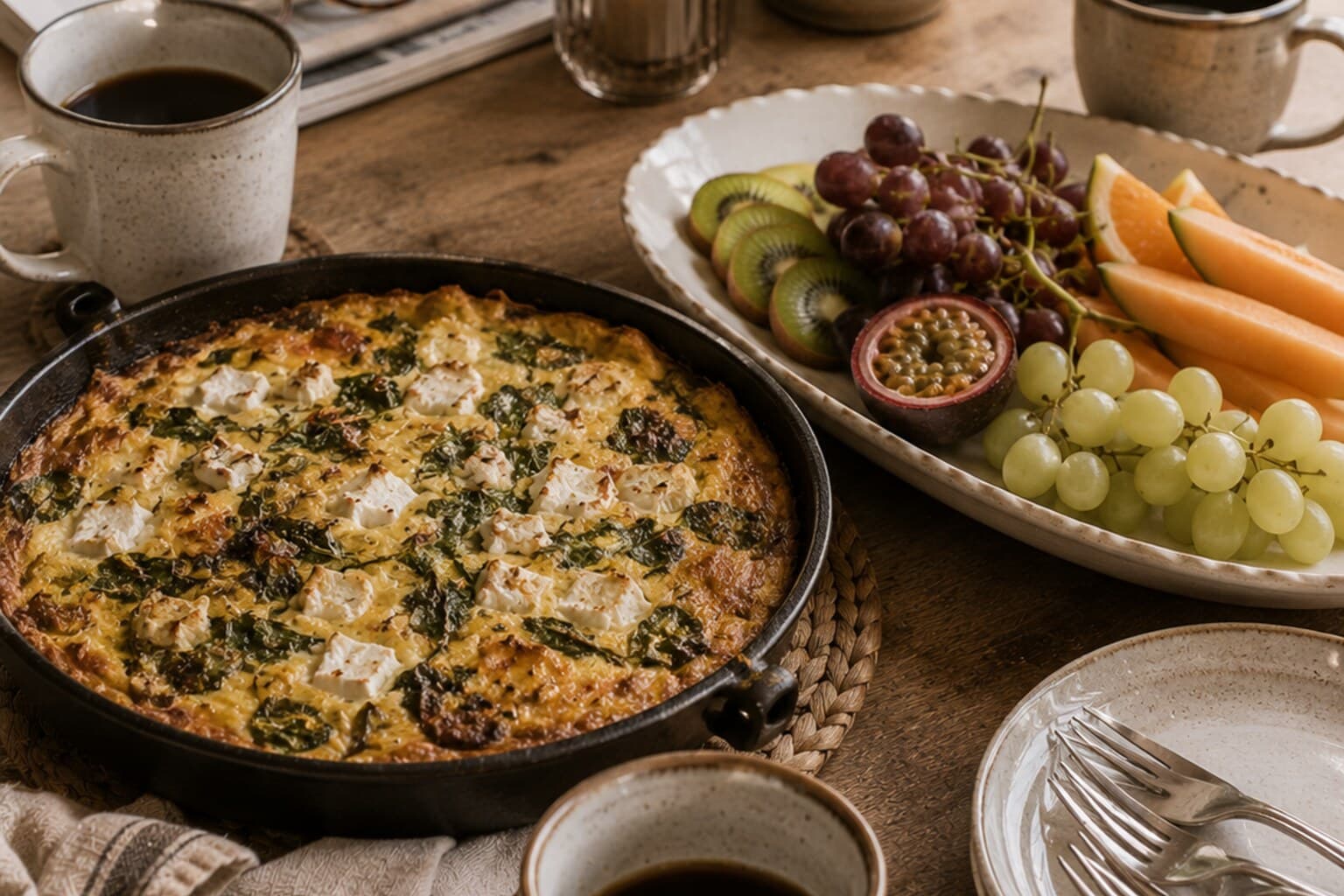
A single warm centrepiece - a frittata, a baked dish, a large pan of eggs - does more work than several smaller dishes competing for attention.
One centrepiece also means one dish to time, rather than several finishing at different moments.
Add One Fresh Element
A simple fruit platter, a green salad or sliced tomatoes adds freshness and colour without requiring any cooking.
This element can be fully prepared well before guests arrive.
Add One Bread Element Only Where Needed
Toast, a loaf for slicing, or pastries add substance, but only if the centrepiece does not already provide enough. Adding bread automatically, regardless of the rest of the menu, is how a simple brunch becomes an overcrowded table.
One bread element, chosen deliberately, is enough.
Keep Drinks Limited
Coffee, tea and one cold drink cover most preferences without requiring a full drinks station. A carafe of water should always be included.
Limiting the drinks list keeps the host from managing several orders at once.
Prepare the Table in Advance
Plates, cutlery, glasses, napkins and any serving dishes should be set out before guests arrive, so the final minutes can go toward the food rather than the table.
A table set early also signals that the meal is genuinely ready to be relaxed into.
The Evening Before
Prepare anything that keeps well overnight - wash and store fruit, assemble a batter or base that can chill, set the table if space allows.
One Hour Before
Begin the centrepiece, so it has time to cook slowly rather than needing to be rushed.
Twenty Minutes Before
Arrange the fresh element, warm any bread, and put on coffee or tea so it is ready when guests are.
Serving
Bring the centrepiece to the table still warm, and sit down. A brunch that is still being assembled once guests are seated has lost its slower pace.
Avoid Constant Replenishment
Serve generous portions from the start rather than making repeated trips back to the kitchen. A host who is constantly refilling plates rarely gets to eat their own meal.
Leftovers can always be offered again later - the first serving does not need to be minimal.
The Checklist
- One centrepiece chosen
- One fresh element prepared
- Bread included only if genuinely needed
- Drinks kept to a short list
- Table set in advance
- Timeline followed rather than improvised
- Host has a seat at the table
Let the Menu Feel Seasonal
Spring
- A herb and vegetable frittata.
- Fresh berries.
- Light, floral tea.
Summer
- A cold egg and vegetable dish.
- Stone fruit platter.
- Iced coffee or tea.
Autumn
- A baked squash or mushroom dish.
- Roasted pear.
- Spiced warm cider or tea.
Winter
- A warm baked egg dish.
- Citrus platter.
- Hot chocolate or mulled tea.
Pair It With
A slow weekend brunch is not measured by how much is on the table.
It is measured by whether the person who made it also got to sit down and enjoy it.
Enjoyed this?
The Seasonal Letter brings more stories, recipes and rituals like this one - a few times a season, never more.

Written by Esther
Esther is a photographer and storyteller, and the founder of Essy's Essentials - a seasonal home for stories, rituals, recipes and everyday luxuries.
More about Esther →