The Girls' Day Out Formula
A simple formula for planning a girls' or ladies' day out - one clear anchor, an agreed budget, and enough unstructured time left to actually talk.
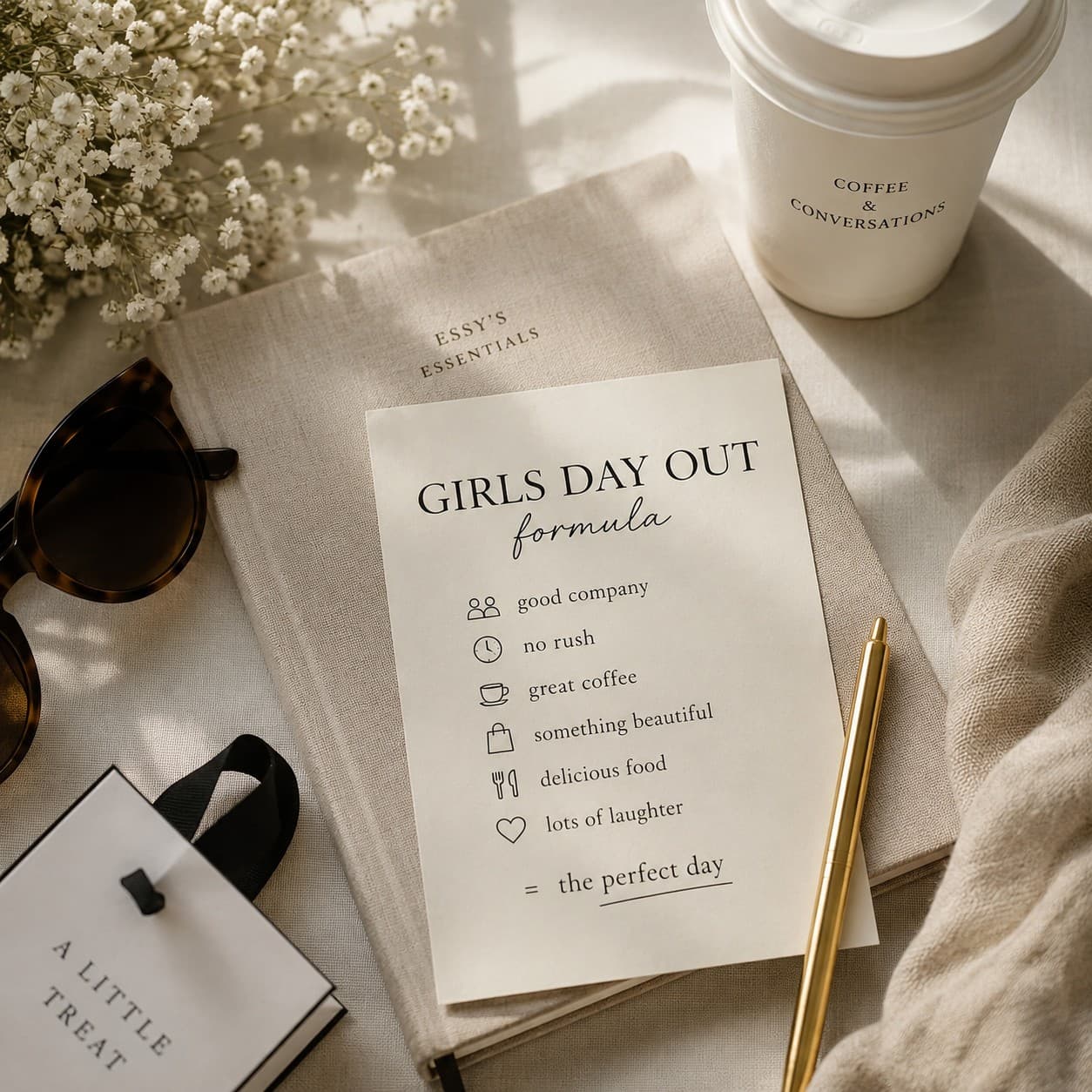
“The best girls' day out isn't the one with the fullest itinerary - it's the one with enough room left to actually talk.”
At a Glance
- Choose one anchor activity
- Agree the budget before you agree the plan
- Pick a pace, not an itinerary
- Add one sensory detail
- Build in a no-spend version
- Leave real unstructured time
- Close the day properly
A "girls' day out" or "ladies' day out" usually goes one of two ways. Either it becomes an overplanned itinerary - brunch, then shopping, then a class, then dinner, back to back, with no room to breathe - or it quietly defaults to the same loop every time, because nobody wants to be the one who suggests something and gets the budget wrong.
Neither version leaves much space for the actual point of the day: being together without checking the time. The formula below is not a fixed itinerary. It is a small, repeatable structure - one anchor, one agreed budget, one pace - that can be filled in differently every time and still work.
Choose One Anchor Activity
Pick a single anchor for the day - a market, a museum, a walk somewhere new, a class, a spa treatment, a long lunch - rather than stacking several. One well-chosen anchor gives the day a shape without turning it into a schedule.
Let the anchor set the tone (slow and quiet, or lively and social) and build everything else loosely around it.
Agree the Budget Before You Agree the Plan
Name a number before naming a place. A vague "let's do brunch somewhere nice" can quietly exclude whoever is watching their spending that month, or leave someone paying more than they meant to.
Agreeing a rough per-person budget first - even a wide range - makes every suggestion after that easier to say yes to.
Pick a Pace, Not an Itinerary
Plan for one main activity per half-day, not four. Leave real gaps between things rather than booking back to back.
A day that moves slower almost always feels longer and more generous than one that is more tightly scheduled.
Add One Sensory Detail
Choose one small, specific detail that marks the day as different from an ordinary errand day: a particular coffee order, a shared playlist for the drive, flowers picked up on the way, a candle lit if the day ends at someone's home.
One detail is enough. It does the work a much bigger production would otherwise be asked to do.
Build in a No-Spend Version
Keep a genuinely free or near-free version of the formula ready for months when spending is tight: a home picnic instead of a restaurant, a walk and a flask of coffee instead of a paid activity, a rotating "host at home" day where whoever's turn it is provides the space and everyone else brings something.
The anchor, the pace and the sensory detail all still apply - only the price tag changes.
Leave Real Unstructured Time
Protect at least one hour with nothing planned in it at all - not a buffer between two bookings, an actual open stretch.
This is usually where the day is remembered from afterwards, not from whichever activity took the most planning.
Close the Day Properly
End deliberately rather than simply dispersing: a last coffee before everyone leaves, a photo, a shared note of what to do next time.
A short, clear ending gives the day a proper close instead of letting it trail off.
The Checklist
- One clear anchor activity chosen
- Budget agreed by everyone in advance
- No more than one big activity per half-day
- One sensory detail added
- A no-spend version considered
- At least one hour left unplanned
- A proper closing moment built in
Make It Seasonal
Summer
- A golden-hour walk followed by a long, slow outdoor lunch.
- An outdoor market for the anchor, then homemade lemonade at someone's home.
- A shared picnic in place of a restaurant booking.
Autumn
- A cosy café as the anchor, timed for the first properly cool afternoon.
- A home baking session instead of an outing, with the oven doing most of the atmosphere.
- A museum or gallery visit followed by tea rather than another meal out.
Winter
- An at-home spa evening as the whole day's anchor - see below.
- A fireside game night with everyone bringing a small dish.
- A slow morning with good coffee, saved for the shortest, greyest days.
Spring
- A flower market or garden visit as the anchor.
- A long lunch built around whatever is newly in season.
- A gentle walk somewhere green, with the actual conversation as the point.
Make It Your Own
- Rotate who chooses the anchor activity each time, so the day always reflects someone different.
- Tie it to a season rather than a fixed date, so it becomes a loose yearly rhythm instead of another thing to schedule.
- Add a small theme - a colour, a cuisine, an era - if the group enjoys a bit of ceremony.
- Keep a shared note or photo album so each day out quietly builds on the last one.
Pair It With
- The At-Home Spa Evening
- The Weekly At-Home Beauty Ritual
- The Hand and Nail Care Ritual
- The Slow Weekend Brunch
A girls' day out doesn't need a theme, a reservation somewhere new, or a full schedule to feel worthwhile.
It only needs one clear anchor, a budget nobody has to feel awkward about, and enough space left over for the conversation that was the actual point all along.
Enjoyed this?
The Seasonal Letter brings more stories, recipes and rituals like this one - a few times a season, never more.

Written by Esther
Esther is a photographer and storyteller, and the founder of Essy's Essentials - a seasonal home for stories, rituals, recipes and everyday luxuries.
More about Esther →