The Seasonal Preserving Ritual
A careful quarterly tradition for capturing one seasonal ingredient through a small, safe and useful kitchen preparation.
At a Glance
- Understand the method before beginning
- Choose one ingredient at its best
- Choose one practical outcome
- Keep the batch modest
- Prepare the workspace
- Label clearly
- Create a use plan
- Record one note
Preserving has long been a way of extending the season - summer tomatoes carried into autumn, apples cooked into butter, citrus transformed into marmalade, herbs frozen before cold weather arrives.
In a modern home, preserving does not need to involve shelves filled with jars. It can remain modest - one ingredient, one tested method, one or two containers, one clear plan for use. The Seasonal Preserving Ritual marks the year through preparation while keeping safety, practicality and scale at the centre.
Understand the Method Before Beginning
Possible methods include refrigerating, freezing, drying, pickling, jam or preserve making, water-bath canning, and fermentation. These methods are not interchangeable.
Shelf-stable preserving requires tested recipes and precise safety procedures - factors such as acidity, processing time, jar preparation and ingredient proportions matter. Do not adapt preservation recipes casually. For a simple household ritual, refrigeration or freezing may be the safest and easiest approach.
Choose One Practical Outcome
Possible outcomes include compote, freezer sauce, herb cubes, jam made with a tested recipe, pickles made with a tested recipe, dried citrus slices, or fruit butter.
Do not choose a method only because it appears traditional. Choose something likely to be used.
Keep the Batch Modest
Prepare enough for one refrigerator jar, two freezer portions, or several small gift jars only when a tested shelf-stable method is followed.
Small batches reduce waste, storage pressure, cost and processing time.
Prepare the Workspace
Before beginning, read the full recipe, gather suitable containers, clean the work surface, check equipment, confirm storage space, and prepare labels.
For formal canning or bottling, follow current official preserving guidance exactly.
Label Clearly
Include the contents, date prepared, storage method, use-by guidance, allergens, and whether the product must remain refrigerated.
Do not give homemade preserves to others without clear storage information.
Create a Use Plan
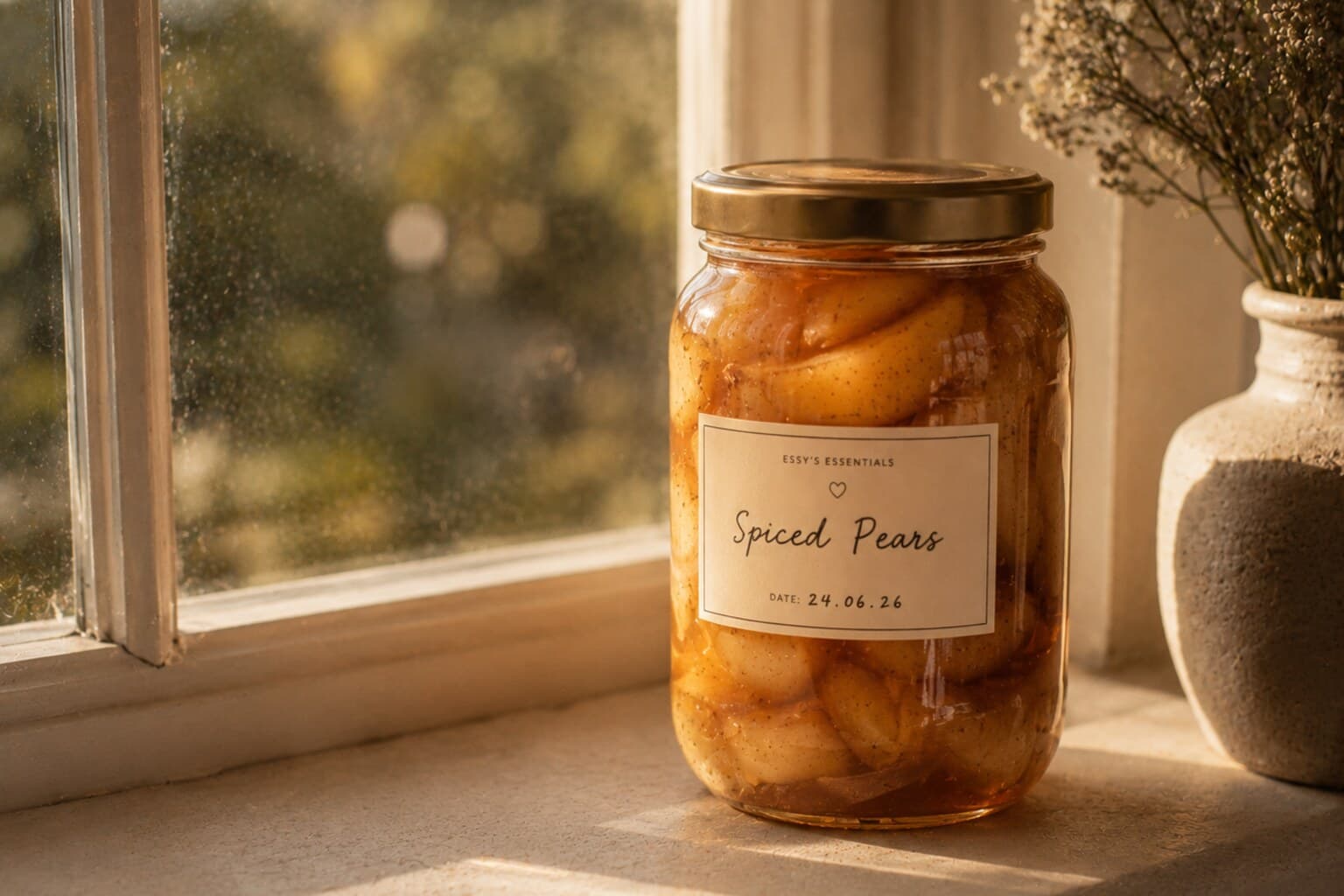
A seasonal preserve should have a future place - tomato sauce for autumn pasta, pear compote for breakfast, herb cubes for winter soup, or citrus preserve for toast and baking.
Write the intended use on the label where helpful.
Record One Note
Keep a brief record of the ingredient, recipe source, quantity, method, result, and what to change for next year.
This helps preserve successful traditions and prevents unsafe improvisation the next time around.
Choose One Ingredient at Its Best
Spring
- Rhubarb.
- Strawberries.
- Fresh herbs.
Summer
- Tomatoes.
- Peaches.
- Berries.
- Courgettes.
Autumn
- Apples.
- Pears.
- Plums.
- Figs.
Winter
- Citrus.
- Cranberries.
- Ginger.
Pair It With
The Seasonal Preserving Ritual template asks six short questions each quarter: the season, the ingredient chosen, the method used, the quantity made, the intended uses, and the storage information - closing with one sentence recorded as a note for next year.
Preserving a season does not require a pantry filled with jars.
Sometimes it is one container of pear compote, one freezer portion of tomato sauce or one bundle of herbs saved before the weather turns - a small taste of the season, kept carefully for later.
Enjoyed this?
The Seasonal Letter brings more stories, recipes and rituals like this one - a few times a season, never more.

Written by Esther
Esther is a photographer and storyteller, and the founder of Essy's Essentials - a seasonal home for stories, rituals, recipes and everyday luxuries.
More about Esther →