The One-Hour Hosting Menu
A complete meal plan for occasions when guests are expected but preparation time is limited.
At a Glance
- The one-hour menu structure
- Choose a menu option
- Follow the minute-by-minute preparation
- Use purchased food confidently
- Choose where effort matters
Not every invitation is planned weeks ahead. Sometimes guests are coming tomorrow, the day has been fuller than expected, or hosting still feels worthwhile with only one focused hour available.
The One-Hour Hosting Menu is built around strategic selection rather than fast, complicated cooking - one purchased or prepared welcome item, one simple central dish, one fresh side, and one ready or make-ahead dessert. The hour is for assembly, cooking and resetting, not for proving that everything was made from scratch.
The One-Hour Menu Structure
A welcome of olives, nuts, bread or a good dip; a centre of pasta, tray bake, soup or tart; a fresh side of leaves, tomatoes, cucumber or fruit; a dessert of purchased cake, ice cream or an alternative, fruit or cookies; and drinks of water and one additional option.
This four-part structure is the same shape as the everyday menu formula, scaled down to what one hour can genuinely deliver.
Choose a Menu Option
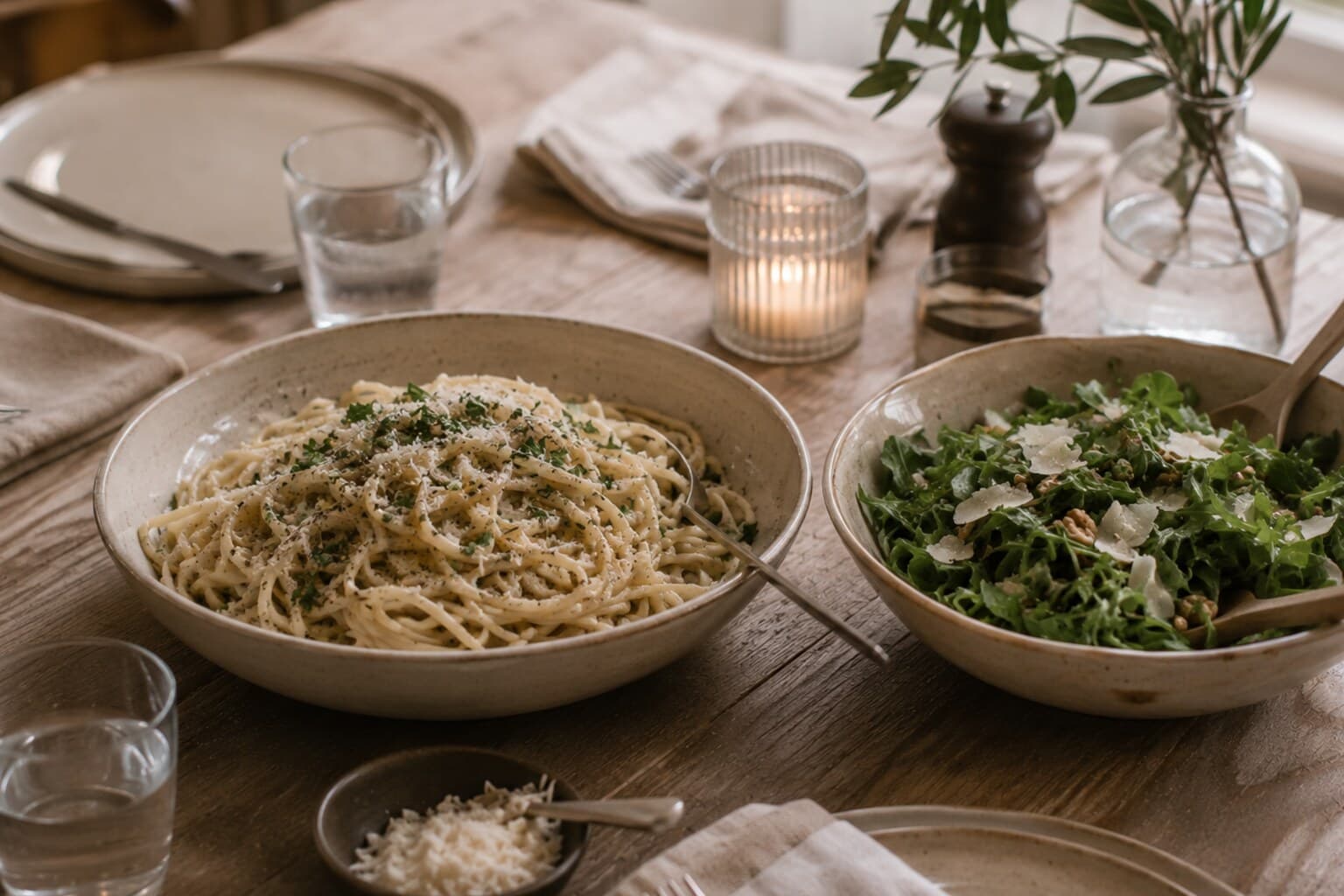
A seasonal pasta supper pairs olives and almonds with pasta in tomato, herbs and beans, a green salad with lemon dressing, and good vanilla ice cream or an alternative with seasonal compote. A tray-bake supper pairs bread and purchased hummus with seasonal vegetables, chickpeas and a simple herb sauce, a cucumber or bitter-leaf salad, and purchased cake served with fresh fruit. A soup and table supper pairs nuts and sparkling water with a high-quality prepared soup improved with herbs, beans or grains where appropriate, bread and a simple salad, and cookies and coffee.
Choose whichever option best matches what is already in the kitchen.
Minutes 0-10
Preheat the oven or begin boiling water, clear the main work surface, put drinks in the refrigerator, set out ingredients, and check serving dishes.
Minutes 10-25
Begin the central dish, prepare vegetables, mix the dressing or sauce, and place welcome food in bowls.
Minutes 25-40
Finish or place the central dish in the oven, prepare the fresh side, set the table, and place water ready.
Minutes 40-50
Clear preparation dishes, wipe the work surface, transfer dessert to a serving plate where appropriate, and check lighting and seating.
Minutes 50-60
Finish the main dish, taste and season, place food in serving dishes, and change clothes or pause for several minutes. Do not add another recipe.
Use Purchased Food Confidently
Useful purchased elements include bread, olives, dip, soup, dessert, a prepared tart, salad leaves, or a good sauce.
Purchased food becomes part of a considered menu through selection, serving, pairing, temperature and fresh finishing ingredients. There is no need to apologise for it.
Choose Where Effort Matters
Make one element personal - a homemade dressing, a fresh herb finish, a seasonal compote, warm bread, or a favourite cake.
The meal will still feel individual without every component being homemade.
The Checklist
- Menu contains no more than four food elements
- One component may be purchased
- Cooking methods remain compatible
- Table set while food cooks
- Kitchen reset kept functional
- Dessert requires no last-minute work
- Host stops after one hour
Pair It With
Easy hosting is not the art of doing everything quickly.
It is the art of knowing what does not need to be done at all.
Enjoyed this?
The Seasonal Letter brings more stories, recipes and rituals like this one - a few times a season, never more.

Written by Esther
Esther is a photographer and storyteller, and the founder of Essy's Essentials - a seasonal home for stories, rituals, recipes and everyday luxuries.
More about Esther →