Seasonal Menus & Easy Entertaining
The Essy’s Essentials Menu Formula
A repeatable four-part structure for building seasonal meals that feel generous, balanced and manageable.
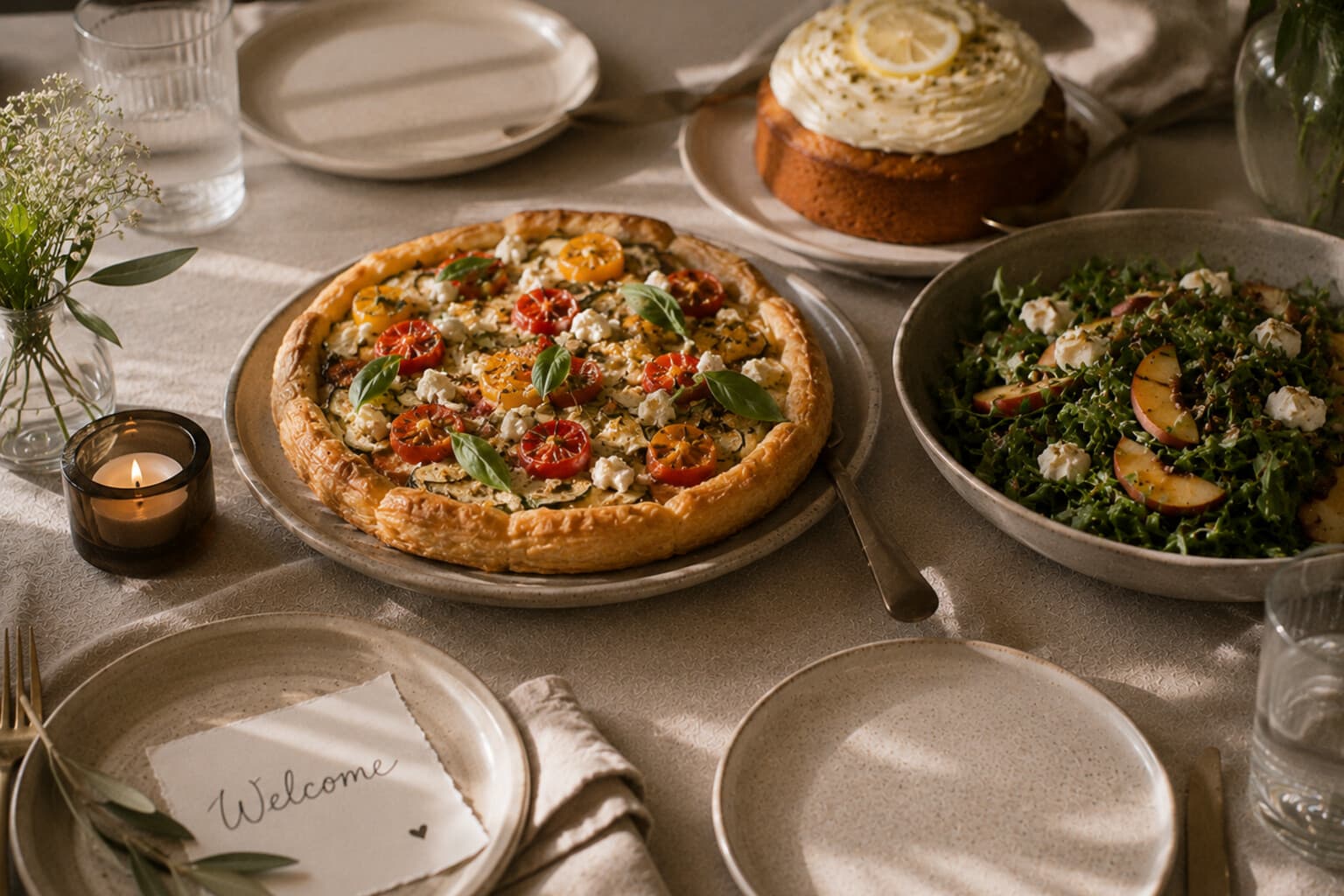
Planning for guests becomes easier when the menu has a dependable structure. Rather than beginning with several recipes, begin with four roles: something to welcome, something at the centre, something fresh, and something to finish.
Each part has a clear purpose. The formula works for lunch, dinner, brunch, afternoon gatherings and small celebrations. The recipes change. The structure remains.
Part 1: Something to Welcome
This is the food or drink offered when people arrive. It should be easy to serve and safe to leave briefly while conversation begins - olives and almonds, bread with herb butter or an alternative, a seasonal drink, a small bowl of soup, vegetables and dip, a plate of fruit, or one simple crostini.
The welcome element should not require the host to stand in the kitchen assembling individual portions.
Part 2: Something at the Centre
This is the main reason the menu feels complete - a large tart, roasted chicken or an alternative, seasonal pasta, tray-baked vegetables and beans, a breakfast bake, a whole fish where suitable, a large salad with grains and substance, or a pot of soup or stew.
The centre should be visually and practically generous. It should also be easy to divide.
Part 3: Something Fresh
This brings contrast - green salad, citrus-dressed vegetables, fresh herbs, tomatoes, cucumber, fruit, a bitter-leaf salad, or a simple slaw.
The fresh element may be cold, crisp, acidic or herb-led. It prevents the meal from feeling heavy.
Part 4: Something to Finish
The ending should feel distinct but uncomplicated - cake, compote and yoghurt or an alternative, chocolate and coffee, fruit tart, cookies, poached fruit, or cheese or an alternative with seasonal fruit.
The dessert does not need to be elaborate. It needs to give the meal a clear ending.
Apply the Formula by Level of Effort
A low-effort menu uses purchased welcome food, one tray-bake centre, bagged leaves with homemade dressing, and a store-bought dessert served well. A moderate-effort menu adds a homemade dip, a main dish prepared earlier, a fresh seasonal side, and a simple homemade cake. A more detailed menu builds a prepared starter, a central dish with several components, a composed salad, and a layered dessert.
Choose the level according to the occasion, not personal pressure.
Add Drinks Proportionally
Offer water, one non-alcoholic seasonal drink, coffee or tea where appropriate, and alcoholic drinks only where wanted and suitable.
There is no need to create a full drinks menu unless beverages are central to the gathering.
The Final Formula Check
Ask whether most of this can be prepared before guests arrive, whether the flavours belong together, whether there is enough freshness, whether dietary needs are covered, whether everything can be served with the dishes available, and whether the host will sit down.
If one answer is no, simplify.
Apply the Formula by Season
Spring
- Welcome: radishes, bread and herb butter or an alternative.
- Centre: asparagus and herb tart.
- Fresh: green leaves with lemon.
- Finish: rhubarb and almond cake.
Summer
- Welcome: olives and cold citrus water.
- Centre: tomato and courgette focaccia.
- Fresh: peach and herb salad.
- Finish: berry yoghurt cream or an alternative.
Autumn
- Welcome: warm nuts and pear spritz.
- Centre: mushroom and thyme pasta.
- Fresh: bitter leaves with apple dressing.
- Finish: pear and cardamom cake.
Winter
- Welcome: warm spiced tea and small savoury pastries.
- Centre: lentil and vegetable stew.
- Fresh: citrus and fennel salad.
- Finish: orange chocolate loaf.
Pair It With
The formula works because every part has a role - welcome, centre, freshness, finish.
Nothing is present only to make the table appear fuller.

Written by Esther
Esther is a photographer and storyteller, and the founder of Essy's Essentials - a seasonal home for stories, rituals, recipes and everyday luxuries.
More about Esther →