Seasonal Menus & Easy Entertaining
The Art of a Simple Seasonal Menu
A considered approach to planning meals for guests without creating too many dishes, timings or last-minute decisions.
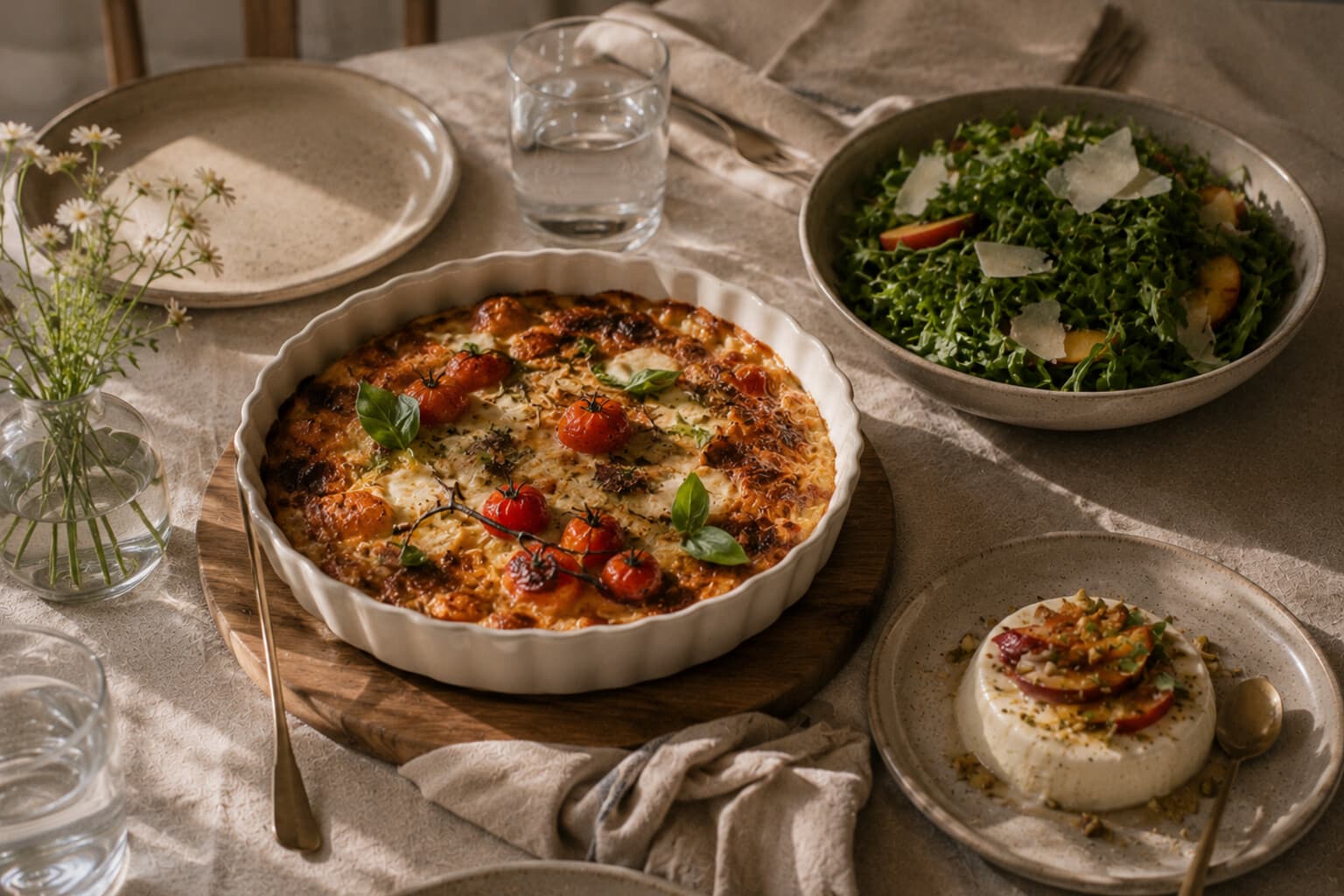
A menu does not feel generous because it contains many courses. It feels generous when the food works together, there is enough to share, and the person who prepared it is able to sit at the table.
The most successful seasonal menus are often built around a small number of clear decisions - one central dish, one fresh or contrasting side, something good to drink, and a simple ending. The season provides the direction, the number of people determines the scale, and the available time sets the level of ambition.
A calm menu begins by accepting those limits rather than trying to work around them.
Begin with the Kind of Gathering
Before choosing recipes, define the occasion - a relaxed dinner, Sunday lunch, an afternoon gathering, a seasonal brunch, coffee and cake, drinks with small plates, a family meal, or a quiet supper for two.
The menu should match the way people will actually gather. A seated dinner needs a different structure from an informal afternoon where people arrive at different times.
Choose One Central Dish
The main dish should carry most of the meal - a tray bake, a tart, a large pasta dish, a slow-cooked stew, a roast, a substantial seasonal salad, a brunch bake, or a generous soup with bread.
Choose something that can be prepared partly in advance, scales reliably, suits the season, allows for dietary needs, and does not require constant last-minute attention.
Add One Contrasting Side
The side should provide something the main dish lacks. If the main dish is rich, add something fresh; if it is soft, add texture; if it is warm and earthy, add acidity - a green salad, roasted vegetables, bread, a citrus-dressed slaw, herbed potatoes, tomato salad or fruit.
One strong side is often enough.
Add a Simple Beginning Only Where Useful
A starter is not essential. Guests can arrive to olives, nuts, bread and a spread, a small bowl of seasonal soup, a few vegetables with dip, or one shared plate.
Avoid serving a substantial first course when the main meal already requires considerable preparation. The opening food should give people something to enjoy while allowing the host to finish calmly.
Choose an Ending That Can Wait
A practical dessert should not depend on exact timing - seasonal cake, fruit crumble, panna cotta or an alternative, poached fruit, cookies and coffee, ice cream or an alternative with compote, or cheese or an alternative with fruit.
A dessert that can be prepared earlier keeps the final part of the meal relaxed.
Use One Flavour Thread
A menu feels coherent when one or two flavours recur gently - lemon in the dressing and dessert, herbs in the main dish and table butter, pear in the salad and cake, or tomato in the starter and centrepiece.
Do not repeat every ingredient. One quiet connection is enough.
Keep the Cooking Methods Balanced
Avoid planning three oven dishes with different temperatures, several pans that need constant attention, a starter that must be served immediately, or a dessert that requires the oven as the main course comes out.
Review oven use, hob space, refrigerator space, serving dishes and resting times - a good menu is partly a timing system.
Create the Menu on One Page
Write out the arrival food, main dish, side, dessert, drinks, preparation that can happen in advance, and last-minute tasks.
This prevents the menu from expanding through memory and impulse.
Pair It With
A simple seasonal menu is not a reduced version of a more impressive one.
It is a complete meal designed around ease, flavour and the pleasure of sharing it.

Written by Esther
Esther is a photographer and storyteller, and the founder of Essy's Essentials - a seasonal home for stories, rituals, recipes and everyday luxuries.
More about Esther →