The Everyday Outfit Formula
A repeatable structure for getting dressed with ease while keeping outfits polished, comfortable and personal.
At a Glance
- The refined everyday uniform
- The polished denim outfit
- The one-piece outfit
- The soft layered outfit
- The elevated home outfit
- Use the third-piece principle selectively
- Balance proportion
- Create a weekly outfit bank
A wardrobe may contain many suitable pieces and still feel difficult to use. The problem is often not the clothing. It is the absence of dependable combinations.
An outfit formula is a structure that can be repeated with different garments - tailored trousers, fine knit, loafers and structured bag; straight jeans, shirt, blazer and ankle boots; simple dress, long coat and jewellery. The exact pieces change. The proportion and level of polish remain familiar. A small group of formulas makes daily dressing faster and reduces the need to create an entirely new outfit each morning.
Formula 1: The Refined Everyday Uniform
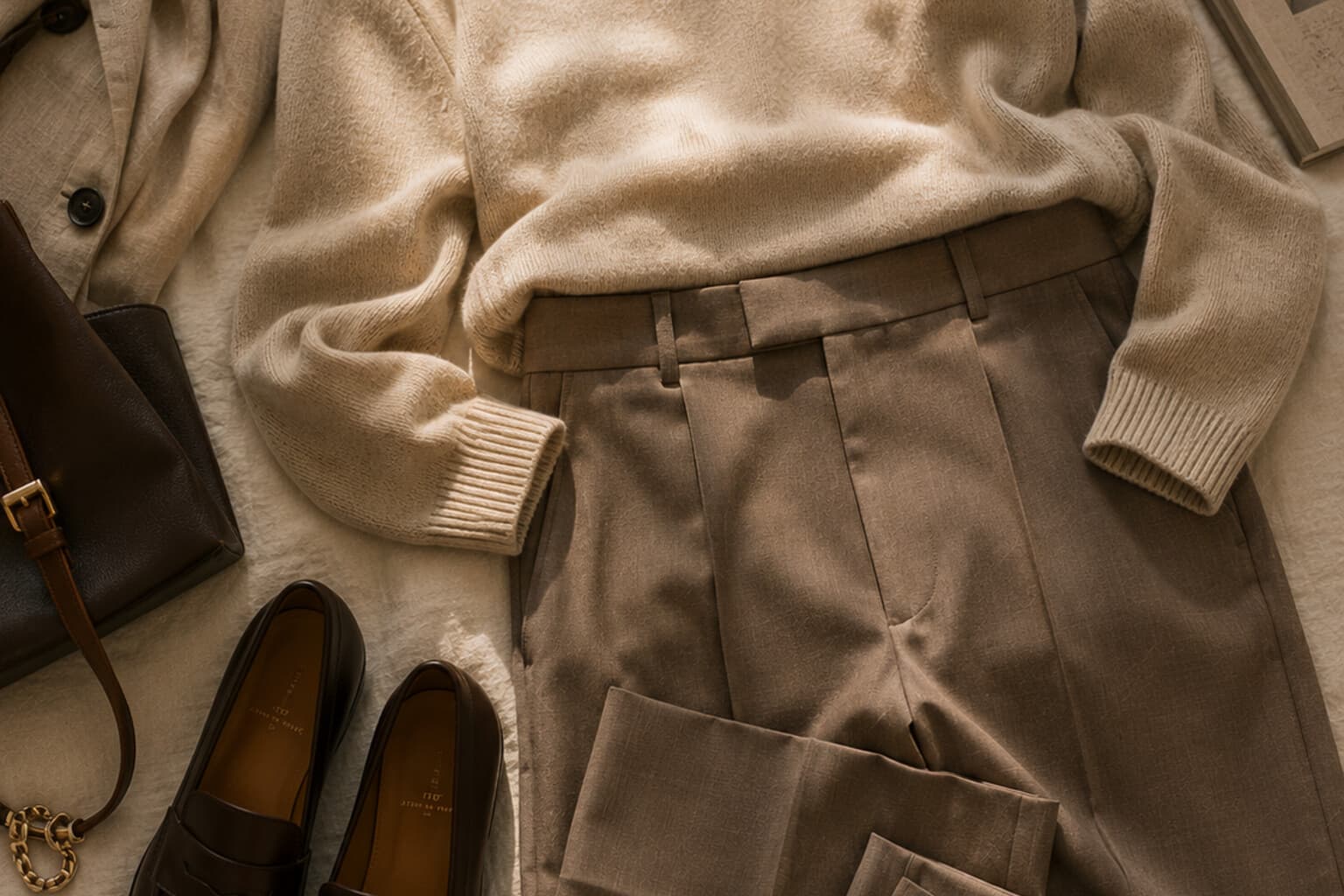
Use straight or tailored trousers, a fine knit or simple blouse, loafers, flats or ankle boots, a structured bag, and one piece of jewellery. This works well for work, appointments, lunch, city days and informal meetings.
Change the weight of the fabrics according to the season.
Formula 2: The Polished Denim Outfit
Use straight-leg or relaxed jeans, a shirt, knit or fitted T-shirt, a blazer, trench or cardigan, leather shoes, and a belt where useful.
The success of this outfit depends on fit, trouser length, condition of the denim and shoe choice. A simple denim outfit can appear highly considered when these details are correct.
Formula 3: The One-Piece Outfit
Use a dress or jumpsuit, one outer layer, simple shoes, a bag, and one finishing detail. One-piece outfits reduce the number of decisions.
Choose shapes that work with existing coats, preferred bras or undergarments, shoes already owned, and real movement throughout the day.
Formula 4: The Soft Layered Outfit
Use trousers or a longer skirt, T-shirt, blouse or thin knit, cardigan or relaxed jacket, boots or loafers, and a scarf where appropriate.
This formula is useful during transitional weather. Keep the layers varied in weight rather than equally bulky.
Formula 5: The Elevated Home Outfit
Use comfortable trousers, a good-quality top or knit, clean indoor shoes, socks or slippers, and small jewellery or a neat hair detail.
The aim is not formal dressing at home. It is to avoid the feeling of remaining indefinitely in clothes associated only with sleep or illness.
Use the Third-Piece Principle Selectively
A third piece may be a blazer, cardigan, waistcoat, scarf, belt or light jacket. It can make a simple top-and-trouser combination feel complete.
However, not every outfit needs an added layer. In warm weather or minimal looks, strong proportions and accessories may be enough.
Balance Proportion
Consider the relationship between loose and fitted, long and short, structured and soft, wide and narrow - wide trousers with a more defined top, an oversized knit with straight jeans, a long coat over a simple column of colour, a fitted dress with a softer cardigan.
The objective is not to follow rigid body-shape rules. It is to create visual balance and physical comfort.
Create a Weekly Outfit Bank
Save five to ten reliable outfits through mirror photographs, a notes app, a wardrobe application, or a simple album, labelled by context - work, warm weather, rain, travel, dinner, low-energy day.
This creates a personal reference library for mornings when inspiration is low.
The Checklist
- Formula suits the day
- Base pieces fit well
- Shoes match the amount of movement
- One outer layer considered
- Accessories kept intentional
- Proportions balanced
- Weather checked
- Outfit saved when successful
Pair It With
The purpose of an outfit formula is not to make every day look the same.
It is to make getting dressed simple enough that personal style can become more visible.
Enjoyed this?
The Seasonal Letter brings more stories, recipes and rituals like this one - a few times a season, never more.
Written by Esther
Esther is a photographer and storyteller, and the founder of Essy's Essentials - a seasonal home for stories, rituals, recipes and everyday luxuries.
More about Esther →