The Accessory Edit
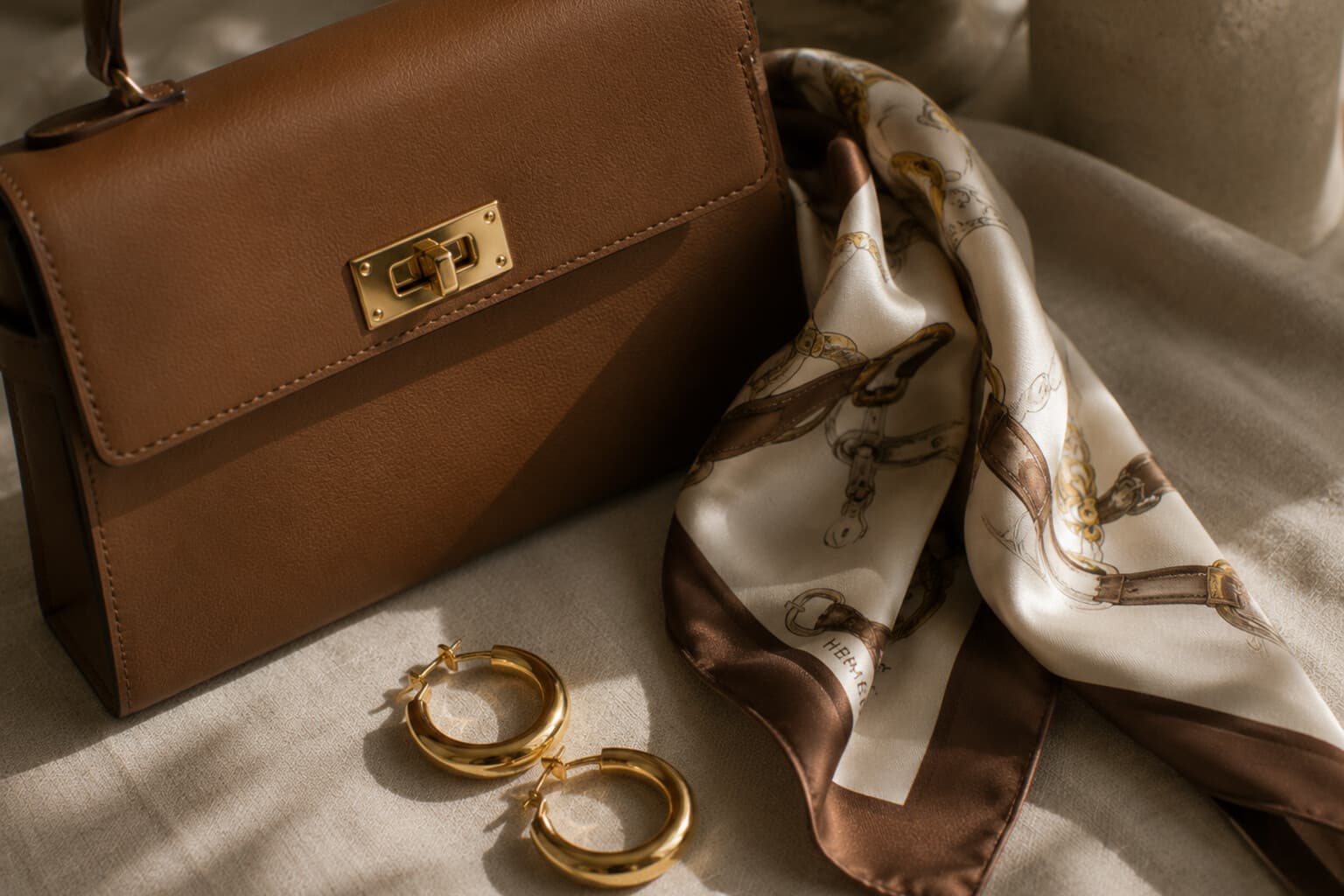
A focused collection of bags, shoes, scarves and jewellery that gives simple outfits distinction without creating clutter.
At a Glance
- Begin with the everyday bag system
- Edit shoes by purpose
- Build a small jewellery signature
- Use scarves intentionally
- Choose belts for actual garments
- Store accessories visibly
- Create an accessory rotation
- Repair before replacing
Accessories often carry more style than the main garments. A simple outfit can change completely through a structured bag, a silk scarf, gold earrings, a belt, a pair of loafers, or a watch. Because accessories are smaller, they are also easy to collect - the result may be many pieces with no clear role.
The Accessory Edit focuses on repeat use. Every item should either support several outfits, serve a clear function, or express a recognisable part of personal style. The goal is not to reduce everything to basics. It is to make the strongest accessories easier to see and wear.
Begin with the Everyday Bag System
A useful bag collection might include one everyday structured bag, one larger work or travel bag, one crossbody bag, one evening or occasion bag, and one seasonal or expressive bag.
Review whether each bag fits phone, wallet, keys, glasses, laptop where needed, and daily practical items. A beautiful bag that does not suit its intended contents will remain difficult to use.
Edit Shoes by Purpose
Possible categories include everyday walking, work, rain, warm weather, cold weather, evening, travel and special occasion. Within each category, ask whether they are comfortable, in good condition, work with current trouser lengths, can be worn for the duration intended, and suit the climate.
Keep shoes that support real movement.
Build a Small Jewellery Signature
A jewellery signature may include gold hoops, a fine necklace, a watch, a signet ring, a bracelet, or pearl or stone earrings.
The pieces do not need to be worn together. They should share enough warmth, scale or material to combine easily. Keep everyday jewellery accessible rather than hidden in several boxes.
Use Scarves Intentionally
Scarves can provide warmth, colour, pattern, structure around the face, and interest to a coat or bag. Useful categories include one fine silk or satin scarf, one light woven scarf, one warm winter scarf, and one expressive seasonal option.
Scarves that never sit comfortably or require constant adjustment are unlikely to become dependable.
Choose Belts for Actual Garments
Review belts with jeans, tailored trousers, dresses and coats. Check width, buckle size, hole placement, leather condition and metal colour.
A belt should work with the garment’s loops and proportions, not only look attractive on its own.
Store Accessories Visibly
Possible systems include a shallow tray for daily jewellery, hooks for belts, a shelf for current bags, a small scarf drawer, and shoe storage organised by season.
Avoid storing everything in its original packaging when that prevents use. Protect delicate items appropriately but keep frequent choices accessible.
Create an Accessory Rotation
At the start of each season, select one everyday bag, one secondary bag, three pairs of shoes, one scarf, and a small jewellery group. Place these where they are easiest to reach.
The rest can remain available without competing for daily attention.
Repair Before Replacing
Consider polishing leather, replacing heel tips, repairing zips, restitching bag linings, cleaning jewellery, reshaping hats, and replacing missing fastenings.
High-use accessories often deserve maintenance before replacement.
The Checklist
- Each bag has a purpose
- Shoes support real movement
- Everyday jewellery visible
- Scarves limited to useful types
- Belts tested with current clothes
- Seasonal rotation selected
- Repairs completed
- Unused pieces reviewed honestly
Pair It With
Accessories should make getting dressed more expressive, not more complicated.
A few strong pieces, worn often, create more identity than a large collection that remains stored.
Enjoyed this?
The Seasonal Letter brings more stories, recipes and rituals like this one - a few times a season, never more.

Written by Esther
Esther is a photographer and storyteller, and the founder of Essy's Essentials - a seasonal home for stories, rituals, recipes and everyday luxuries.
More about Esther →