The Everyday Drawer System
A simple method for organising drawers so that frequently used items remain visible, accessible and easy to return.
At a Glance
- Choose one function
- Measure the drawer
- Use zones
- Use shallow containers
- Store duplicates intentionally
- Avoid the mixed household drawer
- Create a charging drawer carefully
- The twenty-percent rule
Drawers hide clutter quickly. This makes them useful. It also allows mixed categories, duplicates and forgotten objects to accumulate without affecting the appearance of the room.
A useful drawer should not need to be searched from front to back. The contents should be visible when it opens.
The Everyday Drawer System creates clear zones without requiring every object to sit in a perfectly fitted compartment.
Choose One Function
Each drawer should have one primary purpose - cutlery, cooking tools, desk supplies, daily toiletries, bedside essentials, household tools, charging equipment.
Several related subcategories may share a drawer. Avoid combining unrelated items simply because there is spare space.
Measure the Drawer
Before purchasing dividers, measure internal width, internal depth, usable height and any obstructions.
Check whether the drawer narrows at the sides or back, and leave enough clearance for the drawer to close comfortably.
Use Zones
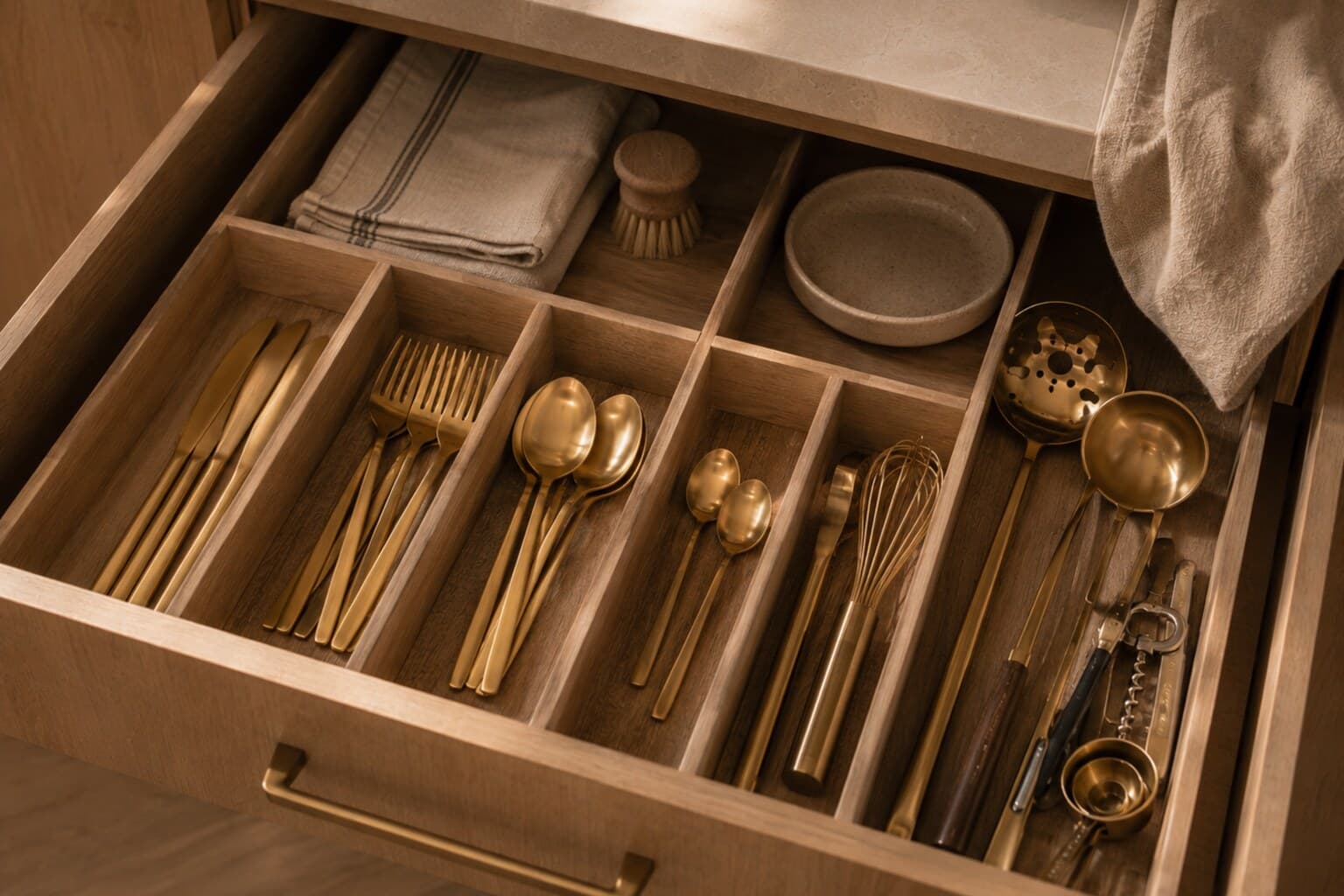
Create zones according to frequency and type. A desk drawer may contain writing tools, small stationery, a charging cable, notes and administrative essentials. A kitchen utensil drawer may contain daily cooking tools, measuring tools, opening tools and specialist items used less often.
Place the most-used category nearest the natural opening position.
Use Shallow Containers
Shallow trays and dividers help prevent items from stacking. Possible organisers include existing small boxes, wooden dividers, transparent trays, ceramic dishes and low baskets.
The organiser should suit the depth and weight of the items - avoid deep containers that hide smaller objects.
Store Duplicates Intentionally
Some duplicates are practical - several pens, two charging cables, multiple teaspoons. Others create unnecessary volume.
Review how many are used, whether they are all functional, and whether the best few would be enough. Keep backups in secondary storage when they do not need daily access.
Avoid the Mixed Household Drawer
A small practical drawer may contain several household essentials, but it needs boundaries - tape, scissors, batteries, small tools, picture hooks, matches. Do not use it for every item without a clear home.
Create a separate system for medication, important documents, hazardous products, loose sharp objects and sensitive personal information - store these safely and appropriately.
Create a Charging Drawer Carefully
A charging drawer may contain cables, adapters, portable batteries, earphones and device accessories. Use cable ties or small compartments, and remove obsolete cables only after confirming they are no longer required.
Do not charge devices in enclosed storage unless the setup is designed to be safe and ventilated - follow device and electrical safety guidance.
The Twenty-Percent Rule
Where possible, leave part of the drawer unfilled. A small amount of space allows items to be seen, hands to reach them, categories to remain separate and new necessary items to be accommodated.
A drawer filled to maximum capacity is difficult to maintain.
The Checklist
- Primary purpose defined
- Contents removed and reviewed
- Interior cleaned
- Measurements checked
- Frequently used items placed first
- Zones created
- Duplicates reduced
- Containers kept shallow
- Hazardous items stored appropriately
- Drawer closes without pressure
Pair It With
A useful drawer does not need to look like a display.
It needs to open easily, show what it contains and allow every item to return without effort.
Enjoyed this?
The Seasonal Letter brings more stories, recipes and rituals like this one - a few times a season, never more.

Written by Esther
Esther is a photographer and storyteller, and the founder of Essy's Essentials - a seasonal home for stories, rituals, recipes and everyday luxuries.
More about Esther →