The Money Edit
I Started Investing This Year — Here’s What I Needed to Understand First
A calm, jargon-free account of what I needed to understand before I opened an investment account - risk, buffers, time and costs, not hot tips.
Investing, Gently · 13 min read

“Not knowing what the market will do next. Knowing enough to decide what you want to do next.”
For a long time, investing belonged to that category of things I knew I probably should understand, but never quite felt an urgency to learn.
I saved. I organised my money. I had different savings pots for things I wanted to do, things I wanted to buy and things that might eventually need replacing. I thought about the future.
But investing?
That still felt like another world. Markets. Charts. Acronyms. People enthusiastically discussing percentages over coffee as though everyone had received the same secret handbook.
I hadn’t.
And perhaps more importantly: I wasn’t particularly interested in becoming someone who spends her evenings analysing share prices.
I simply wanted to understand whether investing could have a sensible place in the financial life I was already building.
So this year, I started.
I opened an investment account through ING, the bank I already use, and began learning.
Not because I suddenly discovered the secret to getting rich. I very much did not.
And not because I think everyone should invest.
I started because I realised that being thoughtful about my financial future also means understanding what options exist beyond leaving everything in a savings account.
This is what I needed to understand first.
Investing and saving are not the same job
This was probably the most important mental shift for me.
I don’t see investing as a more sophisticated version of saving.
My savings have jobs.
Some money needs to be available when the washing machine stops working, the car needs an expensive repair or something in the house unexpectedly needs replacing.
Some is being saved for lovely things: travel, a larger purchase, something I have deliberately decided I want.
And some simply gives me the comfort of knowing that if life becomes expensive for a while, there is room to deal with it.
That money needs stability and accessibility.
Invested money has a completely different job.
Investments can rise in value, but they can also fall. Sometimes significantly. There is no guarantee that the amount showing in an investment account today will still be there when you need it.
The Dutch Authority for the Financial Markets, the AFM, similarly advises people to maintain sufficient savings as a financial buffer and to invest only money they can leave invested for the longer term.
That distinction changed the way I thought about investing.
My emergency money isn’t investment money.
My holiday fund isn’t investment money.
Money earmarked for something I expect to buy soon isn’t investment money.
Investing starts after those conversations.
A financial buffer comes first
There is something decidedly less exciting about building a financial buffer than opening an investment account.
There are no exciting upward graphs involved.
But I think that is precisely why it deserves more attention.
A buffer is the money that protects everything else.
Nibud, the Dutch National Institute for Family Finance Information, describes a financial buffer as money kept aside for larger necessary expenses, such as replacing appliances, maintaining a home or car and dealing with other unexpected costs. The appropriate amount isn’t identical for everyone; it depends on your household and circumstances.
I like thinking about this as separating unexpected-but-inevitable life from genuine emergencies.
At some point, things break.
Cars need repairs.
Appliances stop cooperating.
Homes require maintenance.
None of these things are particularly surprising over the course of a lifetime - we simply don’t know exactly when they’ll happen.
Having money waiting for those moments means an annoying expense can remain exactly that: annoying.
It doesn’t immediately become a financial crisis.
And for me, that comes before trying to make part of my money grow.
Investing means accepting that your money will move
We tend to talk about investing in terms of potential returns.
The less glamorous half of that sentence is risk.
An investment can lose value.
And not merely in theory.
You can open your account and see less money than you originally put into it. Markets can fall, sometimes sharply, and nobody can promise exactly when they will recover.
The AFM explicitly warns that investing is riskier than saving and that investors can lose part - and in some circumstances all - of their investment. Exact rules, protections and regulatory bodies vary by country, so if you live outside the Netherlands, this is worth checking with the equivalent financial regulator or independent consumer-finance body where you live.
Understanding that sentence intellectually is one thing.
Understanding what it might feel like is another.
Before investing, I think there is a useful question that has nothing to do with complicated financial calculations:
How would I feel if this amount was suddenly worth considerably less?
Would I immediately need the money?
Would I panic?
Would I feel compelled to sell everything?
Would I spend every evening checking whether it had recovered?
Your capacity for risk isn’t only about what a spreadsheet says you can afford to lose.
There is an emotional component too.
And I don’t think we talk about that enough.
Time changes the conversation
Investing becomes particularly problematic when money has a deadline.
If you know you need €10,000 next year for something important, you cannot simply assume an investment will conveniently be worth €10,000 when the invoice arrives.
Markets don’t work according to our personal calendars.
The AFM describes investing as something for the longer term and says that investing for just one or two years is generally not appropriate, suggesting people think in terms of at least three to five years. This is Dutch regulatory guidance specifically; if you live elsewhere, look for the equivalent guidance from your own country’s financial regulator.
That helped me think differently about my money.
Instead of asking:
"How much money could I invest?"
I prefer:
"Which money genuinely doesn’t have another job for the foreseeable future?"
It is a much calmer question.
I didn’t need to become an expert before I could learn
Part of what kept investing feeling inaccessible to me was the vocabulary.
Shares. Bonds. Funds. ETFs. Indexes. Asset allocation. Risk profiles.
Finance has an impressive ability to make fairly understandable concepts sound as though you need an economics degree before you’re allowed into the room.
You don’t.
But I do think you should understand what you are buying before you buy it.
At its simplest, investing means putting money into something that you hope will become more valuable or generate income over time, while accepting that this outcome isn’t guaranteed.
There are many ways of doing that.
A share represents ownership in a company.
A bond is essentially a form of lending money to a government or company.
Funds can bring many different investments together.
An ETF - an exchange-traded fund - is a type of fund that can be traded on an exchange.
Those definitions are only the beginning, and we’ll unpack them properly elsewhere in The Money Edit.
The important part for me was realising that I didn’t need to understand the entire financial system at once.
I needed to understand the thing I was considering putting my own money into.
That is a much more manageable assignment.
Diversification is really about not needing one bet to work
Another word that appears everywhere once you start reading about investing is diversification.
The principle is much easier than the word.
Don’t make your entire financial outcome dependent on one company, one sector or one investment behaving exactly as you hope.
Spreading investments cannot remove risk altogether, but it can reduce how dependent you are on the performance of a single investment.
The AFM also identifies diversification - across investments and over time - as an important principle for people investing for the longer term. The same idea appears in investor education from regulators internationally, including the U.S. Securities and Exchange Commission’s Investor.gov, which describes diversification as spreading investments across a variety of assets to help manage overall portfolio risk.
And this is exactly the kind of investing principle I find appealing.
Not finding the winner.
Not making one brilliant prediction.
Just reducing the number of things that have to go perfectly.
Costs deserve to be boringly important
This might be one of the least exciting sentences ever published on Essy’s Essentials:
Investment costs matter.
There can be costs associated with the investment itself, with the platform or service you use and with transactions.
A percentage that looks tiny deserves attention when it is being charged repeatedly over many years.
The AFM specifically advises investors to pay attention to costs because they affect the eventual return, and Investor.gov makes the same point for a US audience: even small differences in fees can translate into large differences in what you eventually keep.
This isn’t something I would have naturally focused on when I first became curious about investing.
A return percentage feels exciting.
A fee percentage does not.
Unfortunately, both percentages belong to the same calculation.
Starting to invest doesn’t mean turning investing into a hobby
This one matters to me.
I enjoy learning about money.
I enjoy organising it.
I like knowing where things stand.
But I don’t particularly want the stock market to become a major character in my daily life.
I don’t want every piece of financial news to trigger an action.
I don’t want to constantly wonder whether I should buy, sell or change something.
And I certainly don’t want my mood to become correlated with a graph on my phone.
For me, successful money management should create more mental space, not less.
That means the investment approach I am interested in learning about is deliberately rather unexciting: long-term, considered and understandable.
There may be people who genuinely enjoy trading.
I am not trying to become one of them.
There are also perfectly good reasons not to start yet
One thing I want this series to be very clear about:
Investing isn’t a financial graduation ceremony.
You aren’t somehow better at adulthood because you have an investment account.
There may be very sensible reasons not to invest right now.
Perhaps your emergency buffer isn’t where you want it to be.
Perhaps you have debts that need your attention first.
Perhaps you’re saving for something important in the near future.
Perhaps your income is currently unpredictable.
Perhaps the idea of seeing your money fall in value would cause you enormous stress.
Or perhaps you simply don’t understand investing well enough yet to feel comfortable.
Waiting until your financial foundation feels stronger isn’t failing to invest.
It is making a financial decision.
The questions I would ask before starting
Not "Which investment should I buy?"
These:
Do I have enough accessible savings for unexpected expenses?
Do I need this money within the next few years?
What am I actually hoping this money will do for me?
Do I understand that its value can fall?
Would a substantial temporary loss make me panic?
Do I understand what I’m investing in?
Do I understand the costs?
Am I making this decision because it fits my financial life - or because everyone suddenly seems to be talking about investing?
Those questions are less exciting than a list of promising investments.
I also think they are considerably more useful.
What I’m learning now
I am still at the beginning of this.
And that is exactly why I want to write about it.
There is plenty of financial content created by people who already know all the terminology. What I often missed was someone translating the learning process itself.
What do you need to understand first?
Which questions are actually important?
What sounds complicated but isn’t?
What looks simple but deserves more thought?
And how do you make investing part of a thoughtfully organised financial life without allowing money to become the centre of that life?
That is what Investing, Gently will explore.
We’ll look at shares, bonds, funds and ETFs.
We’ll talk about risk.
Costs.
Diversification.
Long-term investing.
The emotional side of watching money fluctuate.
And also about the moments when not investing might be the more sensible decision.
No hot tips.
No promises of becoming a millionaire.
No pretending that there is one perfect financial system for everyone.
Just learning how it works - so we can make our own decisions from there.
Because for me, that is ultimately what financial independence looks like.
Not knowing what the market will do next.
Knowing enough to decide what you want to do next.
Editor’s Note
I started investing in 2026 through ING, simply because it was already my bank and that made taking the first practical step feel accessible. This article isn’t sponsored by ING, and mentioning the platform I use isn’t a recommendation to use the same provider.
Throughout The Money Edit, I’ll distinguish between my own experience and general financial information as clearly as possible.
A Small but Important Disclaimer
Essy’s Essentials provides general information and personal experience for educational and editorial purposes. Nothing in this article constitutes personal financial or investment advice, or a recommendation to buy, sell or hold a particular financial product.
Investing involves risk. Investments can increase or decrease in value and you may lose part or all of the money invested. Your financial situation, goals, time horizon and willingness to take risk are personal.
Exact regulations, investor protections and tax treatment depend on where you live. If you need advice based on your individual financial situation, consult an appropriately qualified financial adviser in your own country.
Sources & Further Reading
- AFM (Dutch Authority for the Financial Markets) — Zelf beleggen - consumer guidance on investing
- AFM (Dutch Authority for the Financial Markets) — Praktische checklist bij beleggen
- OECD — Financial education (OECD/INFE)
- U.S. Securities and Exchange Commission - Investor.gov — Asset Allocation and Diversification
Continue The Money Edit
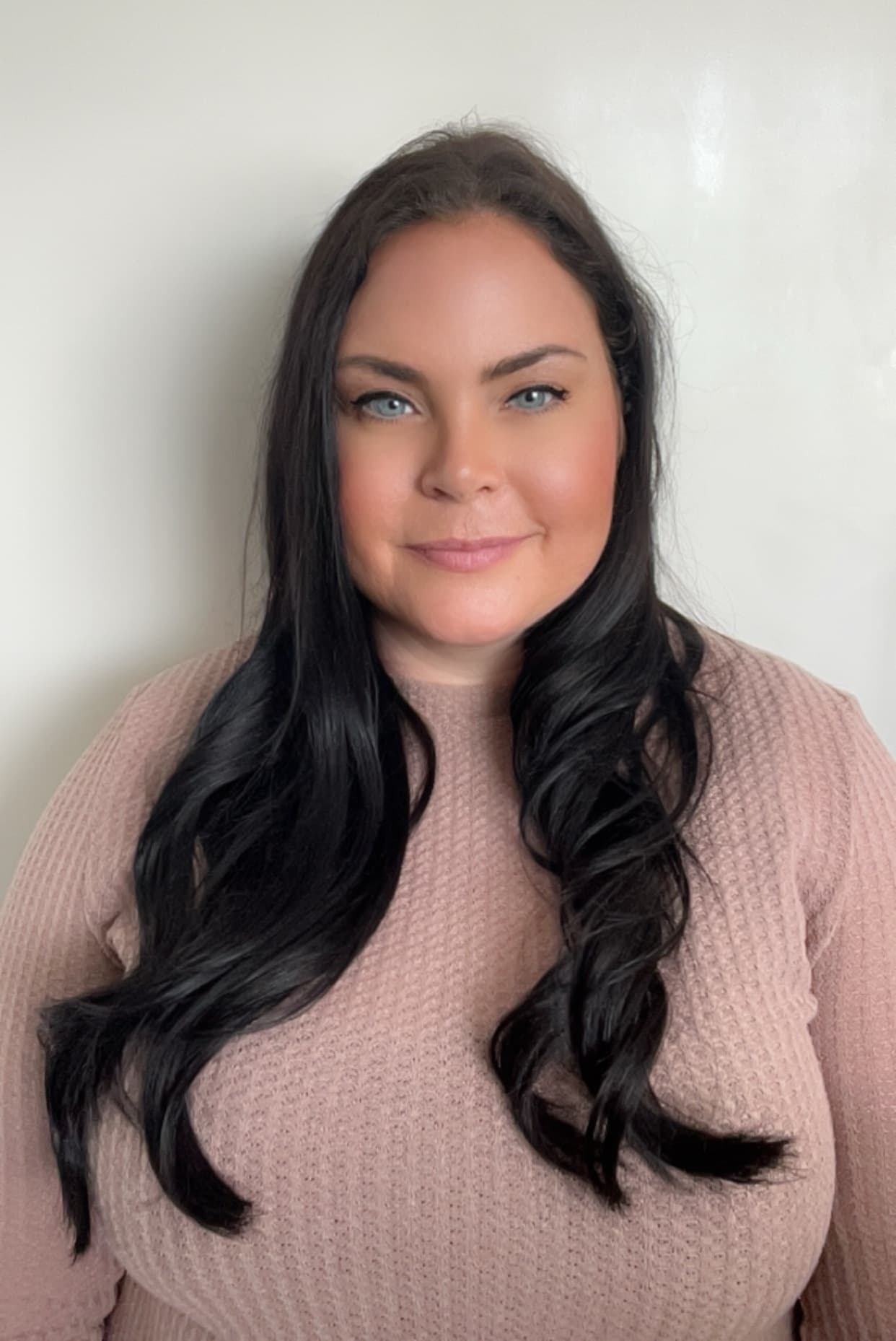
Written by Esther
Esther is a photographer and storyteller, and the founder of Essy's Essentials - a seasonal home for stories, rituals, recipes and everyday luxuries.
More about Esther →