Home Administration
A Beautifully Organised Home Administration System
A calm and practical way to manage documents, recurring responsibilities and the small tasks that keep a household running.
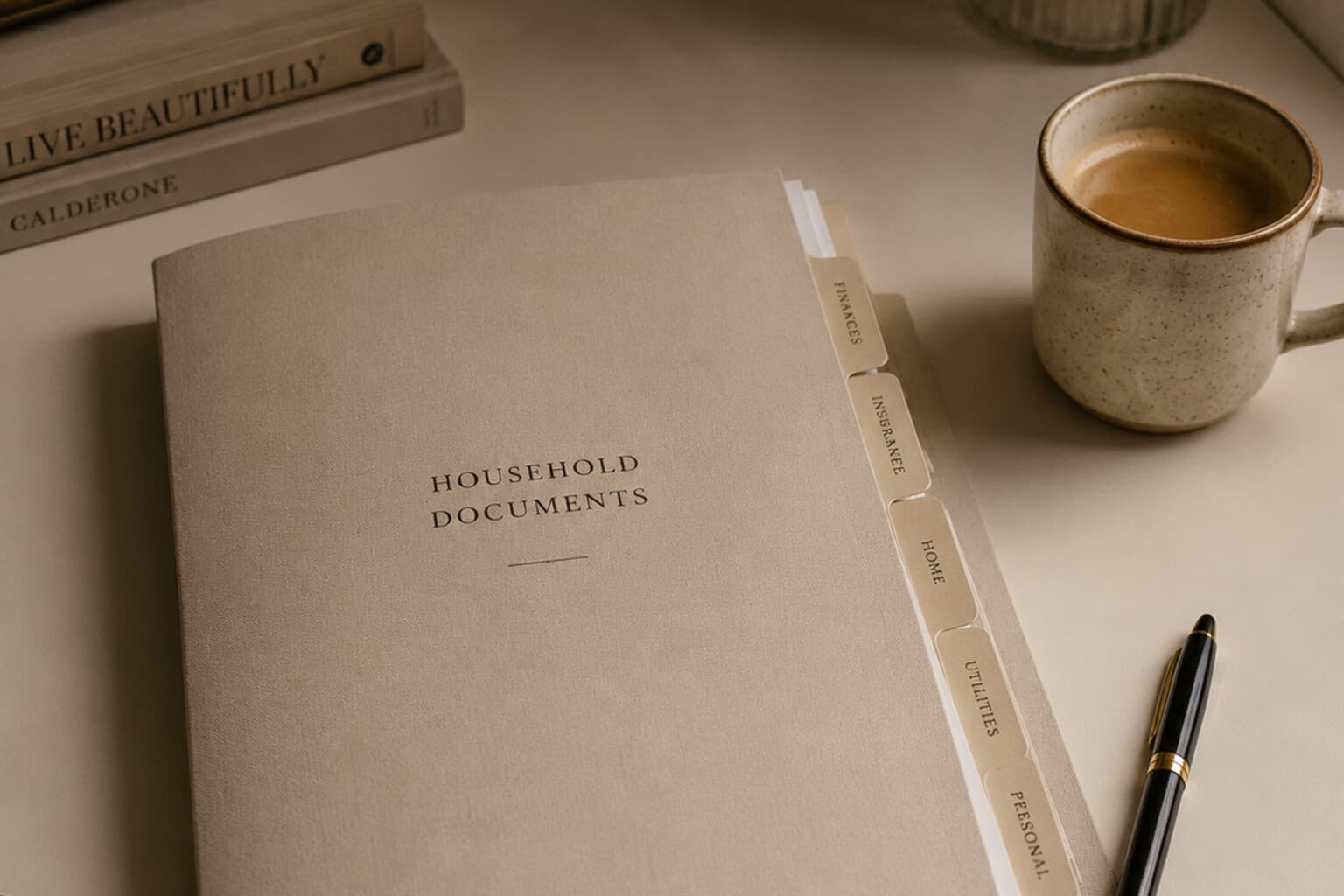
Home administration is rarely difficult because of one large task.
It becomes overwhelming because important information is spread across emails, drawers, folders, calendars and handwritten notes - insurance documents, maintenance appointments, warranties, subscriptions, annual payments, travel documents, household bills, forms waiting to be completed.
The purpose of a home administration system is not to document every detail of domestic life. It is to make important information easy to find and recurring responsibilities easier to remember.
A good system should answer five simple questions: what needs attention now? What is coming later? Where is the information stored? Who is responsible? When should it be reviewed again?
Begin With a Small Number of Categories
Avoid building an overly detailed system before you know what you actually need. A simple home administration structure may include: home and property, energy and utilities, insurance, financial administration, transport, health administration, work and education, subscriptions and memberships, warranties and major purchases, travel, personal documents, emergency information.
Not every household needs every category. Choose only the areas that genuinely apply.
Create One Primary Home for Every Type of Information
Every item should have one clear place. Appointments belong in the calendar. Actions belong on a task list. Original documents belong in secure storage. Reference notes belong in a notebook or digital document. Renewal dates belong in a recurring reminder system. Receipts for major purchases belong with the relevant warranty information.
Do not store the same document in several locations unless there is a clear backup reason. Duplication often creates uncertainty rather than safety.
Separate Active Information From Archive Material
Active information includes current contracts, open claims, upcoming appointments, documents awaiting action, current policies and valid warranties.
Archive material includes expired contracts, completed claims, old quotations, previous policies, and documents retained only for reference or legal reasons.
Keeping active and archived information separate makes the current situation easier to understand.
Use a Household Calendar for Recurring Responsibilities
Many important home tasks happen only once or twice a year. That is why they are easy to forget.
Possible reminders include insurance renewal, energy contract review, boiler or heating maintenance, vehicle servicing, smoke-alarm checks, garden maintenance, annual health appointments, passport renewal, tax or municipal deadlines, and subscription reviews.
Create reminders before the actual deadline so there is enough time to compare options or prepare documents.
Define Responsibility
In a shared household, important tasks may remain unfinished because everyone assumes someone else will handle them. For recurring areas, decide who takes the lead - for example, one person manages insurance, one person monitors utilities, one person schedules vehicle maintenance. Shared decisions are reviewed together.
Responsibility does not mean one person must do everything. It means someone notices when action is required.
Protect Sensitive Information
Home administration often includes confidential material. Use appropriate security for identity documents, banking information, tax records, medical information, passwords, legal documents and insurance details.
Do not place sensitive originals in broadly shared or unprotected folders. Use strong account security, appropriate access controls and secure physical storage.
Keep a Monthly Administration Ritual
Once a month, take thirty to sixty minutes to review upcoming deadlines, unpaid or disputed invoices, open forms, appointments to schedule, documents to file, subscriptions to review, and items waiting for another person.
Choose a few meaningful actions rather than trying to reorganise the entire household.
Pair It With
- The Monthly Home-Admin Hour
- The Household Document Index
- The Annual Household Review
- The Home Maintenance Calendar
- Subscriptions, Contracts and Renewals
- The Household Emergency Information File
- AI for Home Administration
Frequently Asked Questions
What questions should a good home administration system answer?
Five simple ones: what needs attention now? What is coming later? Where is the information stored? Who is responsible? When should it be reviewed again?
How do I stop the same document living in multiple places?
Give every type of information one primary home - appointments in the calendar, actions on a task list, original documents in secure storage, renewal dates in a recurring reminder system. Duplication often creates uncertainty rather than safety.
Who should be responsible for which household tasks?
In a shared household, decide who takes the lead on each recurring area - for example, one person manages insurance, another monitors utilities. Responsibility does not mean doing everything yourself; it means someone notices when action is required.
How much time does home administration need each month?
Thirty to sixty minutes, once a month, to review upcoming deadlines, unpaid or disputed invoices, open forms, appointments to schedule and subscriptions to review - a few meaningful actions rather than reorganising the entire household at once.
A beautifully organised household is not one in which every paper is perfect and every task is completed immediately.
It is one in which important information has a place, responsibilities are visible and unfinished matters are easy to return to.
A Note on This Content
The content on Essy’s Essentials is intended for general inspiration, personal organisation and educational purposes. It does not constitute personal financial, investment, tax or legal advice. Always consider your own circumstances and seek qualified advice where appropriate. Any amounts shown are illustrative examples only, never a recommendation for what you personally should save or spend.

Written by Esther
Esther is a photographer and storyteller, and the founder of Essy's Essentials - a seasonal home for stories, rituals, recipes and everyday luxuries.
More about Esther →