The New Home Edit
What I Wish I Knew Before Our New Build
The things I wish I had known before our new-build - from builder options and showroom decisions to delays, finishing work, furniture and finally making it feel like home.
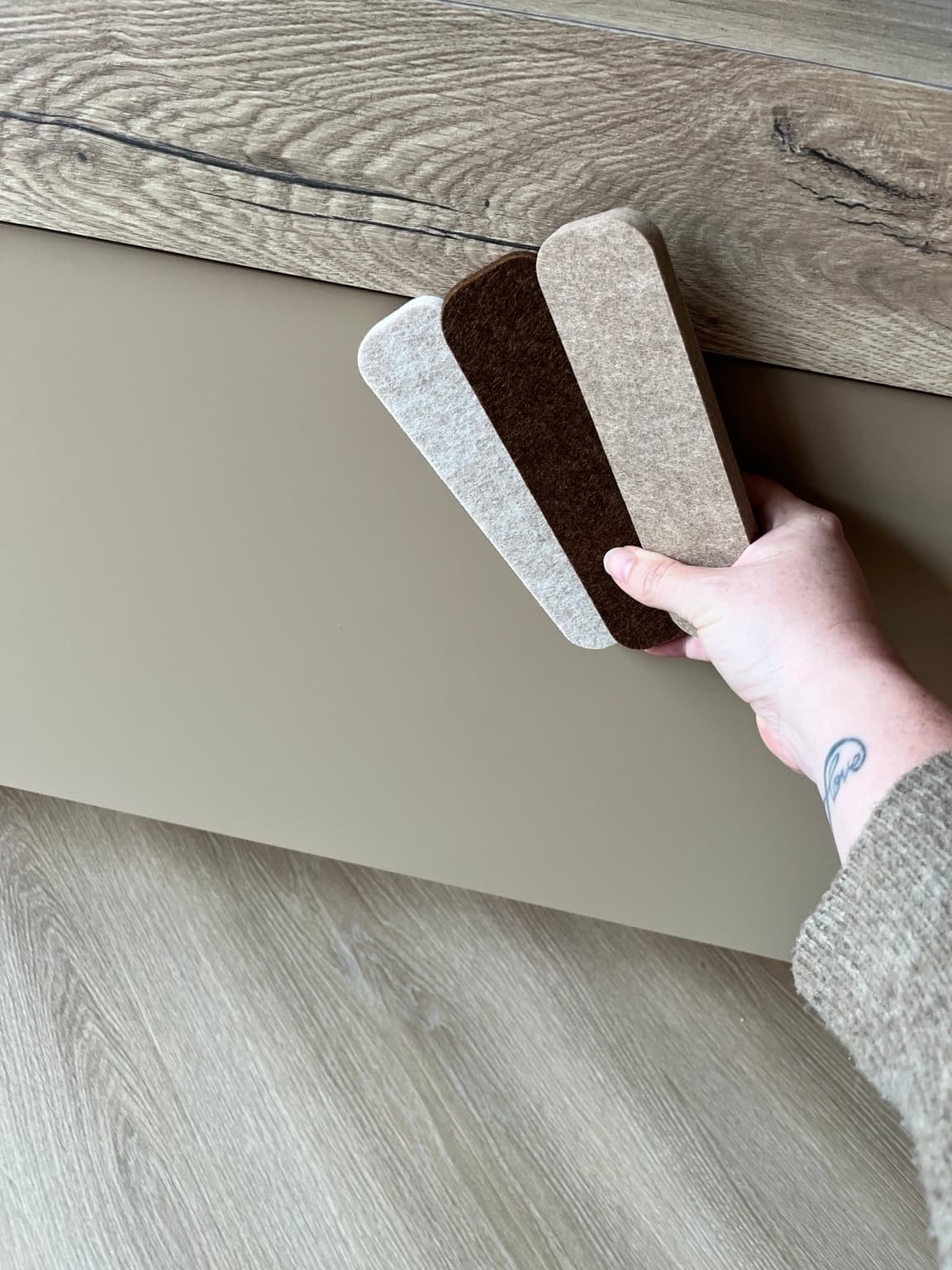
“Completion is technical. Feeling at home is emotional. They do not necessarily happen on the same day.”
The Short Version
The biggest thing I wish I had understood is that buying the house is only the beginning of the decisions. Builder options come early. Kitchen and bathroom choices come early. The costs stack quickly. The promised handover date may move. And once you receive the keys, an unfinished house still has its own timetable. If I did it again, I would focus less on trying to make every decision perfect and more on identifying which decisions would become disruptive to change later.
I would buy a new-build again.
That is probably worth saying first, because everything that follows includes delays, decisions I would change, an enormous number of options, furniture that arrived late and a period when it felt as though our painter had quietly moved in with us.
I still would.
Our house is now remarkably close to the way we wanted to live.
But if I could go back to the beginning and sit beside myself during those first appointments, there are several things I would explain.
Not to stop myself making mistakes.
Mostly to make the whole process feel less surprising.
The Option List Is Only the Beginning of the Budget
Before we had properly reached the kitchen, bathroom, flooring, lighting, furniture or garden, we already had a substantial builder-options list.
A new-build budget can therefore be deceptive. You look at the purchase price. Then the structural options. Then perhaps an extension or layout change. Then the kitchen. Then the bathroom. Then flooring. Plastering. Painting. Lighting. Window coverings. Furniture. The garden.
And suddenly the question is no longer whether one particular upgrade sounds expensive. It is how all those perfectly understandable decisions add up together.
I would tell anyone starting now to maintain a completely separate overview of the house price, builder options, post-handover finishing and the cost of actually furnishing the home. They are four different budgets pretending to be one.
Some of the Most Important Decisions Arrive Surprisingly Early
The strangest part of buying our new-build was making detailed decisions for rooms that did not yet exist. Kitchen. Bathroom. Toilet. Electrical provisions. Finishes.
You are often standing in a showroom trying to imagine how something will look in a home that is still mostly drawings.
That makes preparation more important than I appreciated at first. If you know what you want a room to feel like before the appointment, you have something to test the options against. Without that, it is very easy to simply respond to whatever is placed in front of you.
A Showroom Adviser Should Help Execute Your Vision - Not Replace It
Most of the permanent choices in our house still feel completely right to me.
One of my clearest regrets came from a showroom appointment that was simply not going well. I had chosen a warm glossy tile that felt right immediately. Another pale marble-look tile was suggested alongside it. Normally I am quite difficult to talk out of what I like. On that particular day, the appointment had become chaotic and I allowed myself to be persuaded.
I still don’t think that second tile belongs to the warmer material language I wanted for the house. There is nothing objectively wrong with the tile. It was simply not really my choice.
The rule I would use now: if an appointment is going badly, don’t make a permanent finish decision simply because you want the appointment to end. Take the sample home. Sleep on it. Go back. A few more days of indecision are easier to live with than a permanent finish that never felt quite right.
Expensive Does Not Automatically Mean Useful
There are upgrades in this house I would pay for again tomorrow. And there are premium functions we have barely touched.
One of our ovens has a steam function. It has still never been used. That does not make the whole oven a mistake. It does make the steam function a useful reminder.
Showrooms are very good at presenting capabilities. Your job is to imagine routines. Do you actually cook that way? Will you use it every week? Does it solve something you already find irritating? Or does it simply sound impressive while someone demonstrates it?
I would spend more time asking those questions.
The Most Boring Preparation May Become the Smartest Money You Spend
Some of the decisions I am happiest with are almost invisible. Electrical provision. Conduits. Preparations for the garden. Points for shutters and sun protection. Power where speakers would eventually go.
These decisions are not particularly exciting when you are making them. They become exciting when the house is finished and you do not need to drill through it again.
We had multiple conduits installed through the foundations so electrical connections could later be taken outside. They have subsequently been useful for things such as our EV charger and garden electrics.
The final product can often wait. The hidden route to it sometimes cannot.
Decide What You Do Not Want to Renovate After Moving In
Technically, nearly everything can be changed later. That was never really the question for me. I do not want to live in a finished house and then start breaking it open again.
That meant we were willing to do more before moving in than someone who is perfectly comfortable renovating in phases. There is no universal right answer here.
But I would decide this very early: how much disruption are you realistically willing to tolerate once you live there? Your answer changes the value of many builder options.
Daily Luxury Is a Better Budget Category Than “Luxury Upgrade”
My definition of luxury changed during the build. It is not automatically the expensive tap or the most advanced appliance. It is something that repeatedly makes ordinary life better.
Our kitchen is probably the best money we spent. I use my home office every working day. I wanted a bath for years and now use it regularly. We chose a larger hot-water capacity because I knew exactly how annoying insufficient hot water had been in our previous home. We have two basins because I do not particularly want Bas’s beard hair in mine.
None of those things needs to matter to anyone else. They matter because they match our routines.
And daily luxury can be much smaller. The right paint colour. Good lighting. A socket exactly where you need one. A cupboard that lights automatically when your hands are full. Those things shape daily experience more than a specification list ever will.
Good Lighting Deserves More Attention Than People Give It
I would not economise heavily on lighting. It has too much influence over both function and atmosphere.
We planned lighting alongside room layouts rather than treating it as a decorative layer at the end. There is functional light. Ambient light. Integrated kitchen lighting. Smart lighting. Softer night lighting. Brighter lighting when we are cleaning.
The result is not one “perfect lighting scene”. It is a house that can feel different depending on what is happening in it.
If I did another new-build, lighting would again be one of the early plans rather than one of the final purchases.
The Handover Date Is Not the Finish Line
Our build was delayed by several weeks. That was frustrating, but the bigger consequence appeared after handover. The time needed for the work after receiving the keys did not shrink because the build was late.
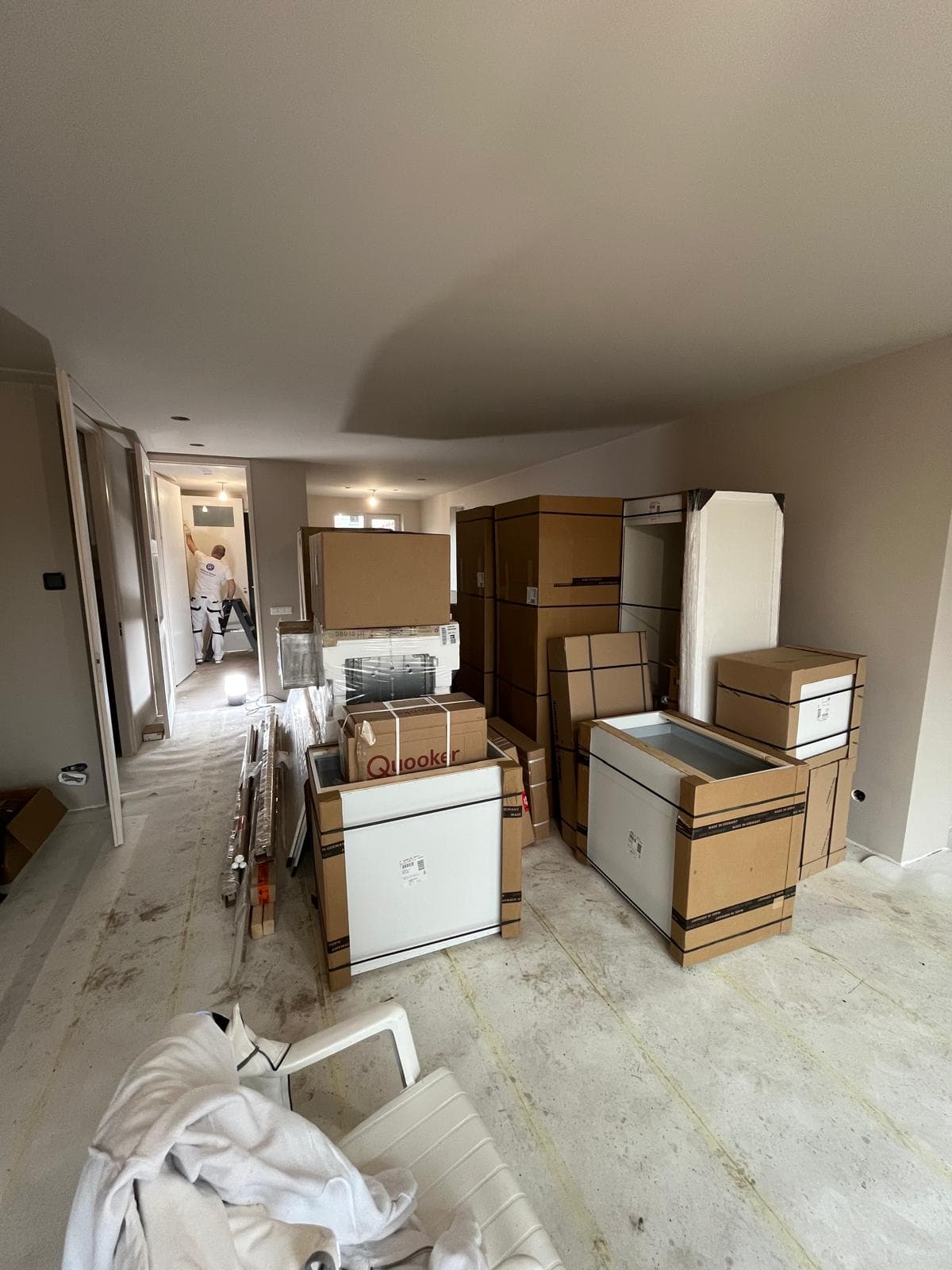
We received the keys in the final week of January. On 3 March, we slept here for the first time. In between, the sequence included electrical work, sanding, plastering, drying, more sanding, several paint coats and flooring.
Drying time is particularly unimpressed by deadlines. It takes as long as it takes.
If I did it again, I would build as much contingency as possible between the expected handover date and any immovable moving deadline.
Living in the House and Finishing the House May Overlap
We were already living here while work was still being completed. Our painter continued to return. Skirting and some floor finishing were still being done.
That was not the fantasy version of moving into a pristine new-build. It was real life. And it was manageable.
I think I had unconsciously imagined two states: building site, and then suddenly: finished home. There is often a third state between them: home, with somebody still coming round to finish things.
Furniture Lead Times May Be Optimistic
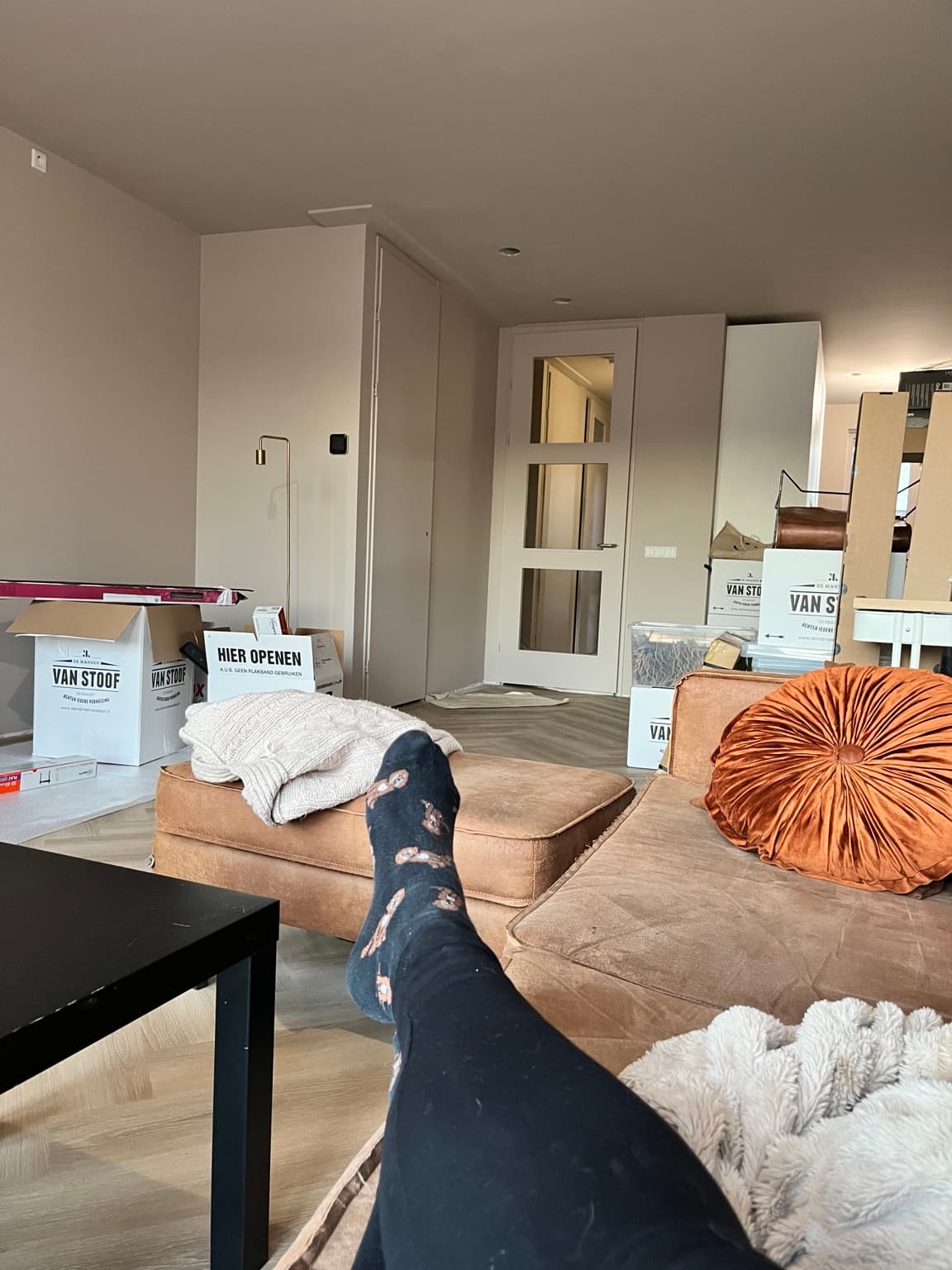
We bought virtually all new furniture for the new house. Our existing pieces were largely sold or donated. We kept our old sofa temporarily for one very practical reason: we needed somewhere to sit.
The new furniture was meant to take around twelve weeks. It took more than sixteen.
If you are replacing almost everything, keep at least enough old furniture to function until the important new pieces are physically inside your house. A promised delivery week is not a chair.
Privacy Belongs on the Early-Moving Checklist
Our curtains arrived in stages. Fortunately, the shutters went in during the first week. That meant we had privacy even while other parts of the house were still unfinished.
It is easy to put curtains into the “decorating later” category. In a house where neighbours and pavements may be close by, window coverings are also functional.
The House May Feel Like Home Before It Is Finished
The moment that changed the feeling of the house for me was the curtains. They softened everything. Suddenly the rooms did not feel like newly completed spaces waiting for things to happen in them. They felt like ours.
There were still details unfinished. That did not matter.
Completion is technical. Feeling at home is emotional. They do not necessarily happen on the same day.
A Mistake Does Not Automatically Require Fixing
Our cast garage floor did not turn out beautifully. It cost around €2,500. I do like the colour. So I have decided I am not going to spend my life being annoyed by it.
There is a temptation, particularly with a new house, to keep correcting everything until every detail matches the original mental picture.
At some point, the house has to stop being a project for long enough to enjoy it.
I Would Still Choose a New-Build
Despite everything above, yes. I would do it again.
The biggest reason is that so much of this house reflects how we actually want to live. We made the technical, structural and aesthetic decisions ourselves.
New-build was not the cheap or effortless route. It was the route that allowed us to make the house ours before we had even properly lived in it.
And for us, that was worth it.
Continue Reading
None of this changes the answer at the top of this piece. I would buy a new-build again.
It just would not surprise me nearly as much the second time.
Planning your own new build? The New Home Studio helps you work through the decisions before they become rushed, expensive or difficult to reverse.

Written by Esther
Esther is a photographer and storyteller, and the founder of Essy's Essentials - a seasonal home for stories, rituals, recipes and everyday luxuries.
More about Esther →