Home & Living
The Winter Room After Christmas
What to do with the space the tree leaves behind.
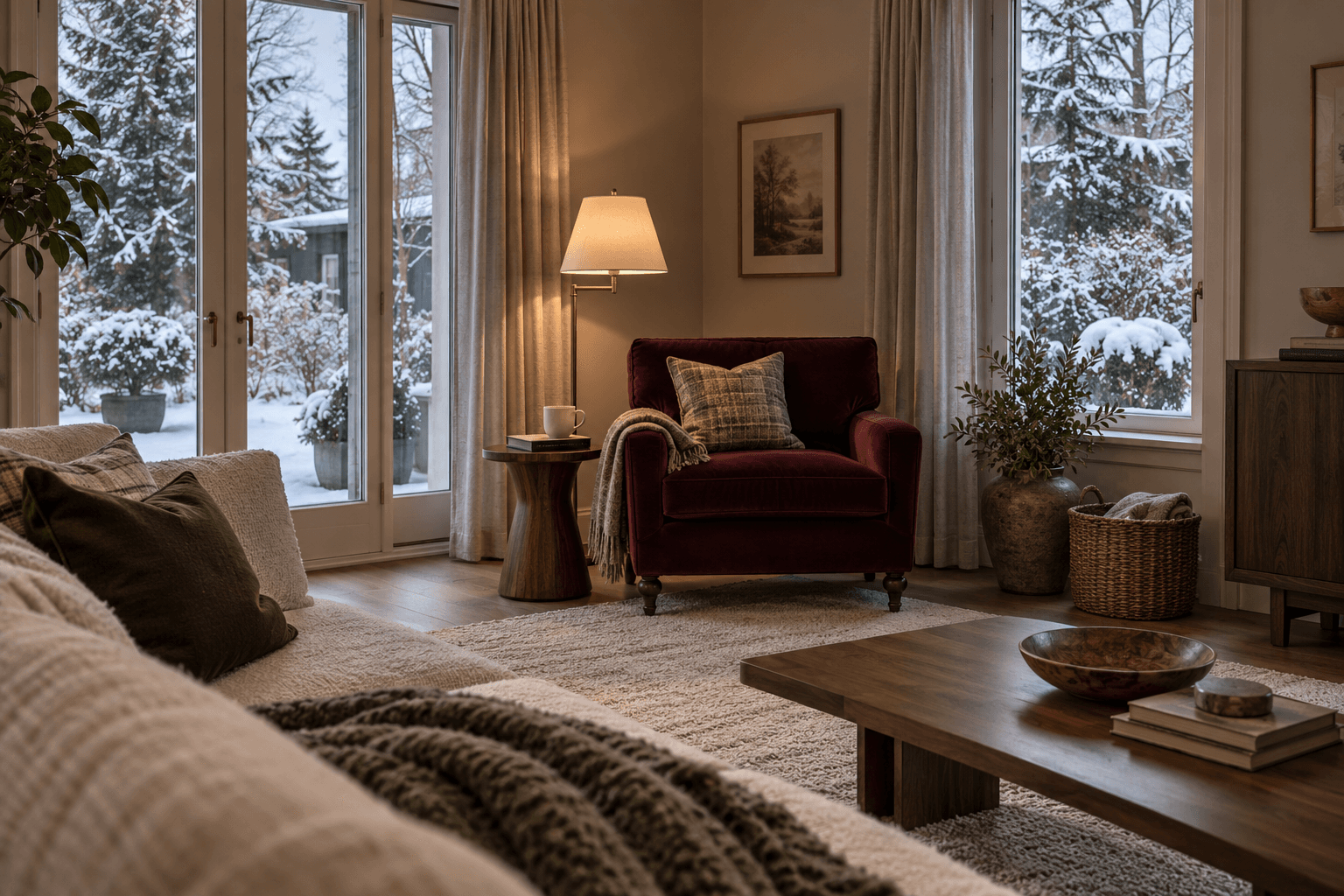
“The tree leaves room behind it. Give some of that room back to the things you want to do.”
When the Christmas tree comes down, a room can seem to lose several things at once: a tall shape in the corner, a pool of evening light and the place your eye has been travelling to for weeks. Before filling the gap, work out which of those things you actually miss.
A lamp may be enough. A chair may finally have room to turn towards the window. Sometimes the best thing to keep is the clear space itself.
In Hollowpine, the fictional winter village at Essy's Essentials, rooms earn their warmth through use. Marta's glass winter garden has a working radiator, a table for company and a velvet chair that Otto has claimed. That is the useful idea to borrow: arrange the room around what you want to do in it through the rest of winter.
Begin with the Job the Tree Was Doing
Once the decorations are packed away, give the room a day in its ordinary state. Look at it in daylight and again at the hour when you normally settle down. The same corner can feel spacious at noon and unexpectedly dim after dinner.
Ask one question: what has actually gone missing?
There is no requirement to recreate the tree's outline. The point is to identify a useful change rather than shop for something approximately the same size.
Give the Former Tree Corner One Clear Role
A reading place is a natural choice when there is already a comfortable chair nearby. Move the chair into position, sit in it and check the arrangement from there. Can you reach the table without leaning across the arm? Does the light fall where the page will be? Can someone walk past without asking you to move your feet?
A corner for conversation needs a different arrangement. Angle the chair towards the sofa and make sure the distance feels comfortable for speaking. A seat pushed neatly into a corner can look finished while making the person in it feel slightly outside the room.
You may want neither. If the tree occupied a route to the window or squeezed the room, let its departure restore that space. A clearer route is a useful result in its own right.
Three versions for three different rooms.
A larger corner: bring together a chair, a small surface and a lamp. Begin with those three useful pieces. Add a throw only if you will reach for it. The corner should still feel connected to the rest of the room.
A small living room: improve the seat you already use. Move an existing side table closer, adjust the reading light and keep the newly cleared floor. You do not need to find room for an additional armchair to make a winter reading place.
A corner that works best empty: put the displaced furniture back where it belongs and leave the corner alone. Make the sofa or dining table more comfortable instead. The room's centre of attention can move somewhere else.
Return the Light to the Activity
Tree lights illuminate a shape. Everyday lighting needs to help someone read, talk or move through the room.
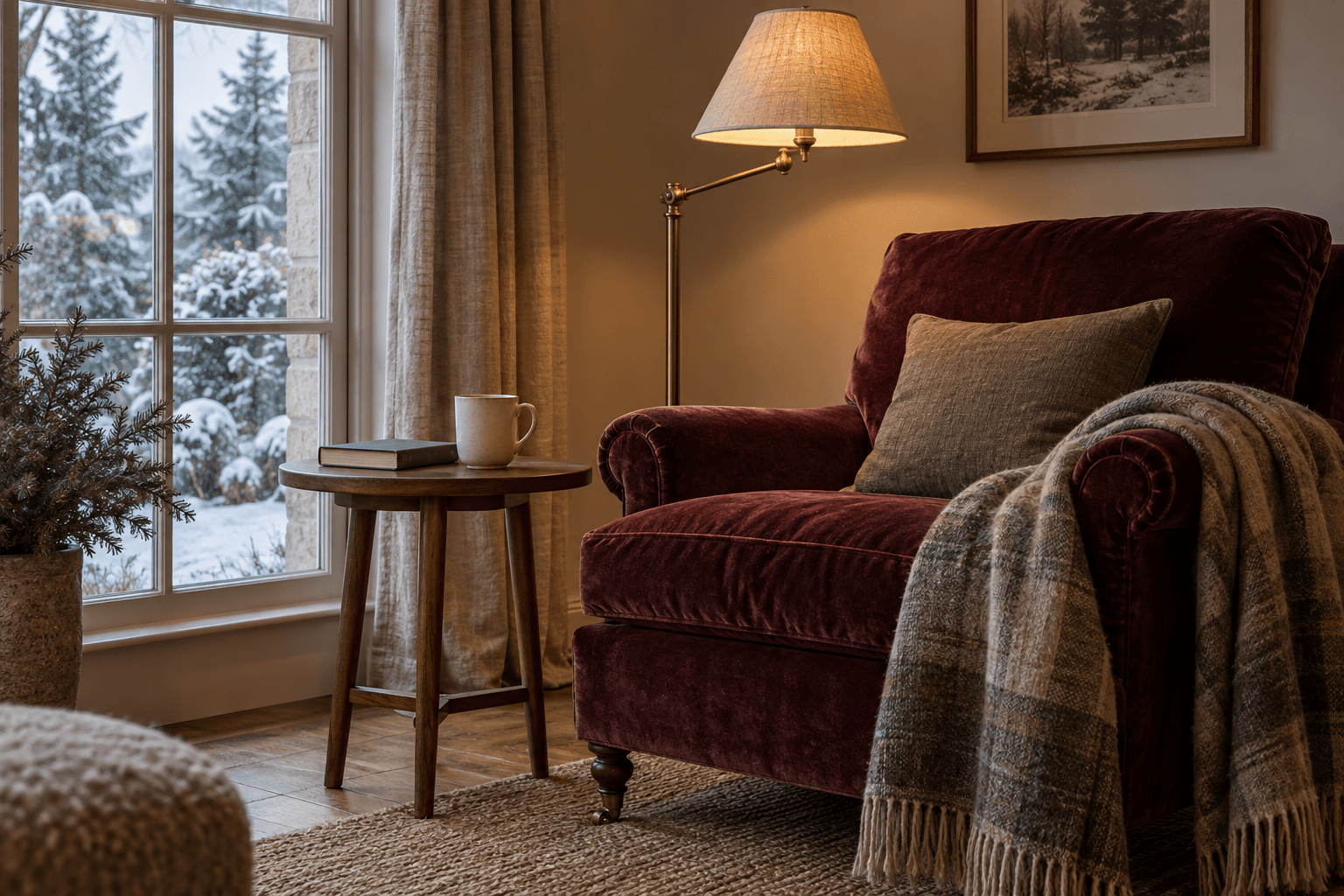
Borrow a lamp from another part of the house for one evening if you can. Try it beside the chair, then on the nearby sideboard, and notice which arrangement you prefer from your usual seat. Check that the shade shields the bulb from your eyes and that reflections are not distracting on the television or window.
Keep task lighting where work still happens. A winter room can have a warmly lit seating area and a properly lit table for a puzzle, a letter or a practical job. Everything need not be equally dim.
Place lamps where cables can run safely without crossing the walking route, and leave heaters and ventilation clear. If you need a complete lighting plan, the existing Layered Lighting Guide can take that further. Here, the aim is to restore the particular light that Christmas was supplying.
Let the Taller Shapes Settle
A tree draws the eye upwards. After it is gone, you may suddenly notice that every object in the room seems to stop at the height of a side table.
Before adding something tall, look at what already gives the room height. Curtains, a bookcase, a doorway and existing artwork all contribute. A lamp moved slightly may reconnect a low seating arrangement with the rest of the wall.
If a plant already thrives in a suitable position, it can be part of the composition. Do not move it into an unsuitable dark corner simply to replace the tree. The empty floor is preferable to giving a living thing a job it cannot do there.
You can also allow the wall to stay quiet. A room may take a few days to look balanced again simply because you are seeing its ordinary proportions afresh.
Keep the Textiles That Belong to January
When the decorations come down, review the soft things individually. A wool throw, velvet cushion or heavier curtain may still be doing exactly what you want it to do. Keep it because it makes the room comfortable.
Choose one or two deeper colours already present in the room - perhaps burgundy, forest green or dark brown - and let the larger neutral surfaces remain familiar. There is no need to buy a set of winter accessories to make them agree.
Put the blanket where it can be taken without dismantling an arrangement. Remove the cushion that must always be moved before anyone can sit down. Useful comfort becomes visible through those small decisions.
Make Room for One Ordinary Pleasure
Choose something you would like to do in this room through January and February. Read after dinner. Write a short letter on Sunday. Have coffee with someone without clearing the entire table first.
Prepare only what that activity needs. A book beside the chair is enough; a whole stack selected for its cover colour can quickly become another thing to manage. A pen and paper can live in a drawer until needed. A small clear patch on the table can be more inviting than another decorative grouping.
There is room for nostalgia here. Use the cup that reminds you of someone, the old reading lamp or the blanket that has followed you through several homes. One familiar object can give the space a personal history without turning the room into a period setting.
Ruth's A Winter Supper for One offers one way to use an evening like this. The Sunday Letter by Hand offers another. Let the room support the choice rather than ask you to maintain a particular look.
What the Room Might Be Missing
The corner feels dark after supper
- The tree was providing evening light.
- Try a lamp near the place where you sit.
The room looks low and spread out
- A tall shape has disappeared.
- Look at the existing curtains, artwork or a floor lamp before adding another object.
Furniture still feels pushed aside
- The Christmas layout is still in place.
- Return a displaced chair, then adjust its angle for conversation or reading.
The room feels calm but unfamiliar
- You have become used to a fuller view.
- Leave it for a few evenings before deciding it needs anything.
The corner has become a holding area
- An empty space has acquired several temporary jobs.
- Put the displaced objects away and decide whether the corner needs a job at all.
A Short Winter Room Edit
Once Christmas is packed away, allow around twenty minutes for these small decisions. This does not include taking down decorations or moving heavy furniture.
- Stand where you usually enter the room and notice what you miss: light, height, a place to sit, or nothing at all.
- Return the furniture that was moved for Christmas, where practical.
- Give the former tree corner one role, or deliberately keep it clear.
- Sit in the place you actually use. Adjust the nearby table and light from that position.
- Keep one useful winter textile within reach and clear a surface for an ordinary pleasure.
- Look again after dark. Write down any genuine remaining gap before considering a purchase.
More Winter Evenings in Hollowpine
Questions About the Room After Christmas
How do I make my living room cosy after taking the tree down?
Start with the light and seating. Restore a lamp near the place you use in the evening, keep a comfortable textile within reach and make space for something you enjoy doing. Then decide whether the room needs any more decoration.
What can I put where the Christmas tree was?
A chair with a small table, a suitable existing plant or a floor lamp can work, depending on the space and its conditions. Leaving the floor clear is also a complete choice, especially when the tree interrupted a useful route.
Can I keep winter colours after Christmas?
Yes. Burgundy, deep green and warm neutrals do not need a Christmas setting. Keep the colours that suit your room and put away the objects that feel specifically festive when you are ready.
How can I do this without buying anything?
Try a lamp from another room, return furniture to its ordinary place and move a table closer to the chair you use. Give yourself time to live with the extra space. Buy only if a specific practical gap remains.
Leave the arrangement in place for a few evenings. Notice where you put your cup, which seat you choose and what you keep moving. Those observations are more useful than trying to decide everything from the doorway.
The tree leaves room behind it. Give some of that room back to the things you want to do: a conversation that carries on, a chapter finished while it is still light, a quiet supper before moving to your favourite chair.
In Hollowpine, Otto understands the value of a well-placed seat. You can borrow the principle without surrendering the chair.

Written by Esther
Esther is a photographer and storyteller, and the founder of Essy's Essentials - a seasonal home for stories, rituals, recipes and everyday luxuries.
More about Esther →