Home Care & Housekeeping
The Linen and Towel Edit
A calm method for keeping household textiles useful, fresh and easy to manage.
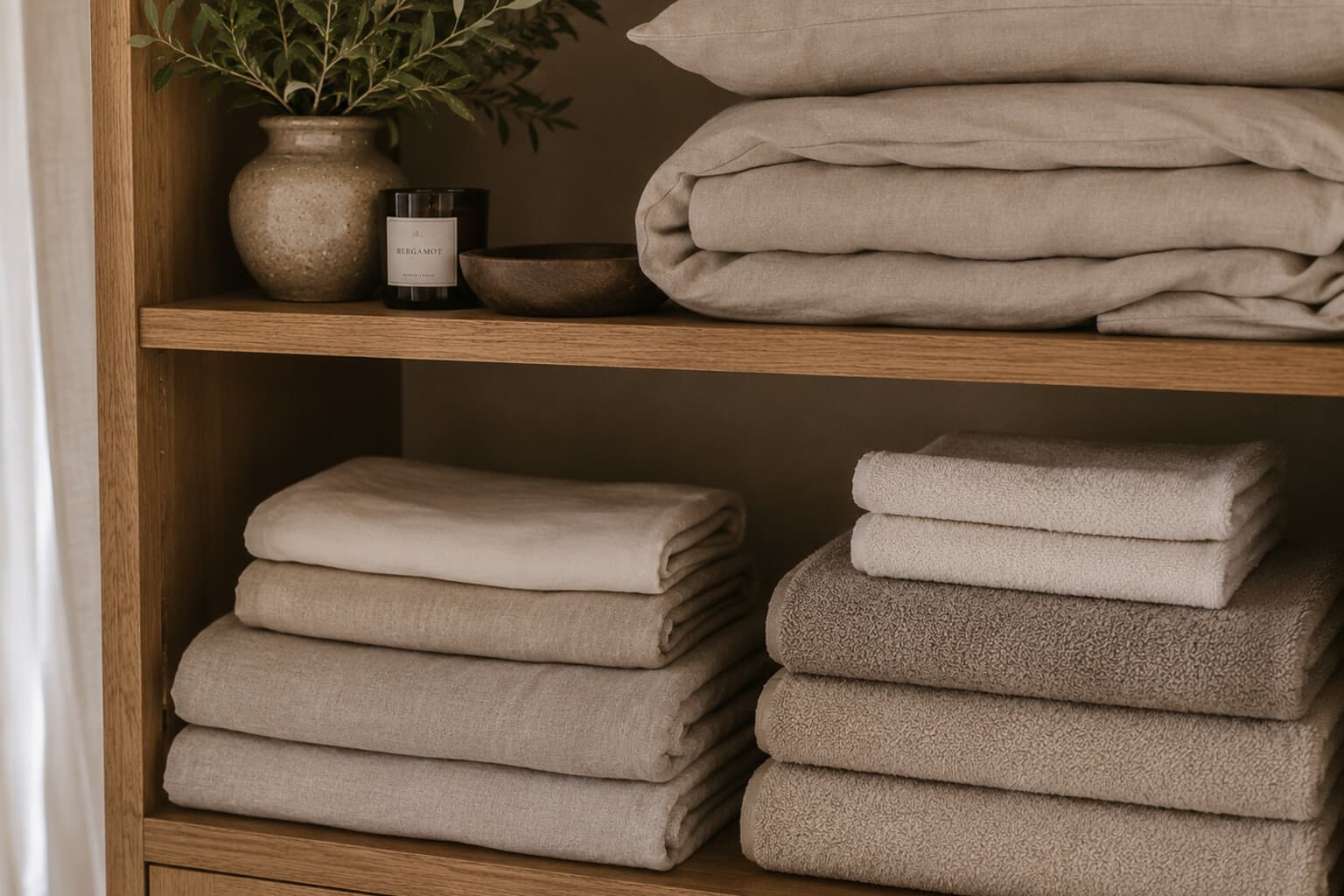
Household linens often accumulate quietly - several incomplete bedding sets, towels that are no longer pleasant to use, guest linen with no clear place, seasonal textiles, and napkins, tablecloths and blankets stored across several cupboards.
The Linen and Towel Edit creates a smaller, more dependable collection.
The objective is not to own as little as possible. It is to know what is available, where it is stored and whether it still serves the household well.
Begin by Gathering Categories
Review one category at a time - bedding, bath towels, hand towels, kitchen textiles, table linen, guest linen, blankets, and outdoor textiles.
Do not empty every cupboard simultaneously. Complete one category before moving to the next.
Review Condition
Check for permanent stains, holes, worn edges, loss of absorbency, broken fastenings, uncomfortable texture, missing matching pieces, and items that no longer fit current beds or furniture.
Decide whether each item should be kept, repaired, repurposed, donated where suitable, or recycled or disposed of appropriately.
Define a Practical Quantity
The right quantity depends on household size, laundry frequency, storage, guests, pets, children and climate.
A simple starting point may be two complete bedding sets per regularly used bed, two or three towel sets per person, a small number of guest sets, enough kitchen textiles to allow regular washing, and a limited collection of table linens actually used.
These are not rules. Use the quantities that match real life.
Store Complete Sets Together
Keep bedding sets together where possible - fold the set inside one pillowcase, use labelled shelf sections, store by bed size, and separate guest linen.
This prevents the search for matching pieces.
Organise by Frequency
Place frequently used items within easy reach. Store occasional or seasonal items higher or further back - a possible order is daily towels, current bedding, guest linen, seasonal blankets, and special table linen.
Do not give the most accessible space to items used once a year.
Protect Freshness
Store textiles only when fully dry. Avoid overcrowding shelves. Allow air circulation where possible. Wash storage areas periodically.
Address persistent dampness or odour appropriately rather than masking it with fragrance. Use a light linen scent only where suitable and desired.
Create a Replacement List
Do not replace every worn item immediately. Create a short list - for example, two new bath towels, one fitted sheet, replacement guest pillowcases, or one durable kitchen towel set.
Prioritise items used most frequently. Choose quality based on function, comfort and care requirements rather than appearance alone.
Seasonal Textile Rotation
Spring
- Wash lighter covers.
- Store heavy layers.
- Refresh table linen.
Summer
- Bring out breathable bedding.
- Review outdoor textiles.
- Wash picnic or garden items.
Autumn
- Check blankets.
- Prepare warmer bedding.
- Clean summer textiles before storage.
Winter
- Rotate heavier layers.
- Review guest linen before holidays or gatherings.
- Keep spare blankets accessible.
Pair It With
- The Art of Quiet Housekeeping
- The Laundry System That Actually Closes
- The Seasonal Home and Wardrobe Transition
A well-managed linen cupboard is not impressive because it is full.
It is useful because everything inside is clean, complete and ready when needed.

Written by Esther
Esther is a photographer and storyteller, and the founder of Essy's Essentials - a seasonal home for stories, rituals, recipes and everyday luxuries.
More about Esther →