Seasonal Life Admin Reset
The Seasonal Home and Wardrobe Transition
A practical checklist for adjusting the home and wardrobe to the coming season without replacing everything.
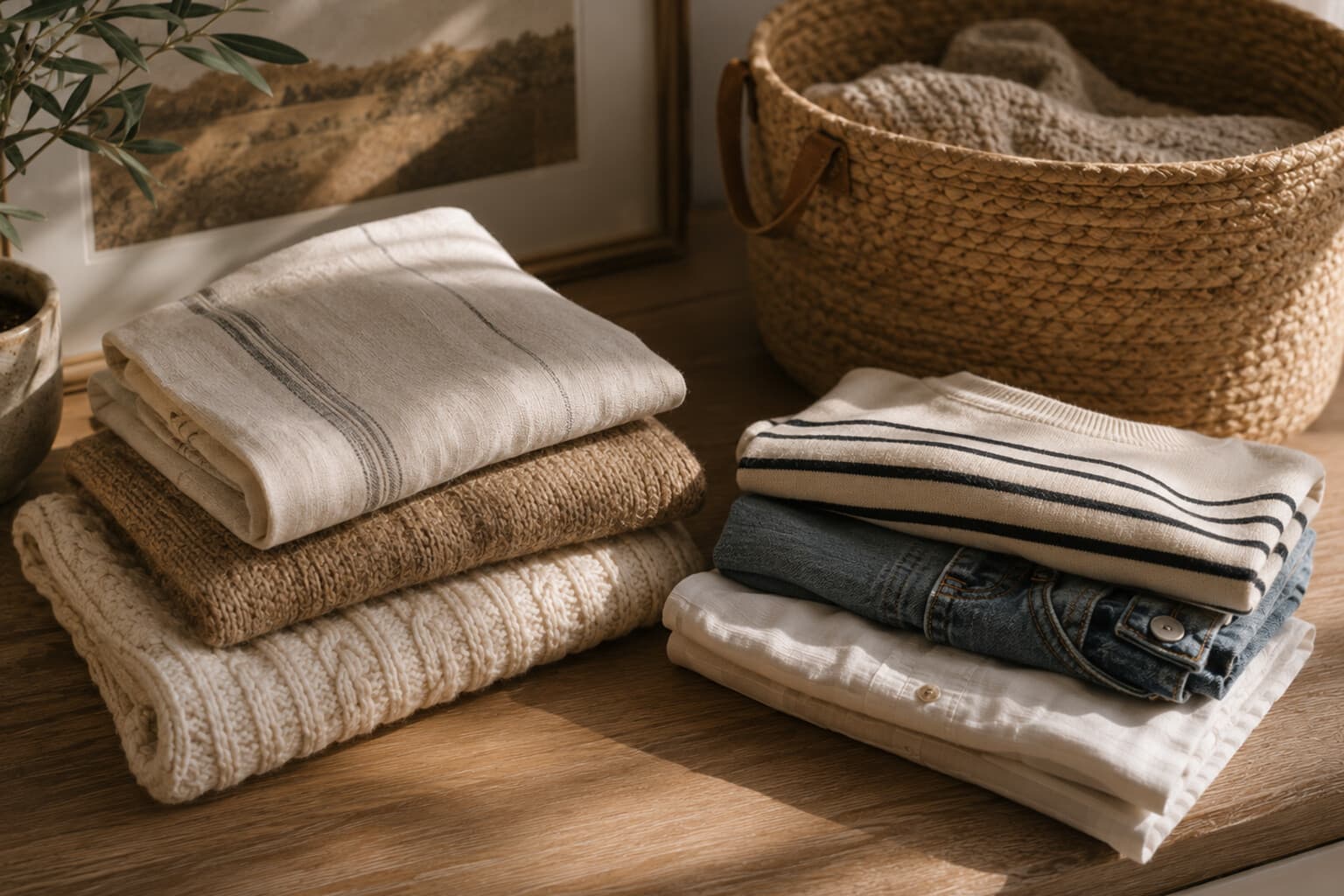
Seasonal transitions are often presented as opportunities to buy more - new clothes, new décor, new storage, new routines.
A thoughtful transition begins elsewhere. With what is already present. What needs cleaning. What needs repairing. What should be stored. What still fits. What will genuinely be used.
The purpose is not to transform everything at once. It is to make the home and wardrobe suitable for the months ahead.
Begin With the Home
Review the rooms used most often. Ask: what is no longer needed this season? What should become easier to reach? What needs cleaning before storage? What requires repair? Which practical items will soon be needed?
Possible home actions include washing and storing seasonal textiles, bringing relevant blankets or lighter linens into use, reviewing lighting, preparing heating or cooling, rotating entryway items, cleaning outdoor furniture, organising seasonal equipment, checking candles, batteries or emergency supplies, and updating household scents or flowers if desired.
Avoid moving items purely for the appearance of change. A transition should improve daily function.
Review the Wardrobe
Begin with the clothes already owned. Separate: ready to wear, needs cleaning, needs repair, needs alteration, no longer fits, no longer suits your life, and seasonal crossover pieces.
Store only clean and wearable items. Do not preserve damaged items indefinitely without a repair decision.
Create a Seasonal Wardrobe Overview
Identify everyday outfits, workwear, outerwear, shoes, occasion clothing, comfortable home clothing, weather-specific items and upcoming event needs.
Notice genuine gaps before shopping. A missing practical item deserves more attention than a trend-based impulse.
Create a Repair and Care List
Possible tasks include replacing buttons, repairing hems, cleaning coats, conditioning leather, resoling shoes, washing delicate items, steaming or pressing garments, repairing bags and cleaning jewellery.
Schedule these tasks early in the season.
Review Seasonal Purchases
Before buying, ask: do I already own something that serves this purpose? Will I wear or use this regularly? Does it work with several existing items? Does it solve a practical gap? Would I still want it without the seasonal trend around it?
Set a small, specific list - for example, one weatherproof coat, one pair of everyday shoes, two layering pieces, replacement gloves.
Avoid using a general seasonal mood as permission for undefined shopping.
Pair It With
Frequently Asked Questions
Does a seasonal transition mean buying new things?
No - a thoughtful transition starts with what is already present: what needs cleaning, what needs repairing, what should be stored, and what still genuinely gets used, before any new purchase is considered.
How should I sort through my wardrobe for the new season?
Separate everything into ready to wear, needs cleaning, needs repair, needs alteration, no longer fits, no longer suits your life, and seasonal crossover pieces - and store only clean, wearable items.
How do I decide whether a seasonal purchase is worth it?
Ask whether you already own something that serves the same purpose, whether you will wear or use it regularly, whether it works with several existing items, whether it solves a genuine practical gap, and whether you would still want it without the seasonal trend around it.
What should I actually do around the home during a seasonal transition?
Wash and store seasonal textiles, bring the right blankets or linens into use, review lighting, prepare heating or cooling, clean outdoor furniture, and check candles, batteries or emergency supplies - changes that improve daily function, not just appearance.
A seasonal transition should make everyday life more comfortable and more coherent.
The best result often comes not from adding more, but from taking better care of what is already there.
A Note on This Content
The content on Essy’s Essentials is intended for general inspiration, personal organisation and educational purposes. It does not constitute personal financial, investment, tax or legal advice. Always consider your own circumstances and seek qualified advice where appropriate. Any amounts shown are illustrative examples only, never a recommendation for what you personally should save or spend.

Written by Esther
Esther is a photographer and storyteller, and the founder of Essy's Essentials - a seasonal home for stories, rituals, recipes and everyday luxuries.
More about Esther →